#SustainableCities May 2017 Guide: Keeping on the Pulse of Milan's Treasures

Curated by Katrin Kaurov

In our modern world of chaotic, fast-paced rhythms, there is one nation that still embraces il dolce far niente - the sweetness of doing nothing. Italians have mastered the art of slow lifestyle even in a business-oriented fashion and design capital, Milan. A true Milanese knows when to disconnect from the virtual, fast-paced world and embrace being fully present with all senses attuned to the moment. Whether it embodies zipping an ice-cold Spritz at an aperitivo in the bohemian district of Navigli, or an unhurried window-shopping stroll in the luxury district of via Montenapoleone, it's all about taking in the beauty of the city's cherished treasures. Running out of unique ways to wind down in Milan? Grasp the beauty of on-the-spot meaningful moments with our Culture Guide to May.

ART BOOST FOR THE SENSES — The highly anticipated “LOVE.Contemporary Art Meets Love” which travelled from Rome to Milan’s Museo della Permanente is curated by Danilo Eccher. It features 39 masterpieces dedicated to the expression of love, taking you on a deeply emotional journey. The contemporary art exhibition spotlights Andy Warhol, Tom Wesselmann and Francesco Vezzoli among others, enabling you to compare and contrast different visions of love’s fairytale.

Tracey Emin - My Forgotten Heart. 

Tracey Emin - My Forgotten Heart. 

GOOD ENERGY SPOT - Missing the edge in the elegant and sophisticated capital of Lombardy? There is an alternative East London vibe in Lambrate Design District. Situated in the hipster district nearby artists’ lofts, exhibitions and installations, East Market Milano brings together indie music, vintage designer clothes, old vinyls, multicultural street food and extravagantly dressed people. Taking place on the third Sunday of each month on 600 sq., the Brooklyn-type creative energy of the avant-garde market will leave you spiritually nourished.

East Market Milano. 

East Market Milano. 

FOR RECHARGING THE TASTEBUDS - Considered as the most “instagrammable” café in Milan, Macha Café, situated just a few steps away from Corso Garibaldi, offers a Japanese-Scandinavian fusion with a twist. Everything in the menu includes green macha - the Japanese superpowder notorious for unbelievable health benefits. The healthy menu ranges from filling (and incredibly photogenic) macha-avocado burgers to sushi bowls and delicate green chia puddings topped with macha for good. Be ready for a buzzing live queue to secure a spot in the new it-place!
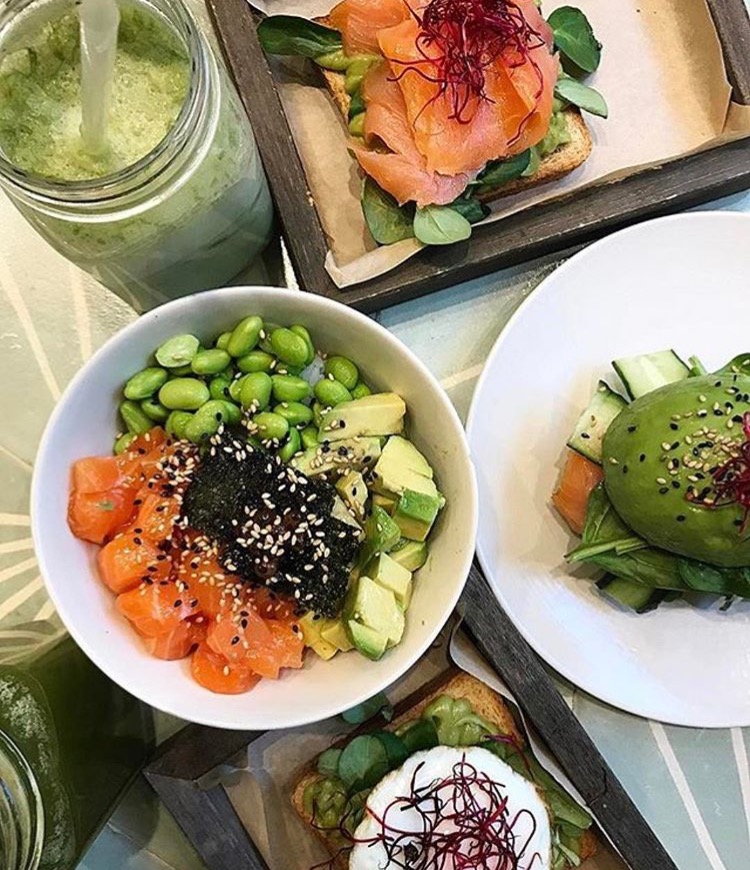
Macha Café

Macha Café

SHOP FOR A GOOD CAUSE - An exclusive shopping marathon will take place nearby Moscova from 13-16 May, with a mission to fundraise for underprivileged children. The event called ‘Profit No Profit’ Haute Couture Shopping features more than 90 high-end brands donating their current season’s collection of clothing, bags and other accessories for charity. The items will be sold at discounted prices up to 80% and all the profit will be granted to “Associazione per il Bambino Nefropatico Onlus” and “Panda Onlus.”

Via Lincoln. 

Via Lincoln. 

STROLL AWAY THE WEEKEND - One of Milan’s best-kept secrets is via Lincoln, just a few steps away from the business district of Porta Nuova known for its skyscrapers and futuristic buildings. The picturesque neighbourhood via Lincoln, which grew out of the idea of having a garden city with small colourful houses, resembles an extraordinary fairy tale. Take a long stroll in the tranquility of the Rainbow District with its tiny gardens full of fruit trees and flowerbeds.
 

AGUSTAV Furniture: Finding Innovation in Functionality

AGUSTAV Walnut Shelf.

Sustainability and innovation don’t always stem from new materials, but from clever solutions used in design process. Icelandic furniture manufacturer AGUSTAV is a fantastic example of how design meets innovation, with their timeless interior pieces using wood as their main material. AGUSTAV has also gone big on an environmentally conscious approach - for every item they sell, they plant trees to help boost the growth of a new forest. You give what you take - one of the main principles of circular economy model. Ágústa Magnúsdóttir, one of the founders of the brand, offered us a glimpse into AGUSTAV's world of subtle innovation paired with sustainability. 

Words: Johanna Raudsepp

AGUSTAV bar stool.

What do you value most about interior design?

Interior design as we see it is the art of establishing a deeply-rooted connection with your surroundings and habitat. It’s sort of like nesting. It’s nesting that we sometimes do for other people. 

We like to keep our lines clean and we value interior design with a solid base. As furniture makers, what we most cherish are spaces designed with a natural calm sense to them; spaces that are grounded with natural materials and allow the furniture to shake up the centre of attention.  

Iceland is a place of great natural beauty. How does that come into play in your design process?

Design is just something we do, it comes naturally to us and the creation process is where we focus most of our energy. It is likely that our foundations are rooted in Icelandic nature, but it’s not something that we identify with specifically. The Icelandic hardness is embedded in our DNA and it’s probably something that moves within us and influences us, without us attempting it per se. We use the nature to get away more than we do [use nature] during the process itself. It’s our safe haven where we catch our breaths and regain our stamina after busy periods at the workshop. 

"We don’t see beauty in buying one thing today and replacing it with whatever comes out in the next seasonal catalogue. We buy once and hold on to [it] forever." 

People are looking for new, innovative ways of creating staple furnishing pieces. What is your approach to innovation and how do you apply innovative methods?

We have always been more interested in the innovation element of creation than the actual 'design' part. To us every thing is designed. In one way or another, intentionally or not, everything is designed. Whether it’s innovative, functional or even useful, is another element and those elements happen to attract our interest even more. We strive to make our items functional and useful; yet we would like them to be innovative and we ground all these things in our perception of aesthetic appeal. 

I have to ask about your infamous book rack - what inspired you when creating it?

The book rack came to be when we still lived in Copenhagen. Initially, when we moved in together, we lived in a very small and crooked apartment. We desperately needed space and a place to put our things away (whatever that thing was). The book rack sprung from our original design of the coat rack. We were looking at ways to utilise the same rack system in more ways and the book rack jumped right at us from that process.  

"We strive to make our items functional and useful; yet we would like them to be innovative and we ground all these things in our perception of aesthetic appeal." 

AGUSTAV Book Rack.

Finally, how does AGUSTAV follow principles of sustainability? Why is it important to you and the consumer? 

The environmental issues the world is facing today are very scary and very real. It’s extremely important that everyone does what they can to contribute to the environment, to reduce their waste and think wisely about their purchases. These elements are key to our process, our creations are centred around the fact that we want our items to last. We create high-end quality furniture and encourage our customers to choose wisely before buying, we create our furniture to last and hope that they will be passed down to generations to come. We don’t see beauty in buying one thing today and replacing it with whatever comes out in the next seasonal catalogue. We buy once and hold on to [it] forever. 

As to sustainability, we use every piece of wood we get hold of in the workshop and do our best to minimise waste. If we can’t see use for the cut-offs, we’ll give them away to projects that can make use of them. Additionally, we strive to give a little back by planting a tree for each item we sell. 

Find AGUSTAV furniture here


Fashion Revolution Week: All You Need To Know About Who Made My Clothes? Campaign

Words: Anna Victoria Eihenbauma
Photos: Fashion Revolution

This year marks the 4th anniversary of the Rana Plaza disaster in Bangladesh where over 1,000 people were killed and over 2,500 were injured. An eight-storey commercial building near Dhaka collapsed after garment factory owners ordered their workers to return to work despite warnings to avoid the building due to cracks in its structure. The Rana Plaza garment workers were producing clothing for European and North American high street brands when their workplace became life-threatening. 

The tragedy caught international media attention and revealed the need for a reformed fashion industry. As a result of this disaster, the Fashion Revolution Movement was created. 

Fashion Revolution is a non-profit organisation focused on campaigning towards greater transparency in the supply chains of the fashion industry. The international movement urges consumers to ask brands this seemingly simple question: Who made my clothes? 

“The global fashion industry is opaque, exploitative and environmentally damaging and desperately needs revolutionary change. We love fashion, but we don’t want our clothes to come at the cost of people or our planet.”

- Fashion Revolution

Whilst working with multiple factories, suppliers and subcontractors at the same time, clothing brands are often unaware of how their products are actually being produced. Transparency in fashion would lead to improved monitoring and controlling of working conditions through all stages of the supply chain. 

Asking brands to become more transparent means asking them to become more accountable. This way, companies can ensure that human rights are respected and that environmental guidelines are adhered to. 

What started out as Fashion Revolution Day, observed every year on 24th April, has now become Fashion Revolution Week. Hundreds of events take place all over the world during this week, all aimed at raising awareness of the true cost of fashion. Individuals and organisations unite in their shared interest of designing a more sustainable future. This year the movement takes place from Monday 24th to Friday 30th April worldwide. 

“We believe in fashion – an industry which values people, the environment, creativity and profits in equal measure, and it’s everyone’s responsibility to ensure that this happens.”

- Fashion Revolution
 

Getting involved can be as simple as taking a photo. Fashion Revolution is calling on all of us to show our clothing labels and ask brands #whomademyclothes on social media. 

Together we can make a positive difference in the world. 

Find out about any potential events near you here.


From ‘Bottle to Boot’: How Timberland’s New Spring Collection is Helping to Reduce Plastic Waste 

Thread CEO Ian Rosenberger.

Words: Kyra Hanson

Imagine unfolding your towel, spreading your body out in the searing sun, listening to the sea waves lapping against the shoreline, sinking your toes into the silky sand – only to find the grains beneath your feet aren’t silky or the colour of sand, but sharp, angular, brightly coloured bits of plastic. These days, a barefoot walk along a beach such as Newquay’s Tregantle Cove is more like hot-footing it through a football pitch-sized box of Lego. Plastic beaches are a common sight around the world, due to the eight million (at least!) tonnes of plastic, which end up in our oceans every year. But in Haiti and Honduras, Thread International is diverting this waste from the waterways, by turning it into wearable fabric. This spring, the sustainable fabric manufacturer has collaborated with outdoors fashion brand Timberland to launch ThreadX, a menswear collection made from recycled plastic. 

Savant caught up with Ian Rosenberger, founder and CEO of Thread and Margaret Morey-Reuner, Director of strategic partnerships, business development and values marketing with Timberland to trace the origins of the ThreadX collection. 

Photography: Taylor Free Solo

How did the idea for Thread come about? 

IR: I went to Haiti in 2010. My original mission was to document the aftermath of the devastating earthquake. While looking through the 3,000+ photos I took, I noticed they all had two elements in common: piles of trash and poverty in abundance. I remember writing in my journal: “if Haiti could turn trash into money = good.” Once home, I quite literally Googled: “What can you make out of trash?”. I discovered you can make fabric out of plastic waste, and the idea for Thread was born.

Bales at ECSSA.

Bales at ECSSA.

Collector picking up a bottle of the streets of Les Cayes.

Can you describe your first impressions of Haiti?

IR: I fell in love with Haiti and its people. After talking to Haitians and asking them what they really needed, I found the answer to be what we all fundamentally want – a roof over our heads and a way to give our kids a better life than we had. I was convinced an effective solution would require not just charity, but a money-making enterprise, creating real jobs for the Haitian people, returning the dignity, autonomy and purpose, which the earthquake had stripped away. 

Plastic flakes.

Can you talk us through the manufacturing process of the new Timberland collection?

IR: The process of going from ‘bottle to boot’ begins in Haiti, where more than 1,300 locals collect the plastic bottles that are ultimately developed into Thread fabric. The collectors sell these bottles to 50 Haitian-owned and operated collection centres. The centre owners and individual collectors transport and sell the sorted plastic to Haiti Recycling and Environmental Cleaning Solutions S.A. in Port-au-Prince. At Haiti Recycling, the production line washes and shreds the bottles into a raw material called ‘flake’, which is then sent to US-based factories that melt and shape the flake into a fibre, which is then woven into fabric. 

"Once home, I quite literally Googled: “What can you make out of trash?”"

Bales of plastic. 

Bales of plastic. 

Timberland purchases the high-quality fabric from us and turns it into durable bags and boots – culminating in the Timberland X Thread collection. Every yard of Thread’s Ground to Good™ fabric supports a network of dignified jobs in the developing world, creating income opportunities, and cleaning up Haiti’s neighbourhoods. It’s one thing to recycle but it’s another to have a lasting impact on people’s lives while you’re creating beautiful products.

Andre Benoit Dulisson and Marie Josette Alexis. 

Andre Benoit Dulisson and Marie Josette Alexis. 

Andre Benoit Dulisson.

Andre Benoit Dulisson.

Kids play soccer at dusk. 

Kids play soccer at dusk. 

Can you describe the thinking behind the design and look of the collection and who would wear it? 

MM: The Timberland X Thread collection utilizes lived-in fabrics for a comfortable look that our consumers enjoy. The city blazer, for example, speaks to a few current trends. Its natural earth tones and deconstructed silhouette are inspired by military uniforms and time-honoured suiting. Our boots are reimagined for year-round appeal and to suit today’s city lifestyle. In this collection the rugged canvas textures, washed leather touches and relaxed tailoring convey the perfect combination of tough-yet-lightweight durability that is unmistakably Timberland. 

Our brand – from classics to newer collections – has gained popularity among a diverse cross-section of men and women. The commonality is that they all appreciate our heritage, style and versatility. Most often, that person is someone who is connected to the outdoors, but in a more casual, everyday way. They care about the outdoors, but they also care about style. In other words, this person is a city dweller who goes for a casual afternoon hike or someone who leaves their house in the morning not knowing if they’re going to spend their afternoon at the park or at the movies. Timberland allows consumers to look and feel their best, from head-to-toe, for any adventure ahead.

Timberland x Thread.

It has been highlighted how plastic fibres (recycled or not) still ultimately end up in our oceans as they break away from our garments when put through a washing machine. What is Thread doing to solve this issue?  

IR: We are keenly aware of the issue of microfibers being released back into our oceans and believe more research and inter-organisational collaboration is needed to develop long-term global solutions. Thread chooses to partner with companies, like Timberland, that are committed to finding sustainable solutions to issues like this.

Uncollected plastic - particularly in coastal areas - is most likely to be washed out to sea. That’s an estimated eight million tons of plastic entering the ocean every year. In Haiti and Honduras, the lack of proper trash disposal and an abundance of waste are the root of many health and environmental problems. In Haiti, most plastics that are collected are eventually burned, releasing harmful toxins into the atmosphere. Thread continues to work to clean the streets of Haiti and Honduras by collecting and recycling trash. And, more importantly, we are creating dignified jobs for the people who live there, enabling them to improve their quality of life and provide for their families.

"I was convinced an effective solution would require not just charity, but a money-making enterprise, creating real jobs for the Haitian people, returning the dignity, autonomy and purpose, which the earthquake had stripped away." 

Delivery truck with super sacks of plastic. 

Delivery truck with super sacks of plastic. 

Both Will.I.AM’s ‘Ekocycle’ collection at Harrods and Pharrell Williams ‘Raw for the Oceans’ campaign with Adidas are steps in the right direction, but one barrier to the democratisation of sustainable fashion practices always seems to be price. Buying sustainably will never beat Primark prices so can we ever envisage a time when sustainable, transparent fashion is the norm? 

MM: I dream of the day when that becomes the case! But there certainly are some challenges the industry as a whole will need to address, including scalability to help bring pricing down, before it can become a reality. It’s exciting to see so many different companies, brands and organisations coming up with innovative solutions to tackle both environmental and social issues. In fact, since 2009, Timberland has given more than 270 million plastic bottles new life in its footwear. And it’s exciting to see the consumer demanding more transparency and accountability in the products they are buying.

Positive role models, such as the pop singers above are one way of encouraging people, and men in particular, into buying sustainably. When did you personally start thinking about where your clothes came from?

IR: Haha. If you saw my own wardrobe you'd laugh. Since I was a kid, I've taken the ‘less is more’ approach. I grew up on a farm in Pennsylvania, so clothes were worn for pure function. As an adult, that translates into the things I like: classic lines and patterns. I don't chase trends, but originally this wasn't because I was trying to be responsible, it was because I'd only own maybe six shirts at a time (which is definitely still the case). I really love thinking about how this idea might translate into the next apparel economy. What if we could have access to all the clothes we needed, and all we needed was six shirts?

What has been the most challenging aspect of Thread’s journey so far?

IR: The biggest challenge for Thread right now is making sure that our end-product is cost competitive with the fabrics or yarns that these brands are already using.

"What if we could have access to all the clothes we needed, and all we needed was six shirts?"

How do you envision the future of sustainable fashion and Thread’s place within it? 

IR: Thread aims to be the catalyst for positive change in the fashion industry, improving the economic, social and environmental impacts of making clothes to end poverty. Consumers don’t identify with a bottle, but they do empathise with the people who make the clothes they wear.

When Thread succeeds, it changes the way the apparel industry buys the materials it needs to make clothes. By focusing on goods rather than convenience, brands understand that there’s intrinsic value to the product they are making and the consumer is buying. This is the future of fashion. Thread’s goal is to work with 25 of the largest apparel and footwear brands in the world within the next two years. Timberland has been an excellent inaugural brand partner; stay tuned for future collaborations!

Shop the collection here.


#WeAreTesting Sustainable Venues: Bustling Grow in Hackney Wick, London

Tucked into spray-canned corner of a Hackney Wick carpark is Grow, a venue, bar and popup restaurant which also doubles up as ‘an experiment in ethical and sustainable business’. 

Words: Kyra Hanson @kyra_sian
Photography: Martin Ruffin - martinruffin.co.uk


On arrival, I ordered a bottle of the Organic Roots Bordeaux Blanc. One glass. Though I was offered a straw by the bemused barman. (Thrifty winos settling in for the night know a bottle makes more financial sense than ordering by the glass). Feeling only slightly sorry for my liver, I returned to the stage to survey my surroundings. There’s something about being by the water that is instantly relaxing and totally moreish – maybe it’s the pace of life offered by the main mode of transport; people in boats always seem to be happy and waving; people in cars always seem to be angry and swearing. At any rate, Grow’s staff and regulars are certainly of the happy and waving variety – an amicable, dressed down sort had gathered under the main space’s luminescent green hue for ‘Have Love Will Travel’, an evening of ‘60's soul, trashy rock 'n' roll, glam gems & cult pop’. Grow doesn’t have the self-important, you’re-not-cool-enough-to-be-here vibes, which sometimes emanate from Crate (further up the river) and on paper, it certainly contains all the buzz words for a green-fingered, guilt-free night out. 

"Grow’s business model is centred around ‘the sharing economy’, this means the chalked-up walls were probably doodled by a local artist, the cute terrace planting involved community gardeners and, importantly, they like to keep events free."

At resident restaurant ‘Slow Fire London’ you can chow down on shoulder of pork or leg of Spring lamb, safe in the knowledge that both pig and sheep were roaming around a field somewhere nearby before they ended up on the canal-side smoker. All dishes are available as veggie options, at lower prices, a nice touch. However, I was left waiting an hour for a lentil and kidney bean wrap with a couple of limp lettuce leaves in tow, either they were growing the lentils in a back room to order, or they’ve taken the concept of ‘slow cooking’ to a whole new level. Two plastic forks arrived with my food, suggesting they haven’t quite figured out how to make cutlery sustainable, yet. (Oops! I later discovered, it's Vegware, not plastic, so all good). But what of the drinks? Although limited, the drinks menu is pleasant enough, there are just three wine options (red, white or rose), but all are organic, as is the prosecco and cider. Coffee is fair trade. Grow’s business model is centred around ‘the sharing economy’, this means the chalked-up walls were probably doodled by a local artist, the cute terrace planting involved community gardeners and, importantly, they like to keep events free. 

I even managed a self-conscious twirl beneath the spider plant-lined dancefloor and I don’t know if it was the lentils lining my stomach or the organic booze, but I certainly didn’t have the usual pounding-head-sick-bucket scenario on Saturday morning. Sort out the slow service and this could be one experiment that takes off in a big way. 


A by B · COME Treasury Rugs: Stories of Artisanal Subtlety

B·COME is an ethical fashion studio and sustainable supplier agency located in Barcelona. We believe that sustainable fashion and green design is the future. We build strong professional relationships between suppliers, artisans, and brands. Our aim is to endeavor for ALL us to be the protagonist of the change.  Our main job implies to discover. Discovering and travelling is, without a doubt, what we truly love.

Alba Garcia and Anna Cañadell, B·COME Studio

How did you discover Treasury rugs? Describe your journey to India and discovering the rugs.

India is almost like our second home. Every two months we land into this wonderful destination filled with culture, colours and emotional sensations. Chance and luck often accompany us on our trips. During one of our trips, precisely, was where we found these treasures in the form of rugs. We were exploring the enchanting corners of Jaipur and we spontaneously decided to visit one of our supplier whom we had encountered at a fair in Delhi. Our first sensation when we saw the rugs was an instant crush, we felt "in love”. The harmony between the colour the detailed technique of each rug caught our attention. It was then when B ·COME´s first more personal project “A by B ·COME” was born.

What makes them unique?

The rugs are authentic and unique, as they are made by hand by passionate and loving artisans. Each rug has its own story and uniqueness to it. The subtlety of colors and the energy of the piece, reciting the country it comes from, is just fascinating. They aren't simply objects of home decor, but treasures from India that you could keep forever and, only by looking at them, instantly feel the energy of the country.

"They aren't simply objects of home decor, but treasures from India that you could keep forever and, only by looking at them, instantly feel the energy of the country."

What are the main techniques used and what puts an artisanal quality stamp on it?

"A by B· COME " rugs are made by a traditional Indian technique known as block print. It is the earliest and slowest process of textile printing due to its detailed designs, which are often impossible to recreate with other printing methods. Yet, it remains one of the most vivid techniques in India today.

Originally from Rajasthan, India, the method consists of creating their own carved wood designs that are later covered with colour and printed onto fabrics and paper by hand. The result is an imperfect art endowed with intention, emotion, and virtue. Each piece of block-printed fabric reflects the rich history of an ancient tradition, as well as the unique style of the artisans who made it.


"Each piece of block-printed fabric reflects the rich history of an ancient tradition, as well as the unique style of the artisans who made it."

Why is the heritage of traditional skills, like block print, important? Why we should help to preserve and cherish these skills and traditions deriving from India?

For B ·COME, quality and design are as important as the way things are made. Our main objective is to strive and empower all to become protagonists of change. We admire the work of artisans all around the world.

Even though technology has opened a wide door to opportunities to create new solutions and facilitate the production process, we are captivated by the life and work of artisans. Their imperfect artisanal products that have a whole story behind surprise ourselves every time we travel. We are excited to get to know about unique textile techniques, especially when those techniques have a whole history behind, such as block print.

When you see HOW and WHY in the first person, you understand and respect craftsmanship as an art. You create a close relationship with the people who have made it, and when they so passionately explain how things are done, you cannot help yourself to fall in love.

What are the main themes and stories running through the artisanal, handcrafted rug line?

For us, the thread is driver of colour, the sensitivity in the use of it. There are styles for all, but all of the rugs breathe serenity, subtlety, and stillness.

Our short story of “A by B ·COME “. From the small corners of India, our treasury rugs learn to fly through the deep blue sea. Lola, their flying lecturer is a world-traveller seeking to find beauty in artisanal objects around the planet. The treasury rugs love her, they want to embrace her and never leave her. Nevertheless, they know they have to undertake a trip in order to accomplish their mission. Along their journey, the rugs were amazed by the wonders of the universe, they observed unknown destinations and fulfilled themselves with experiences.

Behind each rug is a hidden story full of extraordinary moments. From the way they were brought to life, to their flying experience, as of course they had to rest in order to recover and arrive to their destination. They are seeking to find themselves a place where they can feel as home and offer their love as they did with Lola. But from time to time, you must let her fly!

"Our main objective is to strive and empower all to become protagonists of change."

What spaces could benefit from having a Treasury rug? What are their place and meaning in the interior the way you imagine it?

We believe that the space is determined by the personality and taste of each individual. Each rug will attract a different person according to its character and taste. We believe that having a Treasury rug could benefit spaces where they go beyond being perceived as interior objects, but as pieces that can bring back memories, tradition and history.

We imagine the rugs in spaces with delicate lights, neutral or with color, kitchens, bathrooms, rooms, small and big, living rooms. We have different sizes for the rugs to adjust to everyone. The smallest one of 0,90 X 0,60m is a perfect measure to give a touch of color and personality to a room or a closet.

We also have a big size of 1,20 X 1,50m where we imagine wide spaces which help to create amplitude and contrasts. Finally, we have the large rugs of  3,00 x 2,00 meters that we imagine in large outer spaces and terraces.

We adore contrasts. Treasury rugs create story according to current events and serve as a product with ethical values that goes beyond pure aesthetics.

"We believe that having a treasury rug could benefit spaces where they go beyond being perceived as interior objects, but as pieces that can bring back memories, tradition and history."

How do these rugs stand in line with B·Come's hard work so far advocating sustainability principles and transparency?

A by B·COME is completely aligned with B·COME´s philosophy. Since the moment we saw them, we understood and lived the art of block print in first person, namely, the conditions of the workers and the products used to make this art happen. The Treasury rugs are made with a noble cotton base, the color dye used is toxic free, and the technique is performed only in solar time, in fact, this technique is conditioned by atmospheric conditions.

Tell us a good reason, what makes an artisanal rug worth having in the first place?

As mentioned previously, block print is more than a technique, it's an art. We believe that having Treasury rugs for our project A by B ·COME is more than having an interior design object, but a story to complement your house, studio, your life.

Our mission is to transmit the essence of the country through treasures from India. In this case, the rugs become a piece of art or a memory, in which you know that every time you would look at it will remind you of the beautiful and fruitful county India is. We have selected different designs and patterns to allow people to choose according to their taste, personality and energy.

How can we get hold of one of your selected rugs?

For the moment, we are still looking and studying the best method to allow every person in the world to have access to our treasury rugs. For now, the orders can be directly done via mail to info@bcomestudio.com at B·COME.

We are in the process of selecting unique concept stores, who have a similar philosophy as B·COME.

We would love to mention Rita Puig Serra, a young and aspiring photographer based in Barcelona. As without her,  her eye and camera we could not bring the essence and image of A by B·COME to live.


Visit their website and make sure to follow them on Instagram.

Read more here. 


Studio August: Embodying Conscious Consonance

Studio August SS17.

I accidentally travelled to Paris one March weekend, only to discover that in addition to the buzz and bravura of another frivolous fashion week prevailing the city the attendance of which I (despite my rigorous attempts) failed to escape, there was an opening event of BMA (Brand Management Agency) showroom in the upbeat Le Marais district one Friday night. Further to my amusement, two dynamic Estonian brands had already been picked up by the new agency! Sustainable, yet immaculately classy Studio August, bringing together GOTS-certified fabrics and blissfully harmonious, symmetrical lines, among them. So, I sat there (with a glass of Savignon Blanc in one hand), carefully caressing and admiring these elegant Nordic designs from Studio August's new mindfully-crafted collection, communicating the very essence of 'Parisian chic'. The pieces that had travelled all the way from Nordic Estonia to our favourite fashion capital, of course. That encounter passionately fueled my genuine interest in Estonian sustainable fashion, let alone, I immediately yearned for an inspiring one-to-one with the head designer, Äli Kargoja, to keep myself on the pulse of the diligent and humble, yet rapidly evolving and incredibly sought-after Nordic sustainable fashion scene.

How did your journey of becoming a designer take shape? 

This journey was a rather natural one for me, I knew for a long time what I wanted and everything I did was shaped towards this vision – creating my own line of clothes. My first experience in the industry started as a model, doing shows, showrooms, photo shoots, fittings etc. I had the opportunity to move to Paris and I didn’t hesitate even once on wanting to study there. I enrolled in Studio Bercot fashion school, and these were the most important years of me becoming a designer. My creativity bloomed incredibly during these 3 years. To this day, I am very grateful to my teachers for all their work and support. Life then took me under the talented hand of Nicolas Andreas Taralis and from there to an internship in sales team at Maison Martin Margiela. I designed my first collection for August in 2014. 

What were the main cornerstones August was based on? What was the main outlook for you since its inception? 

The main outlook was firstly rather selfish - to express myself creatively and do what I love. As an admirer of minimal aesthetic, I definitely saw lack of that style in my home country. That’s one of the many reasons I decided to base myself here [in Estonia] in the beginning. Another reason was lack of mindfully made sustainable clothing lines in the world in general, to this day.

Studio August SS17.

Studio August SS17.

Also, sustainable fashion is clearly something quite novel in the Estonian market. How did you find your way to sustainable fashion?

I find that it’s a strong value for a clothing brand, definitely something to stand out with. It's also good to have a more meaningful mission, rather than just starting another clothing label – to give people the choice to consume consciously. 

Who is the woman August is meant for? Wrap it up in a sentence.

August’s customer is a confident woman, who expresses her being, choices and way of thinking/consuming also through the way she dresses. A woman who appreciates comfortable everyday classics with an edge and to whom sustainably made clothes and certified organic fabrics make a huge difference. 

Studio August SS17.

How did your brand find its way to be represented by BMA in Paris? What are the larger goals and opportunities being part of this project brings?

We were contacted by BMA agency about 6 months ago. It brought us a lot of useful feedback from the buyers all around the world. It will surely play its role to help August reach more customers eventually. 

What are your prospects on the international marketplace? How does this idea of 'Parisian chic' tie in with your brand and collections?

As I mentioned earlier, the most important growth for me as a designer took place in Paris during my school years, so it must have injected a fair amount of Parisian chic into my designs as well.

What would you like to bring out as a highlight of your journey as a designer? What would you still like to improve?

I'd like to think I am improving every day. The highlight was the decision to stay true to what I love doing the most, to have the courage to take the beautiful challenge of creating my own line. 

"It's also good to have a more meaningful mission, rather than just starting another clothing label – to give people the choice to consume consciously." 

Studio August SS17.

Studio August SS17.

At BMA opening, many of us went like, 'Oh, this is like COS, but better'. What's your viewpoint on that comparison? 

COS has beautiful designs. I like their pure Scandinavian aesthetics. But I do try to stand out with my selection of fabrics and also with the sustainable idea behind the brand. 

Is there anything you'd like to see changing in the Estonian fashion system? 

I hope to see changes in the behaviour of the consumers, not only in Estonia. To choose well, there has to be willingness to pay more money for quality that lasts, and avoid fast fashion chains that provide shirts for 7€. A change in consumer behaviour will force changes up on producers and, further along, the ways our clothes are created. 

Studio August SS17.

What are your personal tips for consuming less and being a more mindful shopper-consumer? 

Listen to your conscious! Buying a T-shirt for 7€ means that someone in that production chain has suffered one way or another. In some unfortunate cases even passed away because of tragic accidents, like Rana Plaza in 2013. 

Who have been your main influencers in your journey as a designer?

I can’t point out a particular person of influence. All the people dear to me have a part in it one way or another. 

Studio August SS17.

Studio August SS17.

"A change in consumer behaviour will force changes up on producers and, further along, the ways our clothes are created." 

Share a thought with us about the future of responsible fashion.

I am convinced that responsible fashion is not a passing trend, but something permanent to stay. Consumers have a growing interest not only towards the clothing, but also towards the values and identity behind the brand. It is important that conscious clothing brands put more emphasis on creating clothes that are stylish and pleasing to the eye to change the stereotype of sustainable clothing being something only for yoga lovers.

https://studio-august.com/


#WhatToWear: Tencel is Trending

What is Tencel? Is it the same as Lyocell, and where does it come from? I will try to give you some insights into this great material – a favorite of many of us eco-fashion girls.

By Johanne Stenstrup

Jazmin Quaymor / Unsplash.com. 

Jazmin Quaymor / Unsplash.com

I am, first of all, very happy with how it feels on the body, how it’s both warm and cool at the same time. This is one of the great things about Tencel, but here are some more details to get you interested:

– Dries quickly
– Is gentler on the skin than cotton
– Is biodegradable because it’s derived from trees
– Is recyclable

– Is of botanic origin and produces in a closed loop system which means no water or air pollution
– Keeps colour way better than cotton

Jazmin Quaymor / Unsplash.com. 

Jazmin Quaymor / Unsplash.com

So what is Tencel?

Lyocell and Tencel are essentially the same thing, which may be nice to know when you’re shopping. The name Tencel is only allowed to use when referring to fiber that comes from the European factory Lenzing, and they are also the ones who are furthest along in their environmentally-safe production methods. Tencel is made from wood. The wood is made into a wood pulp, which is then taken through a chemical solvent that extracts the cellulose fibers from the wood's. This is chemically spun into thin fibers, which can then be used for fabrics.

It’s sort of an abstract process, but I recommend this youtube video for the nerdy ones out there.

Is it sustainable?

What makes tencel good, is two things: first is that the wood used is often from more sustainable sources, like fast-growing trees, e.g. eucalyptus. Second is the closed loop system. Lenzing, who produce the most tencel, say that they recycle 99% of all water and chemicals.

Tamara Bellis / Unsplash.com. 

Tamara Bellis / Unsplash.com

Is it better for the skin?

Even though some pretty heavy chemicals are used in the solvent, they are all gone before the fabric reaches your skin.

Some say that tencel has antibacterial qualities and is healthier for your skin, but I personally have no solid proof to back this statement.

What I can say, however, is that tencel does not bleed colour. Ever tried putting on a dark pair of jeans and having it colour your butt? Or your black socks get wet and your toes turn dark? Tencel keeps the colour much longer, which also adds to it’s durability as a material.

Tencel is my new favorite material, and I think it should be yours as well. It moves beautifully, it feels great on the skin and it’s much better for the environment that it’s cousins - viscose and rayon.