Duvet Days: Fighting Violence Against Women Through Empowering Visual Stories

Duvet Days is an engaging storytelling platform and community enveloping captivating visual language to bring together victims of violence and guide their path towards the healing process. Savant had a chat with Jenna Wiebe, graphic designer and author of Duvet Days, on what it means to communicate emotional real-life stories through beautiful, curated visual imagery.  In this zeitgeist of women's empowerment, by encouraging everyone's individual journey to self-acceptance and self-love, Duvet Days aims to break apart from all things taboo.

Duvet Days, 2016. 

Duvet Days, 2016. 

SAVANT MAGAZINE: What is Duvet Days in a nutshell? What's your mission and what inspired you to create Duvet Days, platform for fighting abuse and encouraging self-love?

DUVET DAYS: Duvet Days is for all the brave women out there who have been affected by rape, sexual assault and domestic abuse, who are on their journey to self-acceptance and self-love using my own experiences with these things as a tool to speak about these issues. I am a Graphic Designer, so I was inspired to use design — graphic design and photography — as an aid to communicate about abuse and promote self-love. I want women to know that these experiences do not define them, but instead are a part of their story and who they choose to become. [I created the platform] to let their experiences empower them and others, not define them.

Duvet Days, 2016. 

Duvet Days, 2016. 

Is there a personal story that links with starting the platform?

Yes, I am a survivor of rape, sexual assault, and domestic abuse — all by different men that were in my life throughout all of my 20s.

Considering the cultural climate we live in, do you feel speaking of violence against women is still a taboo in our society? How does your project encourage women to speak out?

I think culturally, from a North American standpoint, we have come a long way with speaking openly about violence against women, but we still have a long way to go, especially in other parts of the world. I am fortunate to live in North America, where we have the freedom to speak. I do think that it is still taboo to talk about violence against women to some degree, as it isn’t an easy topic for many to hear or see, and there is a lot of judgment and shaming that goes along with it. I believe my project helps others not feel afraid to speak out and that they are not alone. I try my best to not filter my own personal experiences in my posts, so that others have the courage to not be afraid to share their own stories, opinions and experiences. Creating a space for people to feel heard, understood, supported, loved, and inspired is so important for the survivor community. The more people speak out, the less it will be taboo. 

"I want women to know that these experiences do not define them, but instead are a part of their story and who they choose to become."

Duvet Days, 2016. 

Duvet Days, 2016. 

Duvet Days, 2016. 

Duvet Days, 2016. 

How is the visual language you use helping to convey the message?

Before I started Duvet Days, I had done a lot of research trying to find something that was for survivors that were in the healing process, and found it difficult to find anything that was done in a visually pleasing way. Everything I came across was very clinical, or more on the extreme activist side. I think both of these approaches have a place and are needed, but I personally felt there was a missing piece. I think there is a time and place for explicit and in-your-face imagery to convey these messages, but I also think that using visual language, like I do with Duvet Days, connects people in a different way to these topics and gets in front of a different audience. It helps people visualise or feel what others possibly feel from abuse. Words are powerful, but photography also plays a big role in evoking emotions which help people connect on another level.

Who are the ones that benefit the most from your community? How have the audiences reacted so far?

Survivors of either sexual or domestic abuse. I think the most prominent feedback I get on a regular basis is that survivors are happy to know they aren’t alone in feeling the everlasting effects of rape, sexual assault and/or domestic abuse, and that they are not wrong for feeling these things. I also have had great feedback from men, who have thanked me for helping bring awareness to these topics though my own experiences, as many men have lost their mothers, sisters, and daughters to the hands of an abuser. I think if people can see how these events cause everlasting effects in a more relatable way, it helps others become more mindful and hopefully become an advocate for others and these issues.

"Words are powerful, but photography also plays a big role in evoking emotions which help people connect on another level."

Duvet Days, 2016. 

Duvet Days, 2016. 

Duvet Days, 2016. 

Duvet Days, 2016. 

What are the most touching stories you have heard in the months involved in the project?

I communicate regularly with so many amazing survivors with equally incredible stories, but out of the privacy of these individuals I cannot share these stories due to the sensitive nature and their consent.

"Creating a space for people to feel heard, understood, supported, loved, and inspired is so important for the survivor community. The more people speak out, the less it will be taboo." 

Duvet Days, 2016. 

Duvet Days, 2016. 

Duvet Days, 2016. 

Duvet Days, 2016. 

"I think there is a lack of dialogue that is happening with the everlasting effects of sexual and domestic abuse for survivors. People are expected to just somehow go back to the way they were before all these violent acts, but in reality, it isn’t that simple."

Why do communities, such as Duvet Days, need to gain more visibility?

We need more visibility to help reach other survivors and for survivors to not be afraid or ashamed of their experiences. I think there is a lack of dialogue that is happening with the everlasting effects of sexual and domestic abuse for survivors. People are expected to just somehow go back to the way they were before all these violent acts, but in reality, it isn’t that simple. Survivors need to be a part of the change and to let their experience empower them and not define them. The more survivors speak out, the less abusers can hide and be protected and enabled by others. Yes, there will be judgements and shaming from some, but overall there is an overwhelming amount of support, love, and kindness that stretches all around the world. This project has given me a new hope in humanity. The love that I have received has outweighed by far any hate that has been directed at Duvet Days or me personally.

Thank you to DUVET DAYS for sharing their experience!

You can follow and engage here: https://www.instagram.com/duvet_days/ 

fb.me/duvetdaysorg

The Wälderhaus Hotel: A Forest Sanctuary in Hamburg, Germany

We often wonder how sustainable living and slower lifestyle could be incorporated into our day-to-day lives. One approach that benefits living slow is making the most of your time — enjoying the various experiences life has to offer to the fullest. Travelling is a great example of that experience, and having a relaxing stay, without too many fancy, digital nuisances, is something we often strive for. Thanks to innovations in architecture and increasing interest in running a healthy lifestyle, some hotels have now become the epitome of sustainable design — creating a pure, holistic atmosphere for your stay. We took a glimpse into the environmental solutions at Raphael Hotel Wälderhaus in Hamburg, Germany, where modern architecture meets fully sustainable accommodation.

Words: Johanna Raudsepp

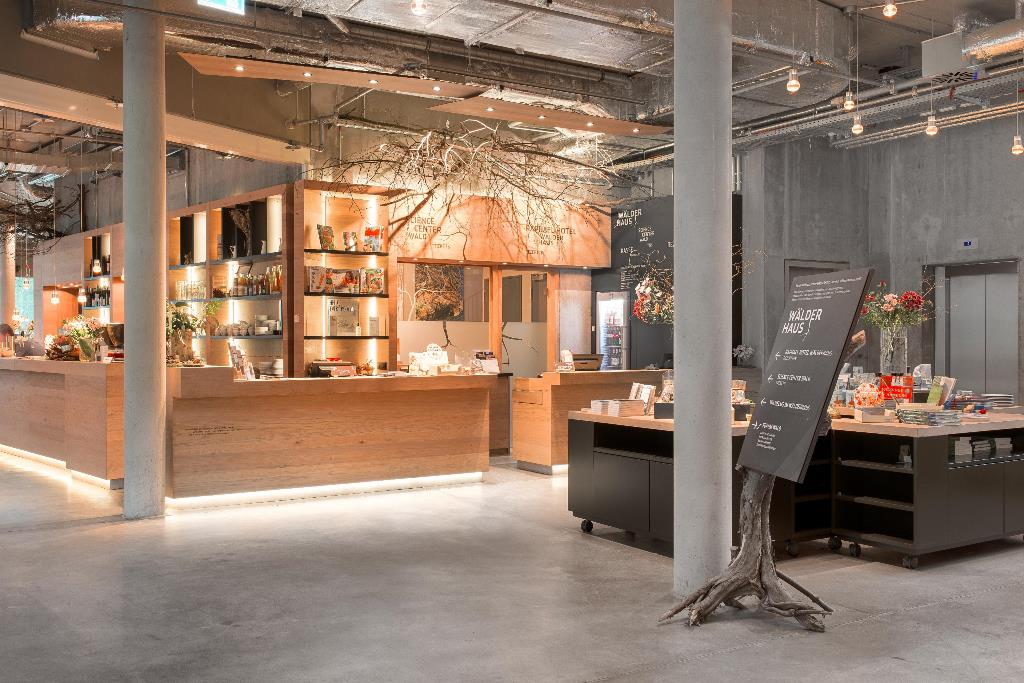
Raphael Hotel Wälderhaus, 2016. 

Raphael Hotel Wälderhaus, 2016. 

The extraordinary wooden façade prominently stands out in the middle of a busy city — made from mostly locally sourced certified wood, the Wälderhaus (which literally means ‘forest house’) is a modern forest delight. “Guests are fascinated by the innovative atmosphere within the hotel and how it is created,” says a Wälderhaus representative. “A nice bonus is, after a visit to the Science Center forest or an overnight stay, you can truly learn something about the connections between the city and nature. The forest house polarises, fascinates, and encourages communication and reflection.” The architecture of the building, despite standing out with the use of materials, fits in with the cityscape. 

Raphael Hotel Wälderhaus, 2016. 

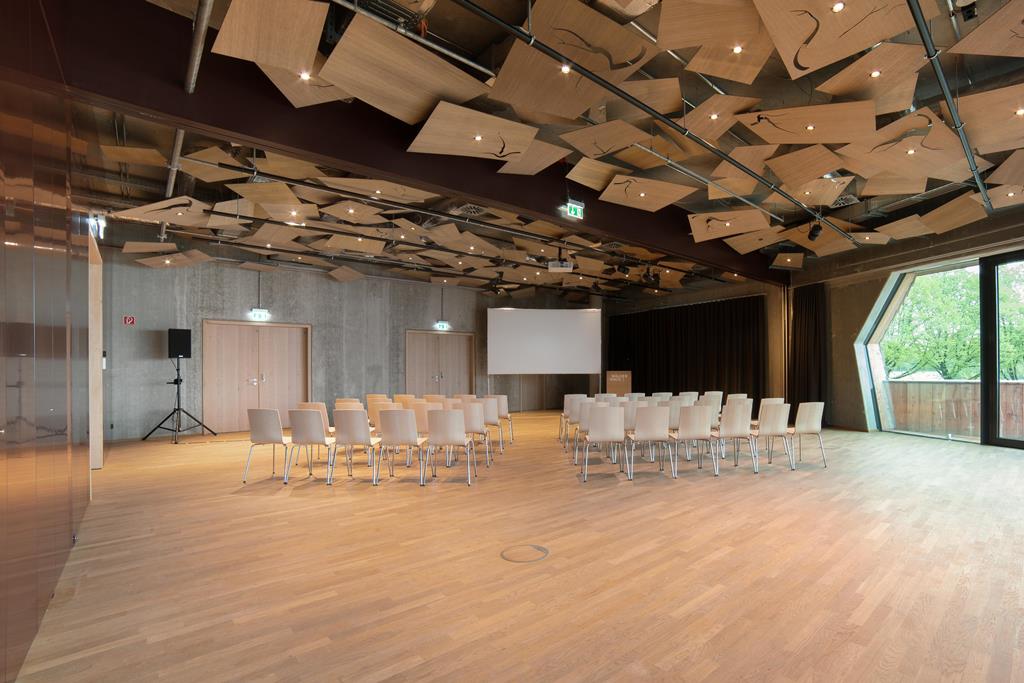
The building meets passive house standards — it is self-sustainable and thus doesn’t damage the environment. In addition to a restaurant, which serves the guests only locally sourced food, the three-star plus standard hotel Raphael Hotel Wälderhaus, with 82 rooms, offers space for special exhibitions and conferences. Here sustainability meets modern innovation to provide the guests with a 360-degree, relaxing holiday. Sleeping between organic cotton sheets and enjoying gastronomic treats at the restaurant ensures you will depart your stay with a well-rested, worry-free mind. As a cherry on top, the Wälderhaus features a green roof, planted with 9000 bushes, 500 hornbeams and various North German tree species.

“The forest house polarises, fascinates, and encourages communication and reflection.”

Raphael Hotel Wälderhaus - Komfort Zimmer.jpg

A fully natural approach is surely gaining popularity. As people are becoming more aware of their impact on the environment, they hold higher standards in terms of sustainability when travelling, as well. The Wälderhaus meets the needs of a conscious traveller. “The guests want as little plastic or artificial in the room as possible, also little electrosmog or superfluous ‘energy eaters’, like minibars. The interest in health is rising, even in healthy indoor air. The architecture should be clear, straightforward, modern, but nevertheless cozy and comfortable.” 

“The interest in health is rising, even in healthy indoor air. The architecture should be clear, straightforward, modern, but nevertheless cozy and comfortable.” 

An eco-approach in the hotel world will definitely be more prevalent in the future. “The eco-concept pays off. We save about 30% energy in the forest house compared to a conventional hotel. The issue will hopefully become even more important.  We like to be pioneers and show that it is possible to [be] sustainable, comfortable and modern at the same time. The number of 100% eco-hotels will surely continue to rise.” The Raphael Hotel Wälderhaus is truly a pioneer in this field, and we cannot wait to see more of such creative, yet environmentally conscious solutions in a modern, urban setting, leaving space for a slower approach to life. 

http://www.raphaelhotelwaelderhaus.de/en

Fonnesbech's DNA of Intelligent Functionality

Fonnesbech is a Danish label with its heritage taking us back as far as to 1847. Without compromising its delicate DNA of intelligent functionality and the tailored quality of impeccable classics coined by Anders Fonnesbech’s legacy, the brand was re-launched in 2014. Aiming to deliver history and craftsmanship not starved of sustainability, Fonnesbech’s vision remains embedded in creating a captivating capsule wardrobe — long-lasting designs that are forever relevant. Fonnesbech’s take on innovating the urban classics may make you forever want to do pirouettes in their elegant silhouettes. We ventured into Fonnesbech’s maison of multipurpose classics with Andrea Friis Laursen, Brand Manager of Fonnesbech.

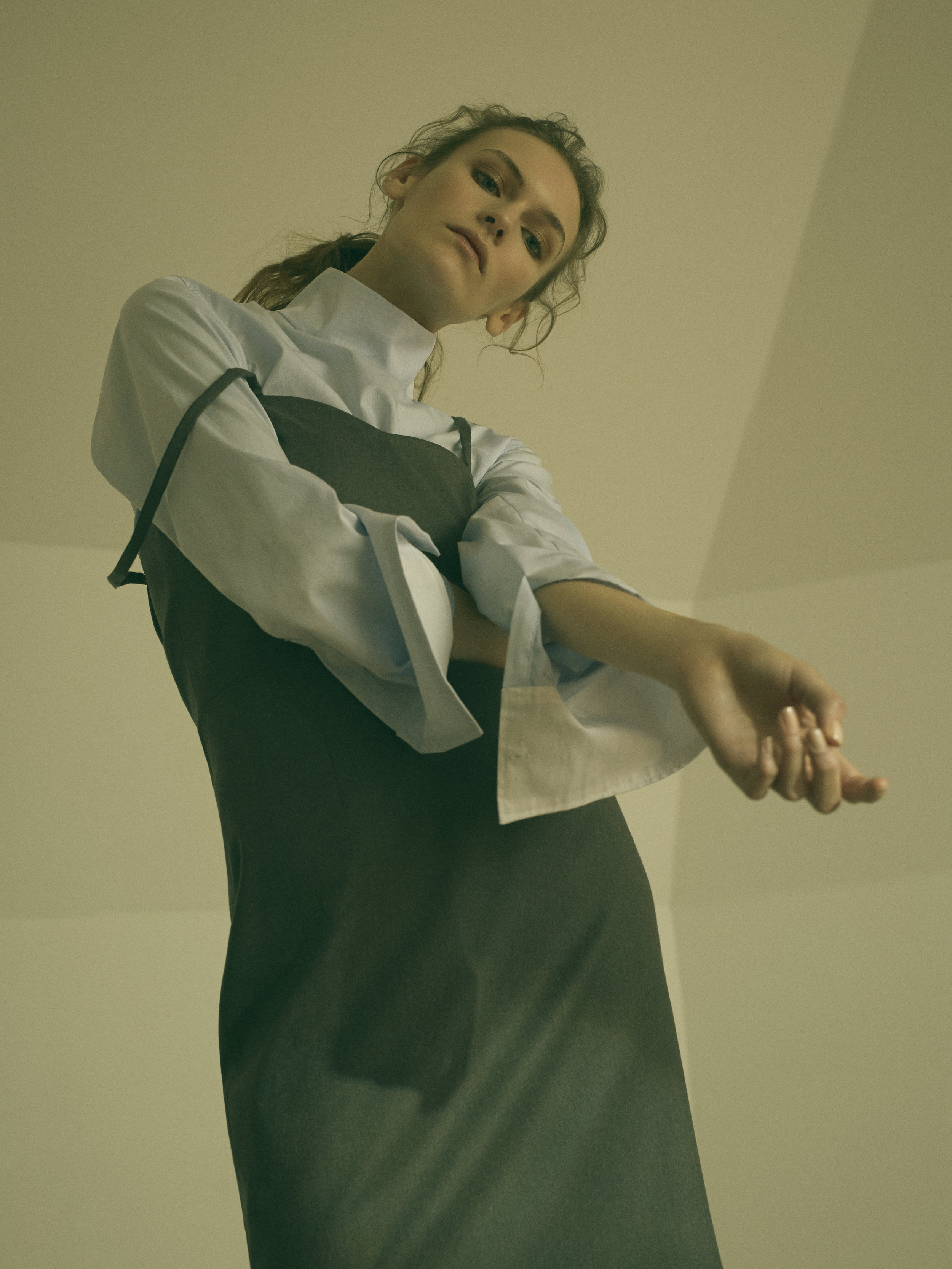
Fonnesbech AW 16/17. 

Fonnesbech AW 16/17. 

What are your brand's principles related to sustainability? 

We get everything produced within Europe. The fabrics we work with need to have a sustainable story, for instance certified GOTS or Oeko-Tex, as well as recycled and organic materials. We are continously searching for new, innovative fabrics. We do not compromise the final look of the product, regardless of sustainable production. 

You mention the multipurpose functionality of your garments.  What's your take on the concept of 'capsule' wardrobe?

We think that having a ‘capsule’ wardrobe in good quality is a luxury nowadays. We like the thought of wearing clothing, which hasn’t affected people, animals or the environment in a detrimental way in the course of its production. We create clothing that contains no harmful chemicals and we aim to design clothing that you feel you can’t live without — be it in five or ten years.

Who is the woman of Fonnesbech?

She is an ambitious, driven and conscious woman, who loves good quality items and classic design with a twist.  

Fonnesbech AW 16/17. 

Fonnesbech AW 16/17. 

How to still look chic with buying less? 

It is essential to build a wardrobe formed of classics in good quality, like the trench coat, the light blue shirt, little black dress and jeans. It is also important to take care of your clothes as much as you care about your own hair and skin. The fibres will stay intact longer, if you lower the temperature when washing.  Do not tumble dry, buy a lint roller, and do iron your shirt every once in a while. It’s actually the little things that matter.

"It is essential to build a wardrobe formed of classics in good quality, like the trench coat, the light blue shirt, little black dress and jeans. It is also important to take care of your clothes as much as you care about your own hair and skin."

What are the main improvements in the clothing industry you look to push forward with Fonnesbech?

We want to be an example of sustainability that is modern, innovative and cool. We want to make timeless clothes you want to keep forever and use season after season, without failing to still look chic. 

In year 2026, where do you see sustainable fashion stand? 

We are wishing for the day to come, where sustainable fashion becomes mainstream. Instead of having to carefully search for sustainable clothing as today, the conventional part will take much less space in stores. The speed of the technological development should make it realistic, or at least that is what we hope for.

https://fonnesbech-cph.com

OSOM: The First Zero-Waste, Upcycled Socks

OSOM brand socks from Los Angeles, CA, are the first zero-waste premium upcycled socks made from eco-friendly yarns that are spun from 95% clothing and textile waste. Osom socks are launched for the holiday season on Kickstarter through December 14, 2016.

The line of OSOM outdoor socks are made by collecting clothing and textile waste, grind the clothing and textile down to be re-spun into a completely new type of yarn. There is no water used in this process, no dyes, no chemicals or toxins. We do not treat the fabrics or yarns with dyes or toxins such as Formaldehyde or heavy metals commonly used in clothing manufacturing that are dumped into waterways, rivers and oceans.

OSOM's manifesto:

REDUCE TEXTILE WASTE: Each year Americans throw out nearly 11 million tons of clothing, approximately 70 pounds per American. Not only does this seriously contribute to the growing waste crisis, it is a true waste considering nearly 99% of textiles are recyclable. 

SAVE WATER: A conventional T-shirt will use 700 gallons and 2.5 ounces of pesticides to create one.  We use absolutely no water or pesticides in the upcycling process of creating the yarn and socks.

NO DYES. NO CHEMICALS:  More than 200 billion of wastewater is dumped into local rivers each year, these chemicals can be found in the food we eat.  We use no dyes or chemicals in the process. 

“As the founder of the company, my only wish is to be able to show people you can do things differently by supporting one another and understanding the natural cycles of life. Nature is our biggest master”

- Patricia Ermecheo

B·COME: Ethical Fashion Studio Revving Up Radical Transparency

We were delighted to meet with Anna and Alba from B·COME Studio, find out more about their amazing brand… 

B·COME Studio, 2016. 

B·COME Studio, 2016. 

Tell us about the team... 

Most importantly, behind B·COME there is a team formed by individuals who are eager and committed to reach the entire world. B·COME is built upon a passionate team formed by multidisciplinary individuals who complement one another.  

What was the catalyst that made you start B COME Studio?

As there couldn’t be another way, B·COME was born after the experience and the aim to become part of the change that the fashion industry is currently experimenting. 

Alba Garcia, co-founder of B·COME, worked inside the textile industry for seven years. During this time she discovered the real system and impact of the fashion circle; which is mainly composed by processes that are increasingly standardised and don’t allow to take out the potential and the resources from others, especially from the providers. As a designer, one doesn’t take the time to discover the real value of each manufacturer, and the rhythm of the work doesn’t allow to explore it in depth. 

At this moment Alba Garcia and her partner Anna Cañadell (co-founder) of B·COME, who has a significant relationship with entrepreneurship business, decided to invest on their first trip to India. As an opportunity to meet possible clients, discover their potential and understand their needs.  From this moment on, the project has been evolving and adapting to each necessity. 

"As a designer, one doesn’t take the time to discover the real value of each manufacturer, and the rhythm of the work doesn’t allow to explore it in depth."

What is your personal relationship with sustainability (Anna & Alba)?

For B·COME there is no doubt that, sustainable fashion is the future. It is not a passing fad nor a way to ‘greenwash’ clean the name of a brand. 

Sustainable fashion at the moment has become a huge trend, and there is a big challenge for the next generations to value the importance to buy ethical/conscious and to start using quality products. It is important to understand that small changes can reduce the environmental impact and the social problem of mass production. At the end, everything is up to the decisions we make for ourselves. 

Tell us about how you work with other brands to build relationships between suppliers, artisans and brands... 

As a multitasking consultancy/agency specialised in sustainable fashion, we mainly advise companies from large corporations to providers who want to incorporate sustainable fashion and processes that are completely transparent within their production system. 

We are the top of the triangle that unifies sustainable providers and European brands. 

B·COME offers brands services including design and consultancy about quality and alternative techniques. 

The main objective is to offer collections that not simply meet the normal standards required for a certain brand, instead we want to offer the most sustainable option.  Always going a step ahead and by the hand of our provider. 

B·COME Studio, 2016. 

B·COME Studio, 2016. 

Tell us about your manifesto... 

RADICAL TRANSPARENCY: 

B·COME believes in people. Together we are and we sum up. Our work consists on facilitating the communication between the retailer (brand) and the provider, throughout transparency and trust, with the final purpose of optimising their collaborations. 

GREEN AND CLEAN:

Building a sustainable fashion business is about passion and seeing beyond present. B.COME believes that green and clean fashion is the future. Product quality and design is equally important as how sustainability it has been made.  We support organisations who believe in ethical fashion and integrity, our aim is to endeavour for ALL of us to be a protagonist of change.

STAY CURIOUS:

Travel is what we do. To discover genuineness is our favourite.

"It is important to understand that small changes can reduce the environmental impact and the social problem of mass production."

B·COME Studio, 2016. 

B·COME Studio, 2016. 

Tell us about some of your recent projects and how B COME helped with the project...

At the moment we are working on several projects, we work with different kind of providers — from small artisans specialised in embroidery by hand (hand craftsmanship) with vertical providers as PRATIBHA (INDIA), who build organic cotton that produce large quantities of cotton, which allow them to work with brands, such as Patagonia, Inditex and C&A. 

We adore to travel and we try to take advantage of our trips to get to know new products and providers. At the moment we fall in love with them, we do whatever is in our hands to introduce them into the European market. 

http://www.bcomestudio.com

#WeAreTesting: Supermood Natural Holistic Beauty

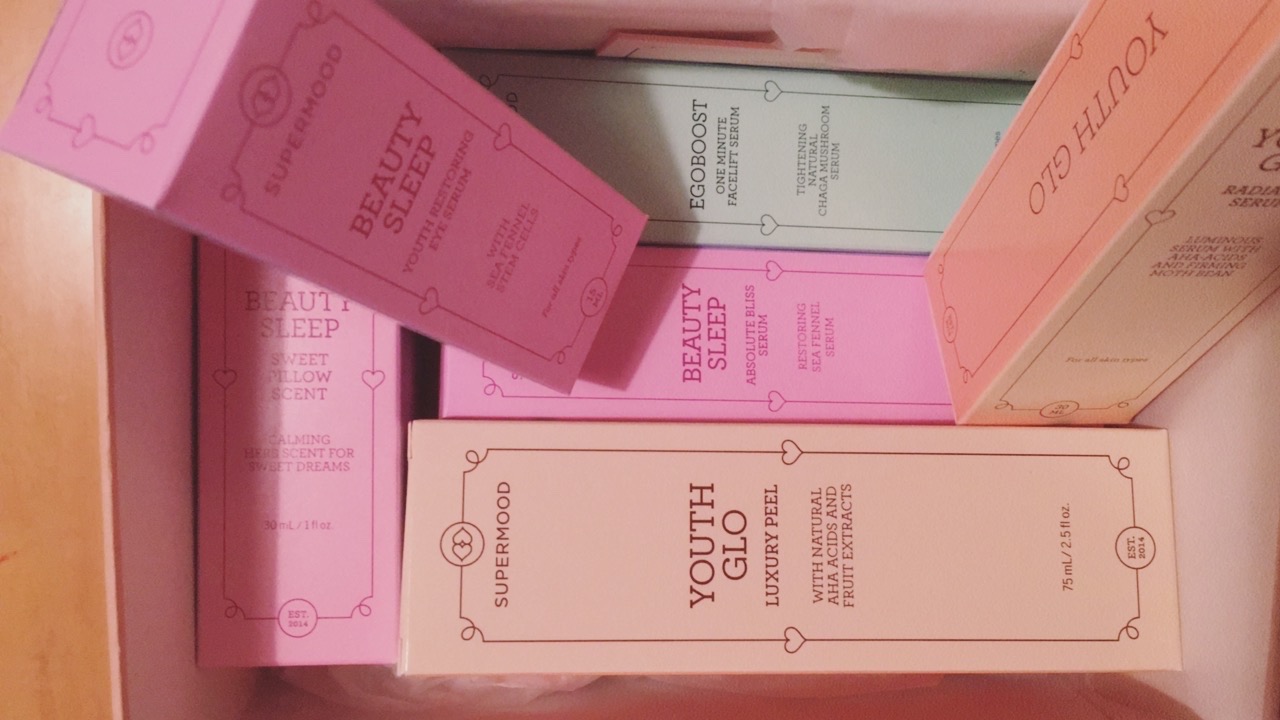
With the secret organic ingredients, such as Chaga mushroom, deriving from faraway Finnish forests, Supermood have chosen to implement a holistic, sensory approach to their facial products. Personally, I’m always more curious to test products that offer a soothing experience for all the senses, and these products are here to prove organic beauty doesn’t need to be less fabulous than your other luxury beauty counter friends. During the course of 10 days, in this competitive rabbit-and-tortoise style race for better, improved skin, I religiously applied these Supermood Holistic Beauty products every day, or some, like the Youth Glo luxury peel, 2-3 times a week, as per instruction.

As a foreword, I haven’t been gifted with exactly the best skin type — sensitivity and occasional allergies and redness are common guests unwantedly ghosting on my delicate facial area, especially before the approaching winter season. For years on end, before I could even think of any decorative cosmetics products I’d like to possess, my best friends were only the strongest apothecary products, promising their best to fight against allergies, rashes and unwanted blemishes. Not so long ago, I turned my beauty counter, then consisting of all kinds of fabulous chemical-induced products, into a cruelty-free, green beauty haven, and I’ve only encountered beneficial effects and lasting results after adapting to that change. 

SUPERMOOD Natural Holistic Beauty, 2016. 

SUPERMOOD Natural Holistic Beauty, 2016. 

Here is what I encountered on my 10-day journey of testing these six wonderful Supermood products.

1. Beauty Sleep Sweet Pillow Scent - Calming Herbal Scent for Sweet Dreams

Each night, just before prepping for bedtime, I sprayed 3 drops gently on my linen pillowcase and let the mist absorb for a few minutes. Although in the beginning, the aroma, reminding me of a mixture of lavender and moss handpicked from Nordic forests, might be slightly off-putting because of it’s strength, it quickly fades away and transforms itself into a milder, more delicate version of itself, awakening your senses to an aromatic experience featuring a herbal bonanza. All these nights, as if by magic, I fell asleep instantly and woke up all freshened and bright, so it surely is more effective than all sleeping pills combined, with a mind-at-ease blissful sleep guaranteed. 

2. Beauty Sleep Absolute Bliss Serum - Youth Restoring Sea Fennel Serum

More often than not, it’s hard to find a serum that has that ideal, balanced texture — not too thick, not too liquid-y. The scent, boasting mild notes of sea fennel, also comes across surprisingly calming, not irritating. The serum is meant for overnight rejuvenation, aiming to deliver youth restoring qualities. By morning, the face is well moisturised, wrapped into a healthy glow and prepared to absorb all other products just perfectly. 10 points out of 10 go to mild, calming scent and light texture, exactly the basic comforting necessities you want to take into bed with you, all extra additives have been left out. 

3. Beauty Sleep Youth Restoring Eye Serum with Sea Fennel Stem Cells

This overnight product ideally pairs with the Beauty Sleep Absolute Bliss serum. Yet it differentiates from the original facial serum by featuring a slightly thicker, creamy texture, which suits well the delicate skin surrounding the eye area. To avoid any irritation, I applied it very carefully with small drops in a circular mode. Waking up, the blue circles around the eyes, which usually derive from excessive hours spent staring at the computer screen and are difficult to get rid of just overnight, had faded away, and it truly seemed to fight redness. In addition, it soothes and softens the eye area, helping to get rid of fatigued skin cells.

4. Youth Glo Luxury Peel with Natural AHA-Acids and Fruit Extracts

I would like to highlight the first thing I appreciate is that the scent is again very mild and delicate, completely contrasting to what you would usually get with, although super-effective, yet chemical peel products. It is recommended to hold the product only for 60 seconds during the first times of use. You don't feel any effects during the peel, other than slight chemical reaction on the surface of the skin. Then the face, slightly irritated from the effects of bioactive ingredients, turns completely burnt red. For preserving your own sane mind, I sincerely recommend avoiding mirrors at that stage. After 30 minutes or so, the redness should gradually diminish, although some patches of redness and irritation may remain, hence this serves as the perfect pyjama-party, pre-sleep peel. I really wouldn't recommend using it on other occasions than before bedtime, when your skin can afford to have its ‘downtime', get restored and repair the healthy glow by the morning hours. After waking up, the skin tone is true-match-all-the-way even, and there are no irritations at sight. What a bliss!

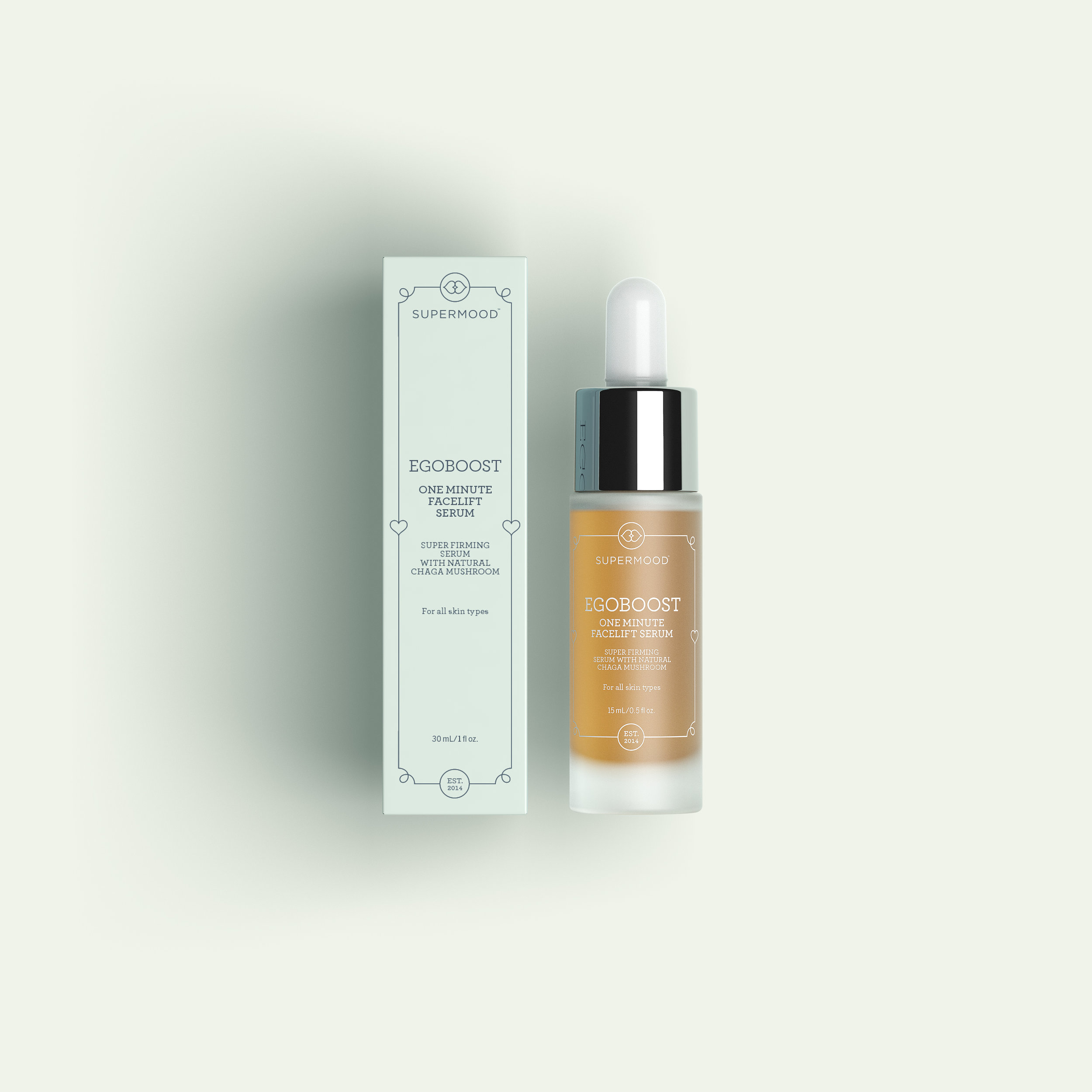
5. Egoboost One Minute Facelift Serum

This product surely stole the show! The first time applying it can succumb your skin to a chain of chemical reactions, whereas the delicate Chaga mushroom scent only complements the product’s promising effectiveness. After at least a minute of absorption time, the product lifts the cheekbones a millimetre higher each time and offers bold definition of the facial contours. I've never encountered my cheekbones to be so clearly defined and toned, than after applying this wunderserum! In the first place, I didn’t quite seem to comprehend what the fun aspect of Supermood is about. The answer lies in this Facelift serum! You have to try this, it's so effective. Fun found in elevated cheeks in a minute. 

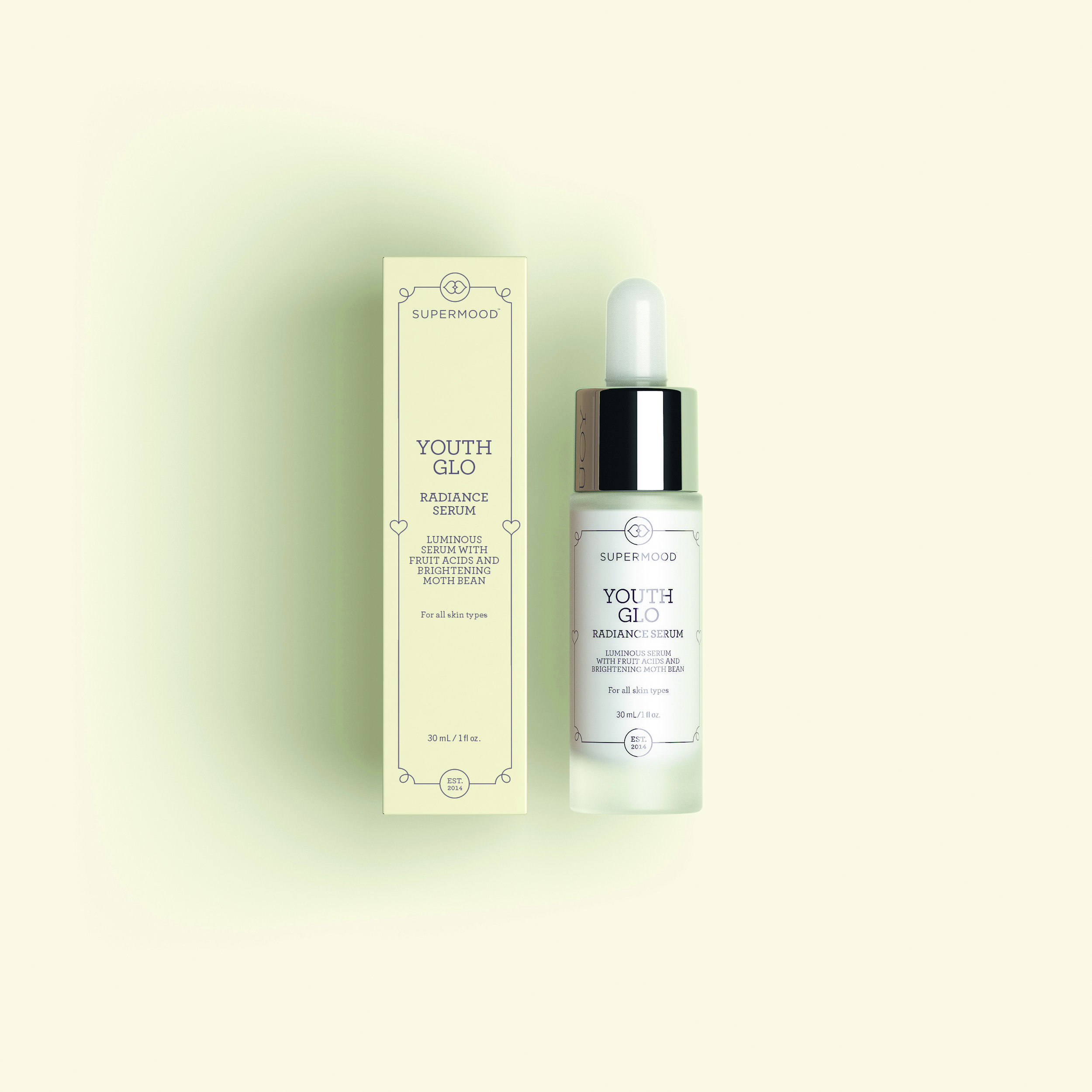
6. Youth Glo Radiance Serum - Luminous Serum with AHA-Acids and Firming Moth Bean

Before the ten days, I would be the person blocking all their pores with layers and layers of heavily applied foundation. After familiarising myself with this Glo Radiance Serum, gone are the days! It has become the best part of my morning routine consisting of transforming myself from a Quasimodo-like,  — one eye blue, another red, craving-caffeine-like-there’s-no-tomorrow —, to a Lets-Start-This-Motivating-Day-With-Glowing-Skin Queen. I hardly wear thick layers of makeup on my face anymore. It seems somewhat irrelevant, when skin can boast an even, irritation-free surface without. If this effective, calming product is not the best thing happened to mankind, it's at least the best thing ever happened to my face. 

During these test days I learned that beauty really does begin from clean skin, which has been taken care of inside out, in a 360-degree way. Your dearest beauty products should not only look good, but offer pampering care for all senses. If you happen to be the person, like myself, who is extremely fuzzy about textures and scents, then this might just be the right everyday beauty range for you. And who could resist these wonderful, yet whimsical glass bottles and pastel packaging? It’s good to know honest products can actually honestly deliver. I found all that’s missing is a little bit more time for our phone-switched-off-it’s-me-time elevating beauty routine… 

After all, outer radiance can only flourish, when inner harmony is in place. 

nitsn: Bespoke Furniture Filling Living Rooms with Ideas of Eternity

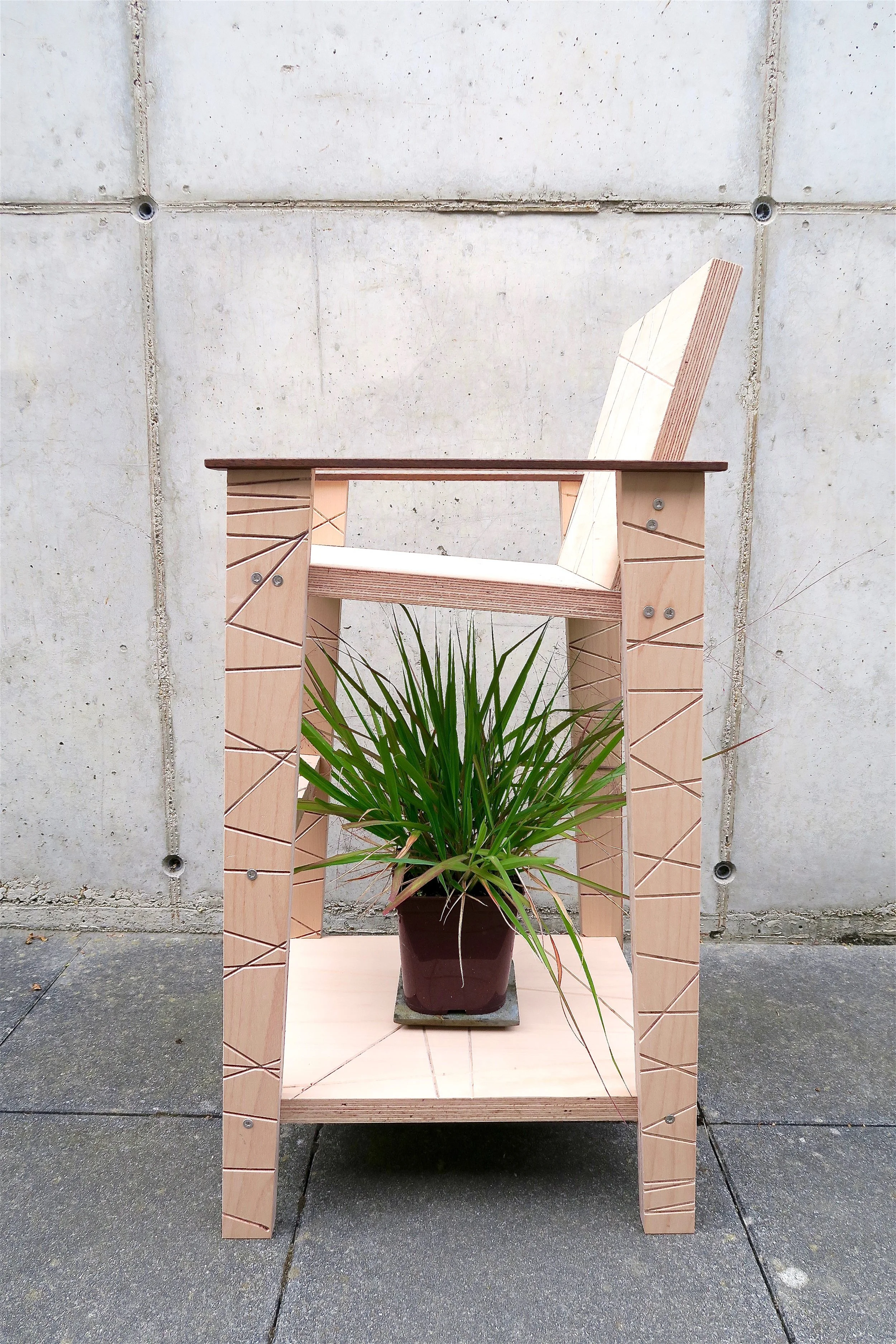
nitsn is a sustainable French furniture studio excelling in bespoke, one-of-a-kind furniture with a modern twist. In addition to the slow and carefully considered approach, the minimalist furniture — each wooden piece touched up with metal inlays, carved textures or laser engravings to boast unique identity — aims to recreate the short-lived moments of our existence. By connecting ideas of sustainability and renewal, the very essence of nitsn's bespoke pieces is to remind us that nothing is eternal, and that way bring the practice of mindful, circular economy closer to the end customer. Savant went into further detail with Roman Wisznia, nitsn's creative and technical mastermind, regarding what connects the creativity and sustainability behind the brand. 

nitsn sustainable bespoke furniture, 2016. 

nitsn sustainable bespoke furniture, 2016. 

What's unique about the way you imagine furniture? 

I see furniture as pieces of nature that we shape to suit human needs. I like to work with natural materials — wood for structure, wool and cotton for fabrics, small touches of polished metals here and there — then shape them with absolute straight lines, like only humans can do. This way, the pieces reflect both the nature and the human side, a perfect balance between the two.

Because every tree is unique, every home is unique, and every person, too, it makes sense to me for each piece of furniture to be unique as well. I understand why mass production eventually has become a standard in the industry. Yet, I like to believe that there is space for a more meaningful approach to work, and to life. Humans have this wonderful ability to think of new things and be creative, and this should be applied every single day. Mass production doesn’t encourage creativity. 

What are your brand’s values?

I try to develop genuine relationships with my customers. It matters to me that people who purchase my pieces, understand who I am, and how these pieces were made. My goal is to make sure the person, who will sit on my chair or put their vest on my coat-hanger, is conscious of the seed that was planted to provide the wood they are using. Perhaps even conscious about the person who planted that seed, and realise that everything works in a circular model. Having a neutral environmental impact is therefore an essential part of the consistency and sense I am looking for. 

nitsn sustainable bespoke furniture, 2016. 

nitsn sustainable bespoke furniture, 2016. 

Do you think customers today show more interest towards one-of-a-kind pieces and furniture brands with a story? 

I think our societies have reached the peak in bare buy-and-throwaway consumption model. We’ve come to realise that acquiring mass-produced things at an ever increasing pace does not contribute to filling the shells of our existence in any way. I believe we need fewer things, things which will make sense to us and that we will truly care for. Making one-of-a-kind pieces that will live once and never be produced again is a way to remind us that nothing on this planet is eternal, and that the shortness of life is what eventually gives it meaning. The story is equally important, and it has to be clear. If people don’t understand the story, they cannot understand the role they play in it.

nitsn sustainable bespoke furniture, 2016. 

nitsn sustainable bespoke furniture, 2016. 

What made you start with nitsn? 

After I graduated from my mechanical engineering school in France, I went to Stockholm’s Royal institute of Technology, where I specialised in renewable energy systems. That Scandinavian adventure certainly played a role in giving me a taste of a slow and cosy lifestyle, as well as minimalist design. After that, I worked for an international organisation known as the authority in energy security and energy-related environmental concerns for three years. I enjoyed it, but quickly realised that I would feel more at ease creating my own means of expression in this world. nitsn appeared to be the answer, a creative activity that would gather all my interests — visual arts, craftsmanship, engineering, politics and environment — in one place. I taught myself woodwork mostly on Youtube, spent my first salaries on professional tools, and began this adventure.

"I understand why mass production eventually has become a standard in the industry. Yet, I like to believe that there is space for a more meaningful approach to work, and to life."

What’s the niche you aim to bring to the market?

With nitsn I chose the approach to have very simple designs for each piece, that I call my standards, and to differentiate them with subtle touches, so that every piece ends up being different. These touches can consist of metal inlays, carvings or laser engravings. They are usually fine-detailed and time-consuming works, but I make each of my pieces an artwork of their own. My standard designs are just like a blank canvas on which I can express my creativity to create a continuous sequence of unique pieces.

nitsn sustainable bespoke furniture, 2016. 

nitsn sustainable bespoke furniture, 2016. 

What's your opinion about sustainability trend in furniture design?

Making stools from recycled cardboard is great and can prove very useful. Finding uses for things that are abundant and that should be recycled is one important part of the equation. Another part of this equation is to reconsider the way we consume objects and furniture. My personal approach is to keep things simple and focus on the essential. Whatever I can do without, I’ll do without. Owning fewer things gives me extra freedom that I really enjoy. It doesn’t mean you shouldn’t redecorate your place when you feel like it, but perhaps there is another way than throwing away your sofa, chairs and coffee table, and replacing them with new ones. We never get tired of seeing trees in the forest. Yet they are the same trees, only the change in seasons make us see them differently, and their appeal is renewed every year. Perhaps there is something to think about there. 

"Making one-of-a-kind pieces, that will live once and will never be produced again, is a way to remind us that nothing on this planet is eternal, and that the shortness of life is what eventually gives it meaning."

What’s your brand’s link with sustainability?

My approach to sustainability is to make robust and great looking pieces that my customers will want to take care of. The goal is for the piece to last at least as long as the time it took for the tree that provided the wood to grow. I also committed to planting one new tree for each piece produced. If my customers have a garden, I offer them to plant it there. This way, I create the missing link in completing ‘the circle’.

nitsn sustainable bespoke furniture, 2016. 

nitsn sustainable bespoke furniture, 2016. 

What are the materials you are using, where are they sourced from?

The wood I use exclusively comes from French forests that I know are managed responsibly. I have nothing against foreign woods, but the further away you get them, the harder they become to trace. It matters to me that I know exactly where the things I use come from. And using local resources simply makes more sense. Because France only produces linen and velvet, I had to look elsewhere for my wool. I’ve had a great experience with a Danish producer, which manufactures absolutely stunning fabrics made in a transparent and environmentally conscious way.

"My standard designs are just like a blank canvas on which I can express my creativity to create a continuous sequence of unique pieces."

What trends appeal to you personally in furniture design?

 Because I don’t have an academic background in design, I really draw what comes to my mind and find a way to make it work once I am settled in the workshop. I don’t usually follow the design trends. I like things simple, and straight lines are usually the simplest way between two points. My engineering background encourages me to understand, how everything is made and how it works together. I think this is reflected in my designs in which every part is visible and every joint shows clearly. Nothing is hidden. Some of the decorations I make, like metal inlays, can require complex calculations and very fine adjustments of CNC machinery. Yet, when you look at the finished piece, a straight line of brass triangles inlayed in a piece of walnut, following an inclined plane, looks very simple. I think that’s where the beauty of the nitsn pieces really stands out — in this apparent simplicity. 

nitsn sustainable bespoke furniture, 2016. 

nitsn sustainable bespoke furniture, 2016. 

Do you reckon French customers are more after comfort, visual appeal or a mix of both?

When it comes to comfort vs visual appeal, I am not sure what the French market is after. Because being ergonomic is such a crucial quality for a chair, I made the designs of my chairs entirely parametric, so that I can adjust any dimension and angle to precisely fit my customer’s body types. I just need the measurements of 5 parts of the body and my computer can instantly generate a fully bespoke chair according to their measures. I don’t think any mass-produced chair can achieve such a perfect fit. It’s like wearing couture as opposed to ready-to-wear.

Learn more:

http://www.nitsn.fr/

https://www.instagram.com/nitsn_france/

https://www.facebook.com/nitsn.fr

A Fond Adieu to Dark Circles: New! LUMI Superbloom Serum Duo

Just last month we tested out their Tundra line and could not stop talking about it. Get excited - LUMI has launched a new serum duo Superbloom to boost your youthful look and restore your skin of the stress and imbalances obtained from the harsh Nordic climate. 

Words: Johanna Raudsepp

LUMI: Superbloom Face & Eye Serum duo, 2016. 

LUMI: Superbloom Face & Eye Serum duo, 2016. 

Superbloom is a magical natural phenomenon where a desert in perfect weather explodes in a sea of flowers. The high-end Superbloom serums will re-energise you and your skin. 

LUMI Superbloom face serum heals and prevents signs of ageing, restoring the elasticity and giving your skin a silky-smooth finish. It’s especially suitable for those, who prefer a water-free product during winter. 

Say goodbye to dark circles! LUMI Superbloom eye serum reduces swelling and gives a dewy finish. The ingredients in this cooling serum moisturise and smooth your skin. Your sensitive skin will be protected and rejuvenated. 

Read more on the new products here.

You can find the latest products on LUMI’s website www.luminordic.com. You can check out LUMI on social media @luminordic for their latest product releases and tips on skincare.

Chic Made Consciously: How to be a Sustainable Shopper and Create a Lasting Wardrobe

Sustainable fashion is on the rise and there is a shift in brands offering more eco-friendly and ethical goods. But what exactly does it mean to be a sustainable or conscious shopper?

Oftentimes, people assume that clothing or accessories deemed sustainable are not chic or trendy. In fact, it is extremely easy to stay fashionable and sustainable, too. I believe that being a sustainable shopper is about bringing more awareness to the present moment before making decisions surrounding what we buy. Stop and question how the company is operating in terms of social and environmental responsibility, and take the time to analyse your purchasing decision from a place of consciousness instead of impulse. 

Author: Cassandra Ciarallo

Coral Necklace by Cassandra Ciarallo, Chic Made Consciously 2016.

Coral Necklace by Cassandra Ciarallo, Chic Made Consciously 2016.

Here are some simple guidelines to help reduce your fashion footprint:

Read your labels. By reading the label you can find out what country your clothes are made in and what material it is made out of. Did you know the average worker abroad makes .03 cents for every $10 t-shirt we buy? Unfortunately, there is a huge amount of human exploitation to make the items we wear, so ensure you are supporting companies that are FairTrade!

The material used also has a big impact on our environment. Choose fibers that are natural over synthetic: cotton, linen, silk, hemp, modal (beech tree pulp), tencel (tree pulp), rayon (if specified from bamboo or tree pulp) or wool. Any product made from recycled materials is also a great choice!

Buy less: Ask yourself: Do I really need this new thing? Instead of buying new, get creative with your closet by reusing old pieces in a new way, accessorising or repurpose an old piece into something totally new! One of my favourite quotes by Vivienne Westwood is: “Buy less, choose well, make it last”.

Shop second-hand: A fun way to spice up your closet is to visit your local thrift store for vintage clothing or swap clothes with your friends. It’s a great way to find some unique pieces and feel good about having a low environmental footprint. 

Do your research: Google “brand name + sustainability/responsibility” or use http://projectjust.com/ to find out how the company is operating in terms of social and environmental responsibility. Once you know, then you can decide if you want to shop there! 

Ask questions and demand transparency! I truly believe it is up to each and every one of us as consumers to make a difference. Ask as many questions as you can to help you decide if you are ready to support that brand. Ensure that the company is being transparent with how they run and what their impact is to the planet and the people. I like to think of it like we are casting a vote with each dollar we spend, so make sure you are doing so wisely!

Use these easy tips to reduce your fashion footprint and be a more conscious shopper! For more updates on how to live a more mindful life and be part of this global fashion movement join my Facebook group here

Cassandra Ciarallo is the founder & designer of Chic Made Consciously, a social enterprise dedicated to social and environmental responsibility through fashion. Her line of handmade accessories are fair trade & upcycled from tire inner tubes. Visit her collection here at: http://chicmadeconsciously.com/

Behind the Brand: Getting Under the Skin of Supermood’s Holistic Approach

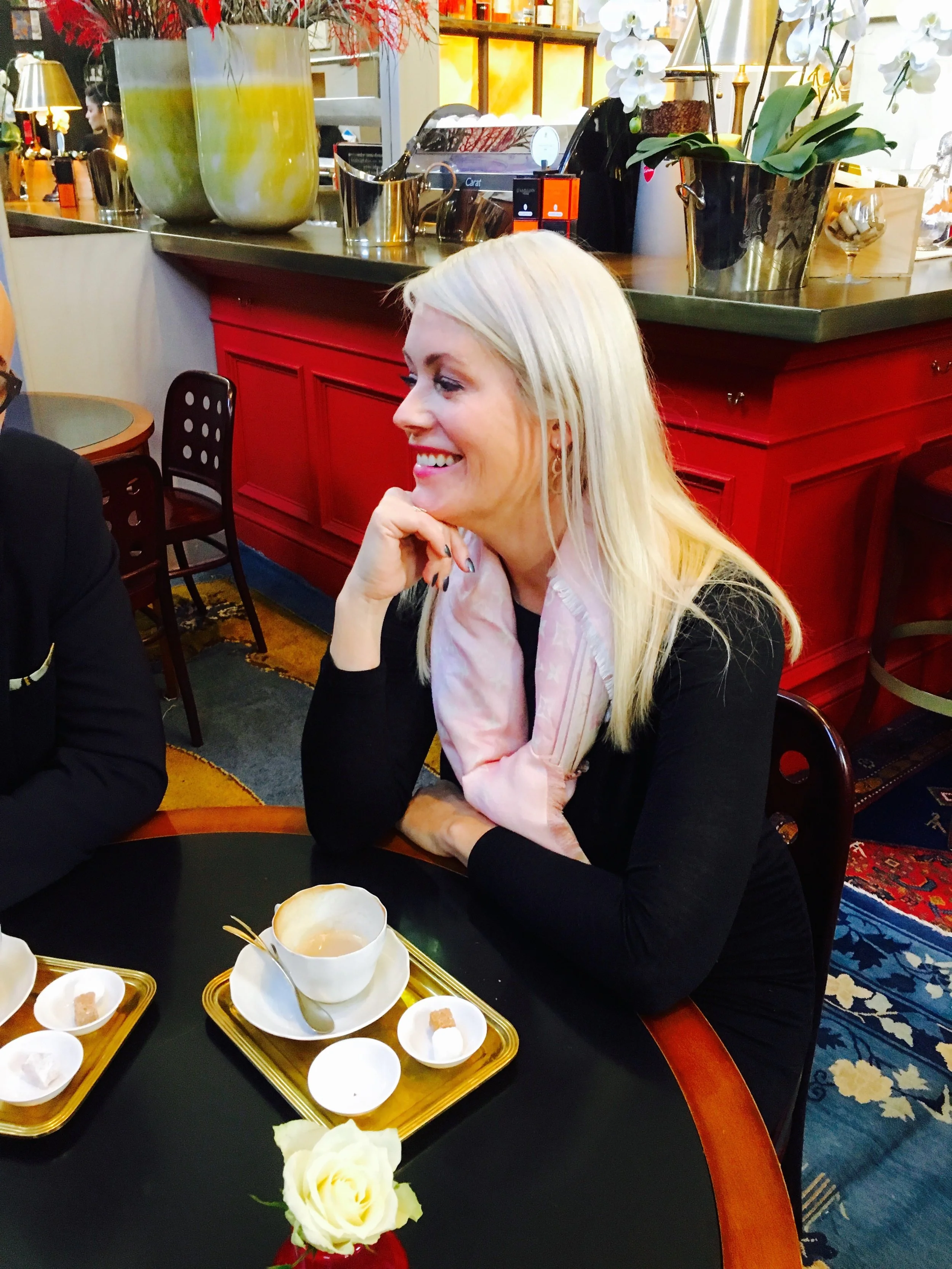
Supermood is a holistic natural beauty brand from Finland, founded by Anne and Joni Kukkohovi, a charismatic duo and life partners. Both have background working in advertising and were settled in the bustling media industry until a few years back, when Anne, a former model and current TV host, was bidding adieu to her rewarding career, to set a base for something more close to heart — beauty with holistic approach. 

Anne’s Nordic, but uncharacteristically lively character is a measured yin to Joni’s soft-spoken, calculated yang, whereas the couple is a living proof to the statement 'team work makes the dream work'. The duo essentially represents the core values of its brand — as I should know first-hand, being Scandinavian calls for a reserved, demure nature, which they bring to the table with an unusual, whimsical twist. 

I shared a friendly coffee and a chat with the couple at Maison Assouline, my favourite secret hideaway in London, and explored the way they think — although the duo still adamantly insists I avoid the O-word — organic beauty and its role in the cosmetics industry today… 

Egoboost: 'Inner Beauty' smoothie with nutritional supplement powder of Chaga and collagen.

Egoboost: 'Inner Beauty' smoothie with nutritional supplement powder of Chaga and collagen.

Anne (A), what’s your personal relationship with the beauty industry?

I’ve been breathing fashion and beauty since I was a teenager. First time, I was 12 and I saw ELLE magazine, that’s where it hit me. For years, I was a well-know model in Finland, and then I got into the advertising business. I have also been working as a TV host for many famous shows, such as ‘Finland’s Next Top Model’, and I’ve been an ambassador for different beauty brands before. Supermood is where everything combines — the communication, art direction, and my passion for beauty. I always knew I wanted to have my own brand at some point. 

Joni (J), what does your role as a Marketing Director at Supermood incorporate?

First of all, we are married, so it’s a family affair! We both have a background in advertising and we also met through the industry. Then, we worked at the same agency for a while, which wasn’t such a great idea. Soon after, Anne decided to go for the entrepreneur route. She is taking care of the product concepts and the vision of the brand, and understanding of what sort of beauty trends there are, and how to approach it. Therefore, my job is to interpret her vision and then execute, so I am in charge of the branding and marketing, but I still do work as a ECD (Executive Creative Director) at an advertising agency.

You started in 2014 from scratch.

Both nod in agreement. 

J: I think one of the things that really helped is our agency background in advertising. You’re used to story-telling, you have an idea [of what you want to produce], and then you just have to find the right people, brief them and direct the final outcome.

Joni and Anne Kukkohovi, founders of Supermood.  

Joni and Anne Kukkohovi, founders of Supermood.  

How does the whole process work with product concepts?

J: Firstly, Anne briefs the chemist at the factory, with some references and desired ingredients. Then what follows is that our chemists make samples and she gives feedback — this is too rich, too heavy, too intense, and so forth and so forth. The testing and trial-and-error lasts 4-6 rounds, until you find that product you’ve imagined. 

A: For me it is important that they understand, how I want the products to feel, what are the ingredients, expected texture, and time it takes to show effects. They also ask, if we want to have a long INCI (ingredient) list. Of course not, because the cosmetics we are doing are very pure and transparent, so we try to avoid anything extra.

The direction you have chosen with Supermood is (excuse me for the categorisation) organic or green beauty. How does it resonate with our cultural climate and the current beauty industry trends?

A: This is the present and future already ingrained in any other field, it’s in cars, in textiles, in design— it’s everywhere — so I don’t even emphasise the green aspect so much.

J: People often ask, what’s the one thing that sets us apart, but it’s never just that, it’s more about our approach to beauty. It’s not about some compound or secret ingredient. We wanted to build a brand for women who love prestige brands, and are accustomed to using premium luxury brands, but are conscious about green beauty and also the fact that most of the established beauty brands are synthetic. 

A: Unfortunately, there was not any kind of alternative for these women at the time, because most of the green beauty looks to be kind of home-made to an extent.

How do you see the industry change in the future?

J: We feel that in 10 years, it’s not about green beauty, it’s about just beauty. We have to be something else as a brand, not just organic beauty.

A:  The way we see it, in 10 years, all production will have a greener approach and a more conscious impact. What we do emphasise on, is the holistic approach.

Could you elaborate on the concept of ‘holistic beauty’?

A: Holistic beauty means that you have edible things, then we have a range of ‘therapeutic’ products, we aim to bring together a ‘holistic triangle’ of beauty, so it’s not merely one-dimensional. The world around us inspired us for such approach — you see people and they want to eat well and they want to take care of themselves in a 360-degree way. 

J: In the beginning it is about your skincare — what kind of things you put on your skin, whether it is artificial or organic, what gets into your system. That’s one part. Then it is about the edibles, what you put into your body as nutrition. Then the last part is, how do you sleep, how do you give your body time to recover. 

Beauty Sleep: youth restoring night cream. 

Beauty Sleep: youth restoring night cream. 

So that’s the holistic, conceptual approach. I saw a pillow in your range and then the moist for it…what’s the beauty pillow about?

A, J: This is also a part of the therapeutic aspect of the ‘holy triangle of beauty’, which comes with a scent for the pillow or bed linen. 

A: Coming up with product concepts doesn’t need to be always led by one way of thinking — calming herbs and florals, they have been used for years and years, but you wouldn’t think of featuring a pillow in a beauty range. 

What inspired you?

A: The idea came, when we were once staying at a hotel with huge and, by what they looked like, comfortable pillows, but when I woke up, I had deep ‘pillow lines’  (Anne illustrates theatrically, with bold gestures) all over my face. So the pillow I invented helps to avoid those lines and doesn’t give you any puffiness at all. When you think about it, you spend one third of your life in bed, so it is crucial to have special beauty equipment for bedtime. 

J: We got the idea when we read about this surgeon, who developed a pillow for post-surgery patients. Obviously when you’ve had something done, you cannot sleep on a regular pillow, because otherwise your face will become disfigured. He had designed this kind of pillow that distributes the pressure differently; it doesn’t impact on your face, or leave any lines on your face, as it does with your regular pillow. It was based on a study about how blood circulation goes into your face.

Who is the buyer the pillow is meant for? 

A: These niche items are for ‘beautyholics’, like me. I can make out the kind of people by looking in their eyes, sometimes they just grab the pillow and they don’t even talk to me, and then the others ask, ‘Why would you do this?’, and I would think, maybe it’s not exactly for you. 

"We aim to bring together a ‘holistic triangle’ of beauty, so it’s not merely one-dimensional. The world around us inspired us for such approach — you see people and they want to eat well and they want to take care of themselves in a 360-degree way." 

Who is that person who lives and breathes Supermood?

A: It is somebody who is in the radar of the new things, takes care of themselves; someone who is conscious about the natural environment and wants to do something about it, but also wants to look good and wants to look fashionable at the same time. I call it like the ‘W Hotel and Wholefoods person, or Net-A-Porter user, so this person is present all over the world. It’s not about age. It’s not about what ethnicity you represent. It’s not about where you live. It’s more about the way you think about things. 

When it comes to working with your partner… do you experience any creative clashes at all?

J: Constantly!

A: It hasn’t always been easy, to be honest. But I think the vision we have is the same. We are a young brand, so it always comes down to those big decisions and projects. But vision-wise we don’t have so many differences —

J: Artistic differences! 

A: But it’s more about, how to use time more efficiently and find the right deals. 

J: We are both hands-on engaged in our other projects, like TV and advertising, so time is our biggest challenge. When we do have a lot on the table, we always consider all the options and priorities. Often Anne says adamantly, ‘this is more important, and we have to go forward with it!’. They’re not exactly arguments, but a way of making out what’s actually important. 

And what saves you in those moments?

A: We are really passionate about the whole thing.

Meanwhile Anne tells a story about presenting to a bunch of male investors in a fancy, formal setting, whereas Anne, keeping her enthusiastic spirit, had invested a great deal of inner passion in storytelling. The reaction was the men going, ‘It’s just a beauty brand. Why are you so passionate about it?’, whilst Anne lost her temper explaining the passion comes from the fact that it’s her vision, and she has invested a lot of time and energy in it, ‘Of course I am passionate about it,’ Anne tells full of spark.

What brought you to London?

A: We are going to have a Space N K launch in December, which will be our biggest UK distributor. It’s a huge thing for us, as you have all the best boutique brands in there, so we are exploring the possibilities of publicising the launch and PR with them.

J: Other markets that we’ve been working with so far have had an incredible response. We are hoping that UK follows the same route, because it is such a big and important market. It is a priority for us to break through here. 

Anne boasts such a radiant, youthful glow that I unapologetically turn to her, asking whether she uses her own products. Her confident smile reveals there shouldn’t be a degree of doubt.

What’s the absolute must-have product from your range?

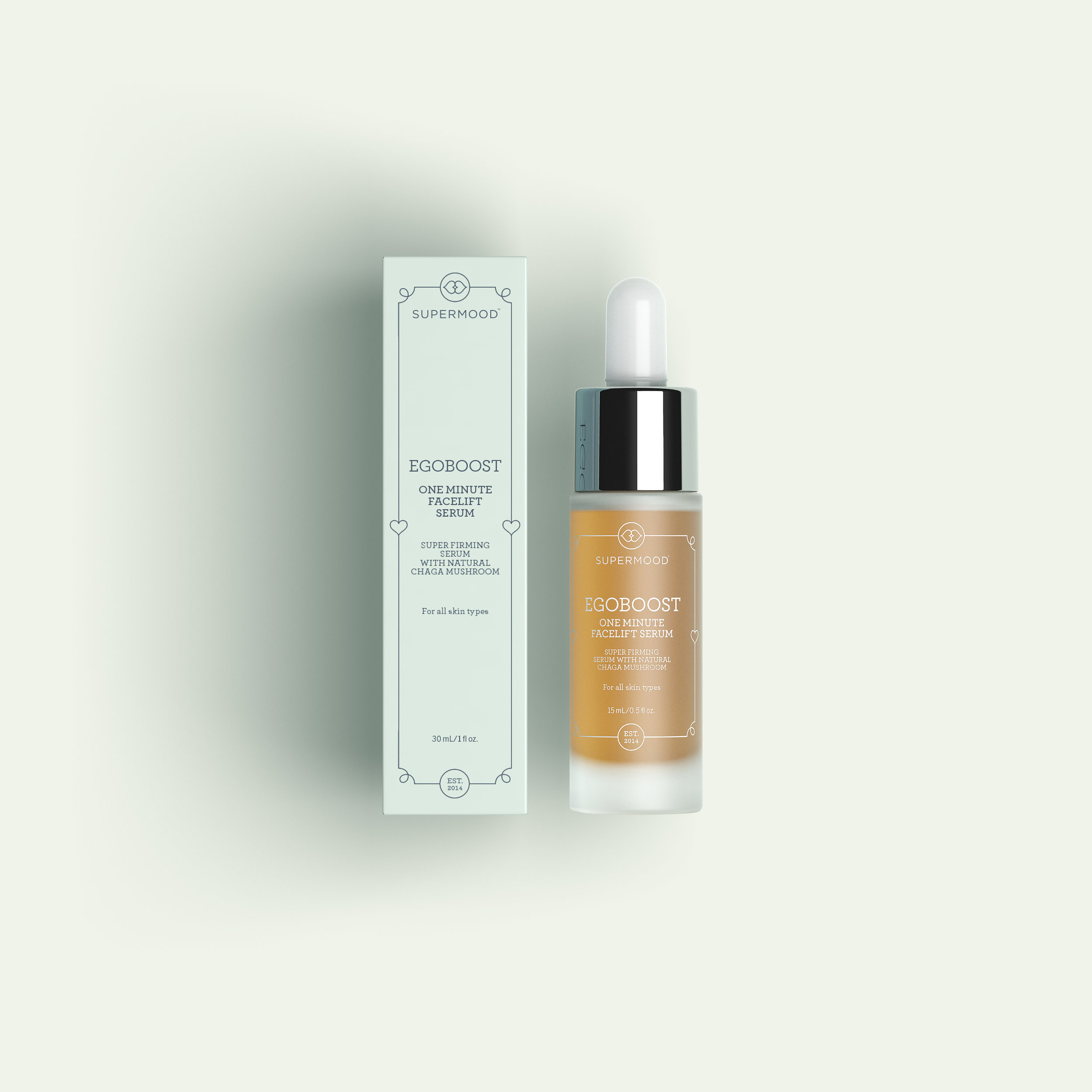
A: 1-minute facelift. It’s one of our key products, although we think that there is no one main product on the importance scale. It does exactly what it says effectively — it really tightens your face and skin up. We also sell it in the States.

J: It’s the most effective sculpting and lifting serum, which also happens to be everyone’s favourite. 

Egoboost: 1-minute facelift serum with Chaga. 

Egoboost: 1-minute facelift serum with Chaga. 

A: We also have an eye serum, ‘Eyes Wide Open’. [To illustrate its effectiveness], first showing it to Joni, I put it on one eye and I said, ’compare it to my other eye’, — he is really suspicious about everything — and he said: ‘It’s really bigger than the other one!’. So it is very effective. For that we used a local Finnish ingredient called Chaga [immune-boosting medicinal mushroom]. That’s one of the main ingredients we use. 

J: We do all the testing with Anne. As she said, I am fairly suspicious about claims of products. When we started, I wasn’t a big believer in organic cosmetics, so I told her strictly that it is adamant that our products are effective, it is not enough that we do great branding. That was like the first penny drop for me.

A: It’s still very few people, who want everything to be super clean, without any extra additives. We are not aiming for that, but the actual effectiveness. 

Egoboost: 'Eyes Wide Open' firming serum for the eye area. 

Egoboost: 'Eyes Wide Open' firming serum for the eye area. 

Where do you produce?

A: We found a local Finnish factory — despite exploring opportunities as far as up to Italy — but I wanted it to be closer to me to learn, too. They are the first Eco-Certified factory in Finland, so they know about that sort of [organic] cosmetics. 

It is, of course, very difficult to get those 100% pure components. Where do the ingredients come from?

A: Chaga comes from a city called Kauhava in Finland, and it is handpicked. The other ingredients are the produce of organic farming in different places around the world. It does depend on the climate a lot — when you have monsoon rain somewhere, it might affect some ingredients. They cannot assure the stability of the supply country, but therefore they make sure it at least feels the same. 

J: Chaga is basically forged — it grows wild on the trees and that’s the main reason why products with it cannot get eco-certified, because it’s not controlled by any agency, so it remains the type of product that you cannot classify as ‘certified or organic’, even though, in theory, it is found in its purest form. The EU legislation hasn’t quite figured it out, whether its a pharmaceutical, but through clinical tests it has been proven to be super effective.

A: Chaga has been used in folk medicine for thousands of years and also in Eastern countries, because it makes your skin really even. Also, when you consume it, it is really good for your immune system. It has a very strong effect — say, when you are taking antibiotics, then I would recommend using or consuming it. 

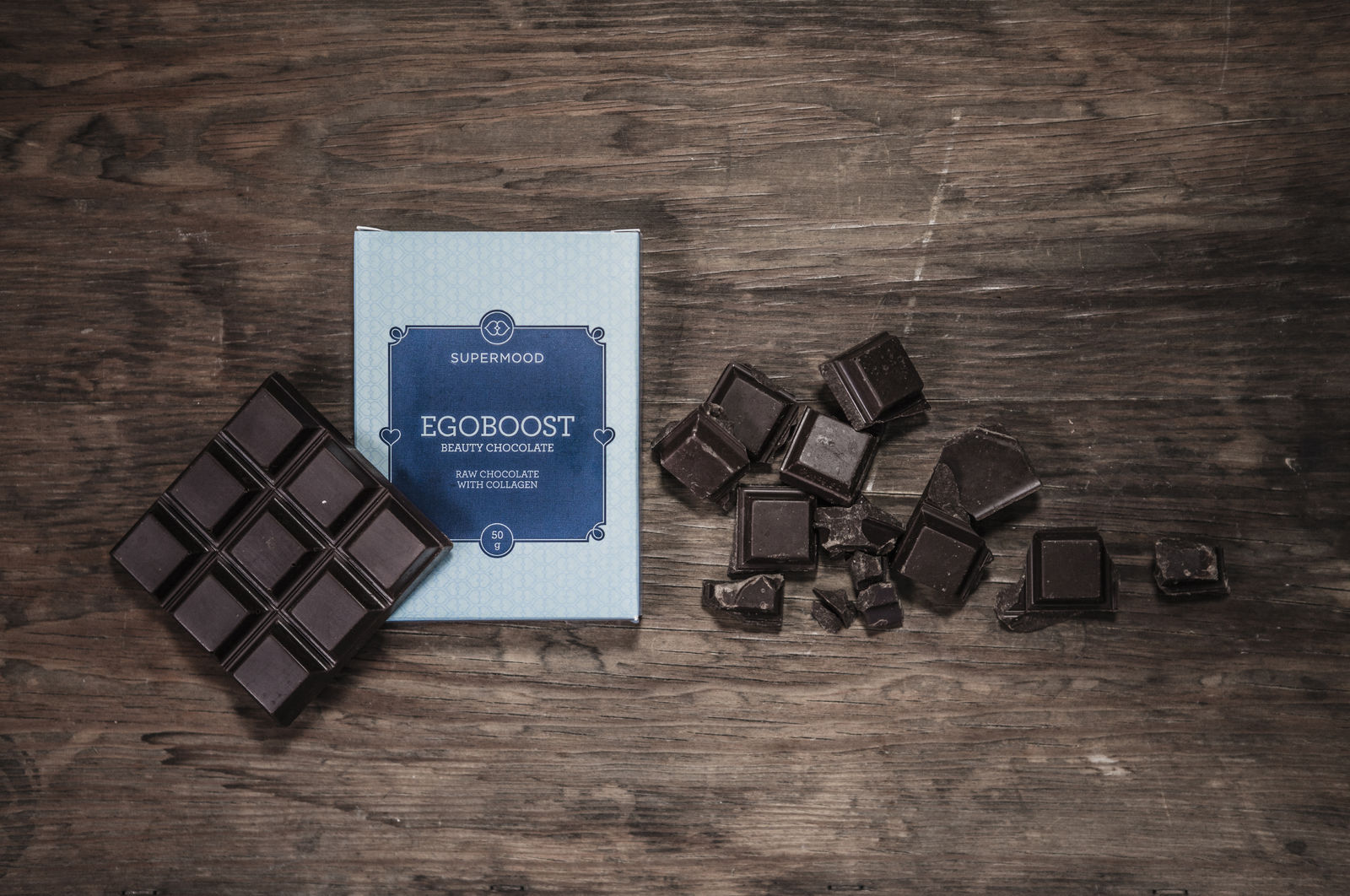
Egoboost: 'Beauty Chocolate', raw chocolate with collagen.  

Egoboost: 'Beauty Chocolate', raw chocolate with collagen.  

J: We feature it in some of the skincare products — we have a collagen and Chaga powder, which is a nutritional supplement that you can blend into your milkshake or smoothies, and also with collagen we have beauty chocolate, which is a raw chocolate.

I saw it! Yes, it is the most interesting product. What’s it about?

A: Everybody says that. Whispers to Joni, ‘now you hear it’. 

Laughter. Anne, it was your idea, of course. 

A: It’s raw chocolate, so we are not talking about organic chocolate, which is heated up. Raw chocolate is cold-pressed, and it’s really expensive to produce. Often the issue is that the price and quality of cocoa varies seasonally. 

J: When it comes to chocolate or coffee, it reacts to weather changes, which right away affects the price of chocolate. A lot of things are very expensive to produce, because you cannot have such volumes, where you could leverage the buying power. That’s why green beauty, as well as green fashion, is still highly priced. 

"Brands have to evolve over time, but at the moment, I think the more layers and perspective you have as a brand, it becomes actually more interesting rather than having this Bauhaus-aesthetic approach."

In today’s visual culture, branding is very important. Advertising background and knowing you target audience well surely works in your favour…

A: People usually want to categorise into either ‘organic’ or ‘normal’, meaning synthetic cosmetics category. We are organic, but that is secondary. On the ferries that are going between Finland and Estonia, they’ve put us next to Dior. That’s exactly the perfect way to explain it, ‘just place it where the good brands are’.

J: It is less to do with the fact that it is green and more to do with communication and how we build the story and tell it, but it doesn’t have to scream ‘green’ at the display. It has to look nice on your bathroom shelf or nightstand. It has to fit in with your other luxury cosmetics.

I have even gone for some beauty stuff only for the packaging, then found out later, ‘oh, it’s 98% bio-organic, too’. 

A: I remember one retailer telling me ‘I don’t care what’s in it, I take it!’, when they saw those pictures of what Joni did — illustrative mockup in 3D of all the range.

J: The first question is, ‘Is it appealing?’, when you see it in the store. Then the next question is, if it something that I would actually use for its utility.

Youth Glo: luxury peel with AHA acids and fruit extracts.

Youth Glo: luxury peel with AHA acids and fruit extracts.

I am totally in love with the packaging!

J: The appearance is a bit whimsical, we felt that green beauty is often strictly about the environment, using green hues. With such personal product that should reflect the user’s values, we wanted to give ourselves that permission to be funny. 

A: [It is] a little bit bold. Also flirty, because when you see all those lines that we have hidden in the packaging — if you find them, you find them. Those little messages. 

J: If we would have chosen kind of a minimalistic and clean, too rigid, approach, I am not sure that would be as much fun to do, it just wouldn’t be entirely ‘us’. If we don’t get that first reaction that it looks good, then it’s a lost case. 

There is this standard Scandinavian minimalism style and approach. Are these the end days?

A: There are so many brands doing this, so it’s already too repetitive. 

J: I think this [Maison Assouline] coffee shop is a good concept — the new and the old meets. The age of ultra design and ultra clean is getting old, in my opinion. In that sense, brands have to evolve over time, but at the moment, I think the more layers and perspective you have as a brand, it becomes actually more interesting rather than having this Bauhaus-aesthetic approach. 

Egoboost: 'Inner Beauty' supplement with Chaga and collagen. 

Egoboost: 'Inner Beauty' supplement with Chaga and collagen. 

Tell us an interesting story.

A: There was an online beauty retailer in California looking to buy our beauty chocolate — 2 pieces, which is a very small quantity. The argument was going on and on, because that comes without saying, sending them to California would have been much more expensive than the chocolate itself (8.00 euros per small chocolate bar). We were having this argument with her, because we couldn’t lose the money, when sending the package that far. It went on and on, and then we just told her to order the chocolate directly from our web store, if she really wants it, but we cannot sell 2 pieces of chocolate and pay for it ourselves. That’s how it goes, when you have a really small business and you don’t want to take the risk of losing the profit. 

J: The comfortable things for us are to work on the brand and on the products, but what we didn’t have experience with, when we got into advertising or out of advertising, is how to handle logistics worldwide. The fact that we are based in Finland, Helsinki, doesn’t make handling international shipping any easier. I think that’s a crucial part of starting your own brand — that it’s a learning curve every day.

What is on hold for the near future?

J: Hopefully, what this UK opportunity brings is that we get more exposure and find new partners to work with, that way we can also grow the business and a bigger audience. 

What are you missing?

A: We need some rest! I wouldn’t mind a nice holiday together…

That leaves Joni reminiscing about a personal father and son road trip in the States with their teenage son few years back, whilst Anne was working at the other end of the country in the midst of mid-summer blizzard. Both admit they haven’t gone on a holiday for long time. 

All goes slowly, step-by-step. 

A: Yes, because we’re still very young. Well, we’re not young, but at least the company is… 

Anne says in her confident tone of wit. We then burst into laughter and finish off the  when so much effort goes into conversation  already cold cappuccinos. 

I hug them goodbye, and rushing through the city’s marvellous Mayfair district, baby pink Supermood goodie bag loosely waving in hand, I soon find myself comfortably in a relaxed super mood. 

www.supermood.fi