Behind the Brand: Getting Under the Skin of Supermood’s Holistic Approach

Supermood is a holistic natural beauty brand from Finland, founded by Anne and Joni Kukkohovi, a charismatic duo and life partners. Both have background working in advertising and were settled in the bustling media industry until a few years back, when Anne, a former model and current TV host, was bidding adieu to her rewarding career, to set a base for something more close to heart — beauty with holistic approach. 

Anne’s Nordic, but uncharacteristically lively character is a measured yin to Joni’s soft-spoken, calculated yang, whereas the couple is a living proof to the statement 'team work makes the dream work'. The duo essentially represents the core values of its brand — as I should know first-hand, being Scandinavian calls for a reserved, demure nature, which they bring to the table with an unusual, whimsical twist. 

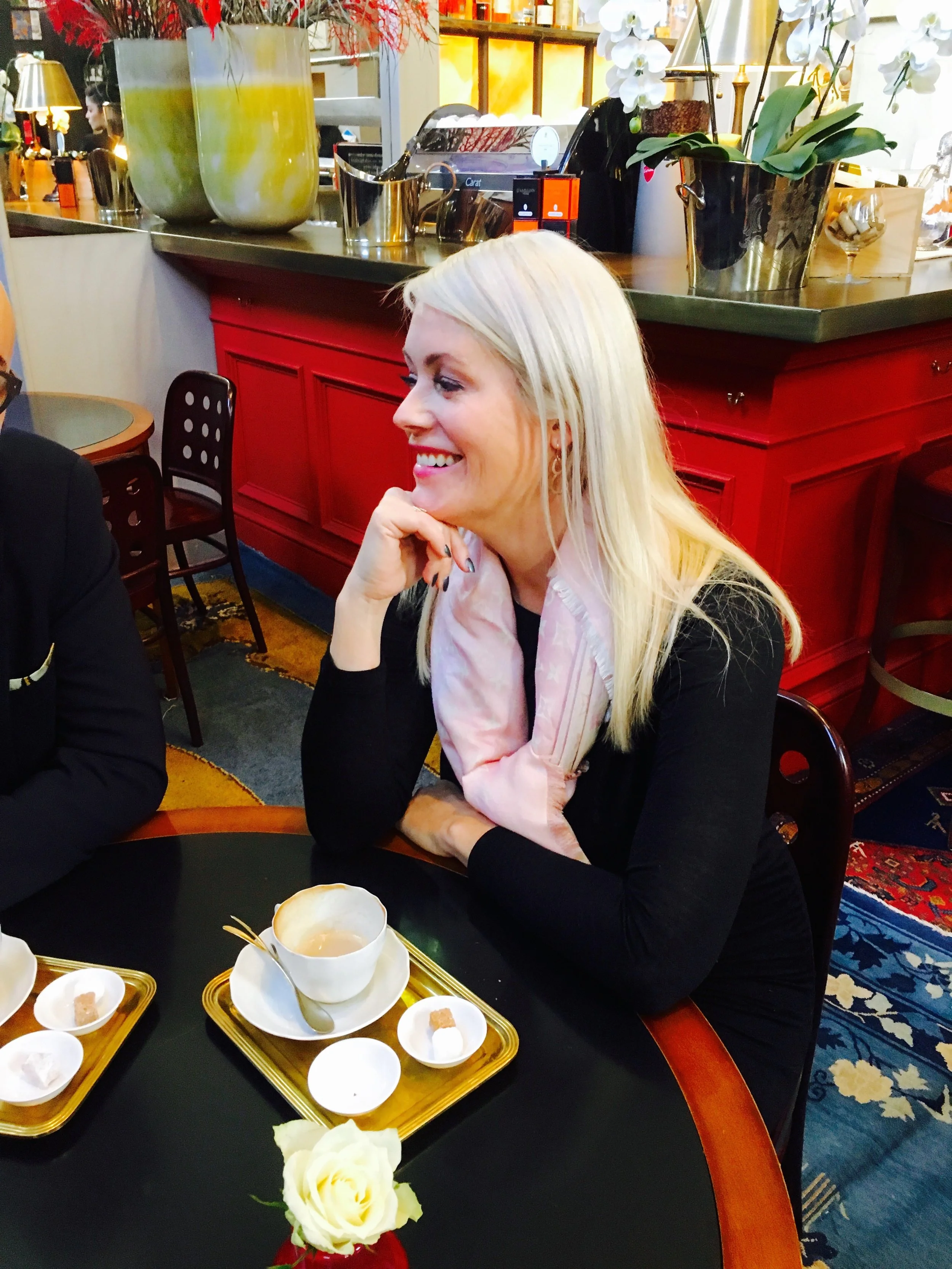
I shared a friendly coffee and a chat with the couple at Maison Assouline, my favourite secret hideaway in London, and explored the way they think — although the duo still adamantly insists I avoid the O-word — organic beauty and its role in the cosmetics industry today… 

Egoboost: 'Inner Beauty' smoothie with nutritional supplement powder of Chaga and collagen.

Egoboost: 'Inner Beauty' smoothie with nutritional supplement powder of Chaga and collagen.

Anne (A), what’s your personal relationship with the beauty industry?

I’ve been breathing fashion and beauty since I was a teenager. First time, I was 12 and I saw ELLE magazine, that’s where it hit me. For years, I was a well-know model in Finland, and then I got into the advertising business. I have also been working as a TV host for many famous shows, such as ‘Finland’s Next Top Model’, and I’ve been an ambassador for different beauty brands before. Supermood is where everything combines — the communication, art direction, and my passion for beauty. I always knew I wanted to have my own brand at some point. 

Joni (J), what does your role as a Marketing Director at Supermood incorporate?

First of all, we are married, so it’s a family affair! We both have a background in advertising and we also met through the industry. Then, we worked at the same agency for a while, which wasn’t such a great idea. Soon after, Anne decided to go for the entrepreneur route. She is taking care of the product concepts and the vision of the brand, and understanding of what sort of beauty trends there are, and how to approach it. Therefore, my job is to interpret her vision and then execute, so I am in charge of the branding and marketing, but I still do work as a ECD (Executive Creative Director) at an advertising agency.

You started in 2014 from scratch.

Both nod in agreement. 

J: I think one of the things that really helped is our agency background in advertising. You’re used to story-telling, you have an idea [of what you want to produce], and then you just have to find the right people, brief them and direct the final outcome.

Joni and Anne Kukkohovi, founders of Supermood.  

Joni and Anne Kukkohovi, founders of Supermood.  

How does the whole process work with product concepts?

J: Firstly, Anne briefs the chemist at the factory, with some references and desired ingredients. Then what follows is that our chemists make samples and she gives feedback — this is too rich, too heavy, too intense, and so forth and so forth. The testing and trial-and-error lasts 4-6 rounds, until you find that product you’ve imagined. 

A: For me it is important that they understand, how I want the products to feel, what are the ingredients, expected texture, and time it takes to show effects. They also ask, if we want to have a long INCI (ingredient) list. Of course not, because the cosmetics we are doing are very pure and transparent, so we try to avoid anything extra.

The direction you have chosen with Supermood is (excuse me for the categorisation) organic or green beauty. How does it resonate with our cultural climate and the current beauty industry trends?

A: This is the present and future already ingrained in any other field, it’s in cars, in textiles, in design— it’s everywhere — so I don’t even emphasise the green aspect so much.

J: People often ask, what’s the one thing that sets us apart, but it’s never just that, it’s more about our approach to beauty. It’s not about some compound or secret ingredient. We wanted to build a brand for women who love prestige brands, and are accustomed to using premium luxury brands, but are conscious about green beauty and also the fact that most of the established beauty brands are synthetic. 

A: Unfortunately, there was not any kind of alternative for these women at the time, because most of the green beauty looks to be kind of home-made to an extent.

How do you see the industry change in the future?

J: We feel that in 10 years, it’s not about green beauty, it’s about just beauty. We have to be something else as a brand, not just organic beauty.

A:  The way we see it, in 10 years, all production will have a greener approach and a more conscious impact. What we do emphasise on, is the holistic approach.

Could you elaborate on the concept of ‘holistic beauty’?

A: Holistic beauty means that you have edible things, then we have a range of ‘therapeutic’ products, we aim to bring together a ‘holistic triangle’ of beauty, so it’s not merely one-dimensional. The world around us inspired us for such approach — you see people and they want to eat well and they want to take care of themselves in a 360-degree way. 

J: In the beginning it is about your skincare — what kind of things you put on your skin, whether it is artificial or organic, what gets into your system. That’s one part. Then it is about the edibles, what you put into your body as nutrition. Then the last part is, how do you sleep, how do you give your body time to recover. 

Beauty Sleep: youth restoring night cream. 

Beauty Sleep: youth restoring night cream. 

So that’s the holistic, conceptual approach. I saw a pillow in your range and then the moist for it…what’s the beauty pillow about?

A, J: This is also a part of the therapeutic aspect of the ‘holy triangle of beauty’, which comes with a scent for the pillow or bed linen. 

A: Coming up with product concepts doesn’t need to be always led by one way of thinking — calming herbs and florals, they have been used for years and years, but you wouldn’t think of featuring a pillow in a beauty range. 

What inspired you?

A: The idea came, when we were once staying at a hotel with huge and, by what they looked like, comfortable pillows, but when I woke up, I had deep ‘pillow lines’  (Anne illustrates theatrically, with bold gestures) all over my face. So the pillow I invented helps to avoid those lines and doesn’t give you any puffiness at all. When you think about it, you spend one third of your life in bed, so it is crucial to have special beauty equipment for bedtime. 

J: We got the idea when we read about this surgeon, who developed a pillow for post-surgery patients. Obviously when you’ve had something done, you cannot sleep on a regular pillow, because otherwise your face will become disfigured. He had designed this kind of pillow that distributes the pressure differently; it doesn’t impact on your face, or leave any lines on your face, as it does with your regular pillow. It was based on a study about how blood circulation goes into your face.

Who is the buyer the pillow is meant for? 

A: These niche items are for ‘beautyholics’, like me. I can make out the kind of people by looking in their eyes, sometimes they just grab the pillow and they don’t even talk to me, and then the others ask, ‘Why would you do this?’, and I would think, maybe it’s not exactly for you. 

"We aim to bring together a ‘holistic triangle’ of beauty, so it’s not merely one-dimensional. The world around us inspired us for such approach — you see people and they want to eat well and they want to take care of themselves in a 360-degree way." 

Who is that person who lives and breathes Supermood?

A: It is somebody who is in the radar of the new things, takes care of themselves; someone who is conscious about the natural environment and wants to do something about it, but also wants to look good and wants to look fashionable at the same time. I call it like the ‘W Hotel and Wholefoods person, or Net-A-Porter user, so this person is present all over the world. It’s not about age. It’s not about what ethnicity you represent. It’s not about where you live. It’s more about the way you think about things. 

When it comes to working with your partner… do you experience any creative clashes at all?

J: Constantly!

A: It hasn’t always been easy, to be honest. But I think the vision we have is the same. We are a young brand, so it always comes down to those big decisions and projects. But vision-wise we don’t have so many differences —

J: Artistic differences! 

A: But it’s more about, how to use time more efficiently and find the right deals. 

J: We are both hands-on engaged in our other projects, like TV and advertising, so time is our biggest challenge. When we do have a lot on the table, we always consider all the options and priorities. Often Anne says adamantly, ‘this is more important, and we have to go forward with it!’. They’re not exactly arguments, but a way of making out what’s actually important. 

And what saves you in those moments?

A: We are really passionate about the whole thing.

Meanwhile Anne tells a story about presenting to a bunch of male investors in a fancy, formal setting, whereas Anne, keeping her enthusiastic spirit, had invested a great deal of inner passion in storytelling. The reaction was the men going, ‘It’s just a beauty brand. Why are you so passionate about it?’, whilst Anne lost her temper explaining the passion comes from the fact that it’s her vision, and she has invested a lot of time and energy in it, ‘Of course I am passionate about it,’ Anne tells full of spark.
What brought you to London?

A: We are going to have a Space N K launch in December, which will be our biggest UK distributor. It’s a huge thing for us, as you have all the best boutique brands in there, so we are exploring the possibilities of publicising the launch and PR with them.

J: Other markets that we’ve been working with so far have had an incredible response. We are hoping that UK follows the same route, because it is such a big and important market. It is a priority for us to break through here. 

Anne boasts such a radiant, youthful glow that I unapologetically turn to her, asking whether she uses her own products. Her confident smile reveals there shouldn’t be a degree of doubt.

What’s the absolute must-have product from your range?

A: 1-minute facelift. It’s one of our key products, although we think that there is no one main product on the importance scale. It does exactly what it says effectively — it really tightens your face and skin up. We also sell it in the States.

J: It’s the most effective sculpting and lifting serum, which also happens to be everyone’s favourite. 
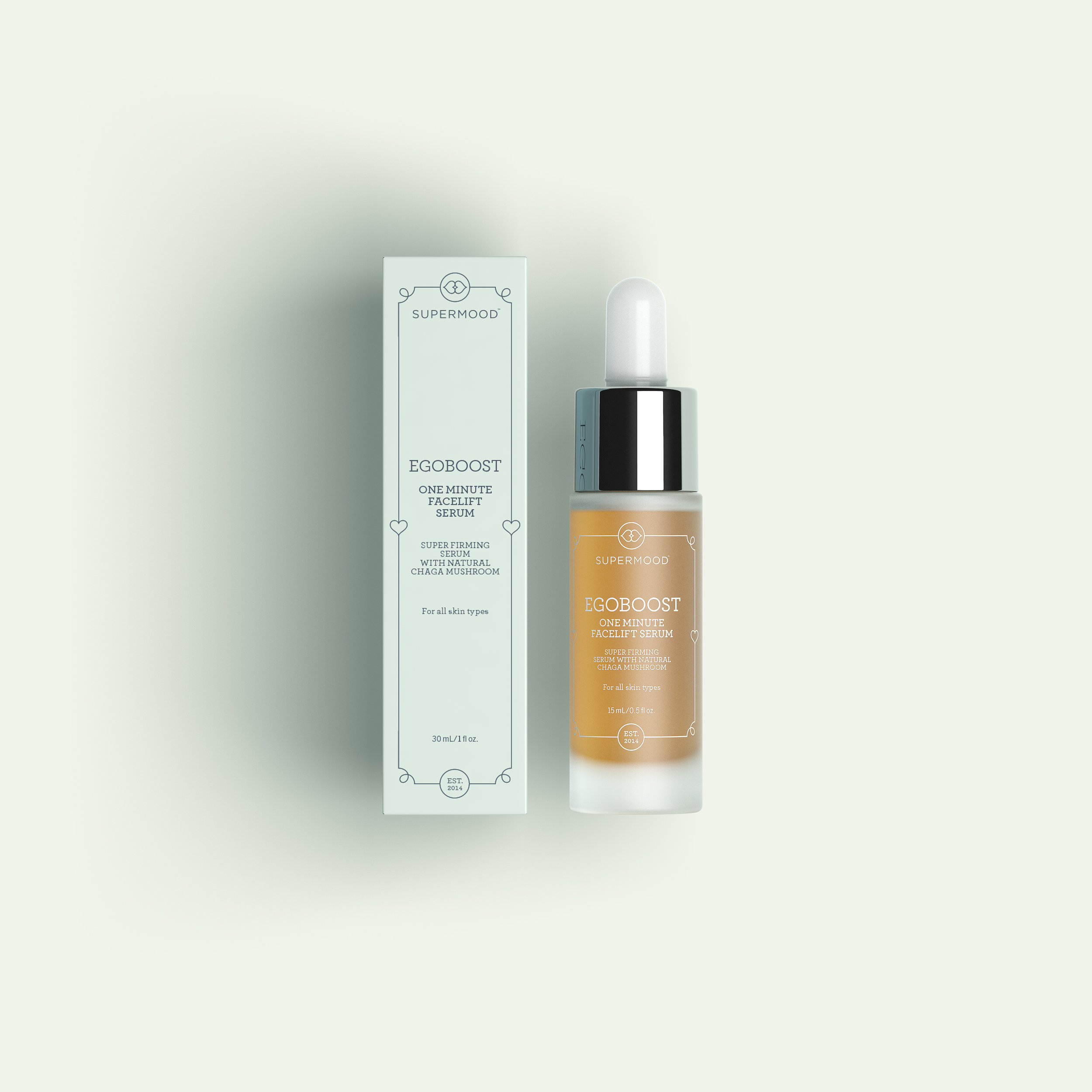
Egoboost: 1-minute facelift serum with Chaga. 

Egoboost: 1-minute facelift serum with Chaga. 

A: We also have an eye serum, ‘Eyes Wide Open’. [To illustrate its effectiveness], first showing it to Joni, I put it on one eye and I said, ’compare it to my other eye’, — he is really suspicious about everything — and he said: ‘It’s really bigger than the other one!’. So it is very effective. For that we used a local Finnish ingredient called Chaga [immune-boosting medicinal mushroom]. That’s one of the main ingredients we use. 

J: We do all the testing with Anne. As she said, I am fairly suspicious about claims of products. When we started, I wasn’t a big believer in organic cosmetics, so I told her strictly that it is adamant that our products are effective, it is not enough that we do great branding. That was like the first penny drop for me.

A: It’s still very few people, who want everything to be super clean, without any extra additives. We are not aiming for that, but the actual effectiveness. 

Egoboost: 'Eyes Wide Open' firming serum for the eye area. 

Egoboost: 'Eyes Wide Open' firming serum for the eye area. 

Where do you produce?

A: We found a local Finnish factory — despite exploring opportunities as far as up to Italy — but I wanted it to be closer to me to learn, too. They are the first Eco-Certified factory in Finland, so they know about that sort of [organic] cosmetics. 

It is, of course, very difficult to get those 100% pure components. Where do the ingredients come from?

A: Chaga comes from a city called Kauhava in Finland, and it is handpicked. The other ingredients are the produce of organic farming in different places around the world. It does depend on the climate a lot — when you have monsoon rain somewhere, it might affect some ingredients. They cannot assure the stability of the supply country, but therefore they make sure it at least feels the same. 

J: Chaga is basically forged — it grows wild on the trees and that’s the main reason why products with it cannot get eco-certified, because it’s not controlled by any agency, so it remains the type of product that you cannot classify as ‘certified or organic’, even though, in theory, it is found in its purest form. The EU legislation hasn’t quite figured it out, whether its a pharmaceutical, but through clinical tests it has been proven to be super effective.

A: Chaga has been used in folk medicine for thousands of years and also in Eastern countries, because it makes your skin really even. Also, when you consume it, it is really good for your immune system. It has a very strong effect — say, when you are taking antibiotics, then I would recommend using or consuming it. 
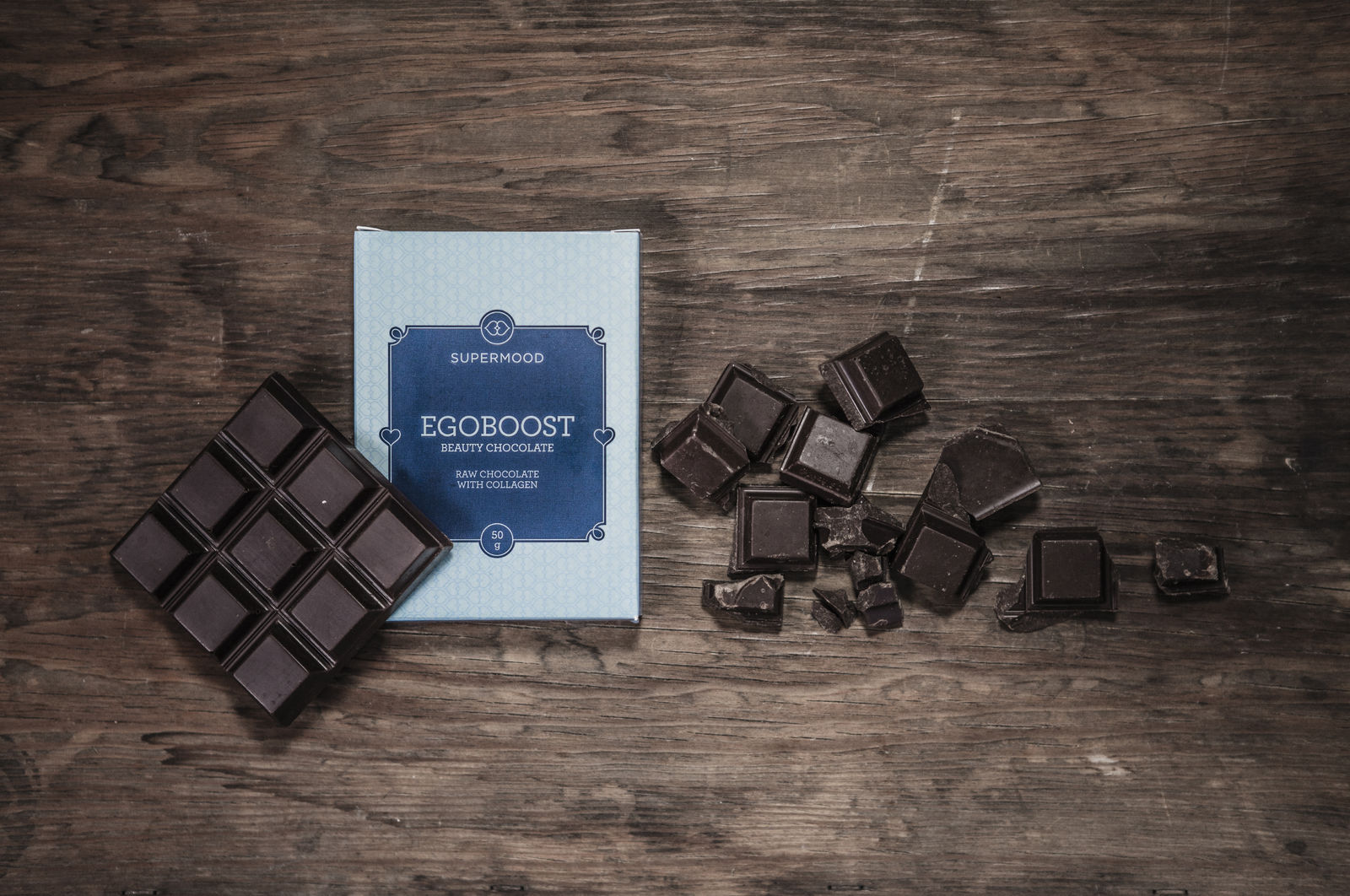
Egoboost: 'Beauty Chocolate', raw chocolate with collagen.  

Egoboost: 'Beauty Chocolate', raw chocolate with collagen.  

J: We feature it in some of the skincare products — we have a collagen and Chaga powder, which is a nutritional supplement that you can blend into your milkshake or smoothies, and also with collagen we have beauty chocolate, which is a raw chocolate.

I saw it! Yes, it is the most interesting product. What’s it about?

A: Everybody says that. Whispers to Joni, ‘now you hear it’. 

Laughter. Anne, it was your idea, of course. 

A: It’s raw chocolate, so we are not talking about organic chocolate, which is heated up. Raw chocolate is cold-pressed, and it’s really expensive to produce. Often the issue is that the price and quality of cocoa varies seasonally. 

J: When it comes to chocolate or coffee, it reacts to weather changes, which right away affects the price of chocolate. A lot of things are very expensive to produce, because you cannot have such volumes, where you could leverage the buying power. That’s why green beauty, as well as green fashion, is still highly priced. 

"Brands have to evolve over time, but at the moment, I think the more layers and perspective you have as a brand, it becomes actually more interesting rather than having this Bauhaus-aesthetic approach."

In today’s visual culture, branding is very important. Advertising background and knowing you target audience well surely works in your favour…

A: People usually want to categorise into either ‘organic’ or ‘normal’, meaning synthetic cosmetics category. We are organic, but that is secondary. On the ferries that are going between Finland and Estonia, they’ve put us next to Dior. That’s exactly the perfect way to explain it, ‘just place it where the good brands are’.

J: It is less to do with the fact that it is green and more to do with communication and how we build the story and tell it, but it doesn’t have to scream ‘green’ at the display. It has to look nice on your bathroom shelf or nightstand. It has to fit in with your other luxury cosmetics.

I have even gone for some beauty stuff only for the packaging, then found out later, ‘oh, it’s 98% bio-organic, too’. 

A: I remember one retailer telling me ‘I don’t care what’s in it, I take it!’, when they saw those pictures of what Joni did — illustrative mockup in 3D of all the range.

J: The first question is, ‘Is it appealing?’, when you see it in the store. Then the next question is, if it something that I would actually use for its utility.

Youth Glo: luxury peel with AHA acids and fruit extracts.

Youth Glo: luxury peel with AHA acids and fruit extracts.

I am totally in love with the packaging!

J: The appearance is a bit whimsical, we felt that green beauty is often strictly about the environment, using green hues. With such personal product that should reflect the user’s values, we wanted to give ourselves that permission to be funny. 

A: [It is] a little bit bold. Also flirty, because when you see all those lines that we have hidden in the packaging — if you find them, you find them. Those little messages. 

J: If we would have chosen kind of a minimalistic and clean, too rigid, approach, I am not sure that would be as much fun to do, it just wouldn’t be entirely ‘us’. If we don’t get that first reaction that it looks good, then it’s a lost case. 

There is this standard Scandinavian minimalism style and approach. Are these the end days?

A: There are so many brands doing this, so it’s already too repetitive. 

J: I think this [Maison Assouline] coffee shop is a good concept — the new and the old meets. The age of ultra design and ultra clean is getting old, in my opinion. In that sense, brands have to evolve over time, but at the moment, I think the more layers and perspective you have as a brand, it becomes actually more interesting rather than having this Bauhaus-aesthetic approach. 

Egoboost: 'Inner Beauty' supplement with Chaga and collagen. 

Egoboost: 'Inner Beauty' supplement with Chaga and collagen. 

Tell us an interesting story.

A: There was an online beauty retailer in California looking to buy our beauty chocolate — 2 pieces, which is a very small quantity. The argument was going on and on, because that comes without saying, sending them to California would have been much more expensive than the chocolate itself (8.00 euros per small chocolate bar). We were having this argument with her, because we couldn’t lose the money, when sending the package that far. It went on and on, and then we just told her to order the chocolate directly from our web store, if she really wants it, but we cannot sell 2 pieces of chocolate and pay for it ourselves. That’s how it goes, when you have a really small business and you don’t want to take the risk of losing the profit. 

J: The comfortable things for us are to work on the brand and on the products, but what we didn’t have experience with, when we got into advertising or out of advertising, is how to handle logistics worldwide. The fact that we are based in Finland, Helsinki, doesn’t make handling international shipping any easier. I think that’s a crucial part of starting your own brand — that it’s a learning curve every day.

What is on hold for the near future?

J: Hopefully, what this UK opportunity brings is that we get more exposure and find new partners to work with, that way we can also grow the business and a bigger audience. 

What are you missing?

A: We need some rest! I wouldn’t mind a nice holiday together…

That leaves Joni reminiscing about a personal father and son road trip in the States with their teenage son few years back, whilst Anne was working at the other end of the country in the midst of mid-summer blizzard. Both admit they haven’t gone on a holiday for long time. 

All goes slowly, step-by-step. 

A: Yes, because we’re still very young. Well, we’re not young, but at least the company is… 

Anne says in her confident tone of wit. We then burst into laughter and finish off the — when so much effort goes into conversation — already cold cappuccinos. 

I hug them goodbye, and rushing through the city’s marvellous Mayfair district, baby pink Supermood goodie bag loosely waving in hand, I soon find myself comfortably in a relaxed super mood. 
www.supermood.fi

Steinway & Sons: 4 Sustainability Pillars to Piano Making

What makes an honest company experienced in the craftsmanship of a single musical instrument? In the world of sustainable luxury, for Steinway & Sons, 4 base factors are the key — tradition, green issues, transparency and durability. In this world crammed with disposable items in every aspect of life, Steinway & Sons, with more than 160 years expertise in piano making, reassures our confidence in quality, sustained craftsmanship and environmental consideration, and as if by accident, connects with the most talked about emerging trends in the current global luxury sector.

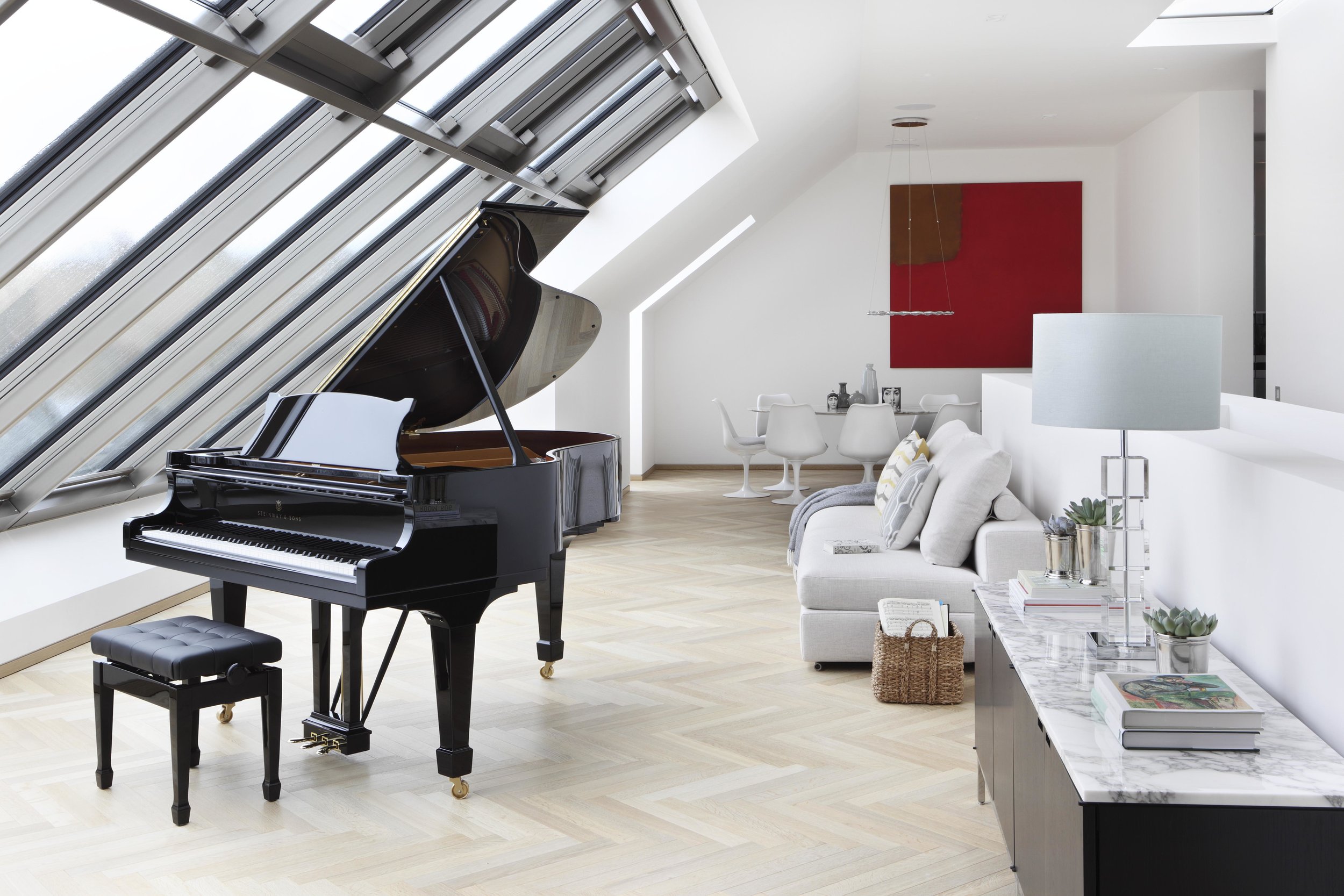
Steinway & Sons, 2016.

Steinway & Sons, 2016.

Transparency and environmental issues are no longer living in an extinct, faraway land only concerning the global fashion superpowers, but are widely prioritised on the consumer awareness agenda, whereas it is a no-brainer luxury brands get more exposure on revealing their behind-the-scenes. With #whomademyclothes increasingly trending on social media as a form of attracting sustainable fashion more visibility, even companies with tradition and history have been affected, due to popular demand, by a new wave of embracing transparency. Yet, what if there is nothing to hide? Steinway & Sons is a company that unintentionally stands in line with the global trend of stripping ‘bare’ in the luxury industry. We may still consider fashion as the most obvious example of an industry aspiring to turn a great degree greener, but also a great deal of craftsmanship and environmental consideration can be put into making a piano — a Steinway piano, made of wood from sustainable sources, can be played and enjoyed for decades, and — coming without an expiry date — even centuries. 

“In today’s marketplace, brands like ours must continue to innovate in order to remain relevant to the world around us, but that doesn't mean that quality and craftsmanship can suffer.”

Steinway & Sons, 2016. 

Steinway & Sons, 2016. 

Steinway belongs to the segment of sustainable luxury products, but understanding the real quality and durability often takes more than just a fancy exterior — it is easy to plaster a product with a luxury label, without making sure the product actually delivers towards the sustainability criteria. At Steinway, in addition to aesthetic appeal of the instrument, the role of actual craftsmanship, skills and the quality of raw materials is taken with utmost importance, where there is no compromise — it takes about a year to make one Steinway piano. In addition, the company boasts only two factories world-wide, based in New York and Hamburg. It takes only a glance under the lid to reveal the complexity of the artisan-built musical instruments measured with great care, assuring the customer that they are not simply paying for ‘luxury’ label, the name.

Steinway & Sons, 2016: Painting of the logo. 

Steinway & Sons, 2016: Painting of the logo. 

Similarly to the flourishing #whomademyclothes trend, the answer to questions like, ‘Who made my piano? How well treated the workers are? Where are they based? How much are they paid?’ , lies in highly-skilled craftspeople and artisans treated fairly and ethically. As a customer, in addition to the basics, like how, where, and by whom the product is made, we shouldn’t discard the most important question — whether the expertise is actually there. Like many other notable luxury corporations, Steinway has chosen to downplay the ostentatious label and opt for a greater degree of transparency — many of their staff have been at its workshops for decades and there are generations of the same family who have dedicated their lives to Steinway. At Steinway, interactive approach is also the key — customers frequently visit the workshops before moving on to the factory’s Selection Room, where they can try out a variety of pianos to find the one that feels right for them.

Steinway & Sons, 2016: Making of. 

Steinway & Sons, 2016: Making of. 

Steinway is also highly dedicated to the exclusivity aspect — any experienced pianist can tell that every Steinway piano sounds slightly different. Over the years, they have introduced a variety of limited editions — the Steinway Crown Jewel Collection is a range of visually striking pianos created from unusual, precious woods that challenges the perception of the ebony high polish concert grand, is typical of this trend. In 2015, in partnership with Wayne Stahnke, Steinway Spirio, the world's finest player piano system, available exclusively on select Steinway grand pianos, was introduced as a remarkable innovation, which is expected to last the full lifetime of the piano. 

Steinway Spirio launch, 2015. 

Steinway Spirio launch, 2015. 

According to the brand's spokesperson, “Since the founding of Steinway & Sons over 160 years ago, innovation and craftsmanship have served as the core tenets of the company. In today’s marketplace, brands like ours must continue to innovate in order to remain relevant to the world around us, but that doesn't mean that quality and craftsmanship can suffer.” Relying on these core principles of sustainability, craftsmanship, tradition and environmental responsibility,  and more than a century worth of expertise, no wonder Steinway is the choice of nine out of ten concert pianists as well as countless professionals and amateurs.

For years on end, Steinway proudly serves as a company that, first and foremost, has its core values in place. 

http://steinway.com


Gudrun & Gudrun — Funky Knitwear Extravaganza from the Faraway Faroe Islands

Gudrun & Gudrun, bringing sustainability to life using Faroese wool and traditional knitting techniques, is a fashion-forward knitwear brand gaining momentum with its bold heritage. Emerging from the faraway Faroe Islands, the remoteness of the geographical location inspired Gudrun & Gudrun to use the island’s scarce wool resources wisely, not to let them fade away. Adding a touch of women’s empowerment led thinking and mind-blowing creativity to Gudrun’s journey is what makes the brand as powerful as it stands today. We also never knew knits assembled of natural wool could look so good.

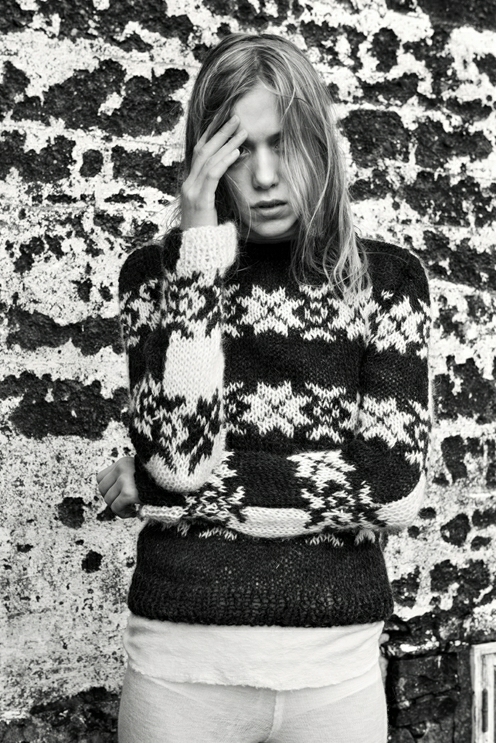
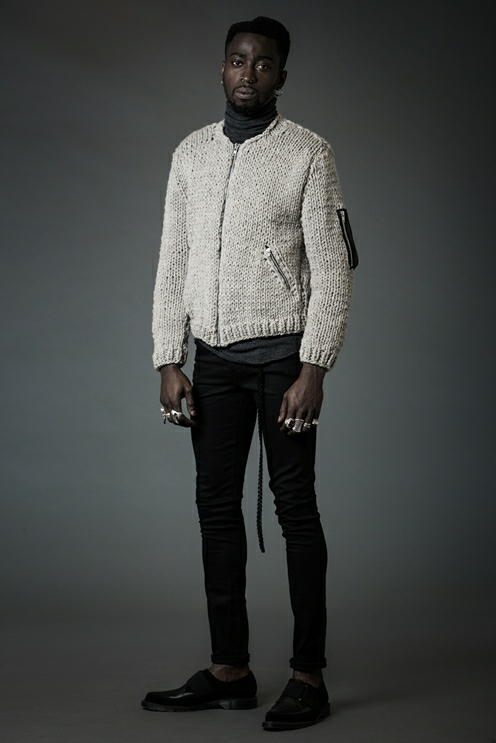
Gudrun & Gudrun AW16/17 Campaign. 

Gudrun & Gudrun AW16/17 Campaign. 

What brought together Gudrun & Gudrun and sustainability?

We didn’t start as some brands might start today, saying ‘we are going to make a sustainable brand’. We just discovered that all the resources on the Faroe Islands [located halfway between Norway and Iceland] were very limited and used poorly. We discovered that we must take very good care of the scarce resources, like in the old days. It’s to do with the heritage of the place, nothing can grow and it is very remote, so we just had to use what the nature has to offer — we have wool, we have sheep and we have fish, that’s all we have here on the Faroe Islands. Sadly, in the rapidly growing economy of the 1990s people didn’t care too much about the natural resources and the local produce, but thought that everything imported from abroad was much more valuable. We came to a situation where most of the wool was burnt and lambskins were destroyed completely, because nobody wanted to use them. Whereas we felt really upset about it, because these were not the values we were brought up with, what we had learnt to do. Then we thought we should put an end to it somehow, sooner rather than later, that’s where it all started… 

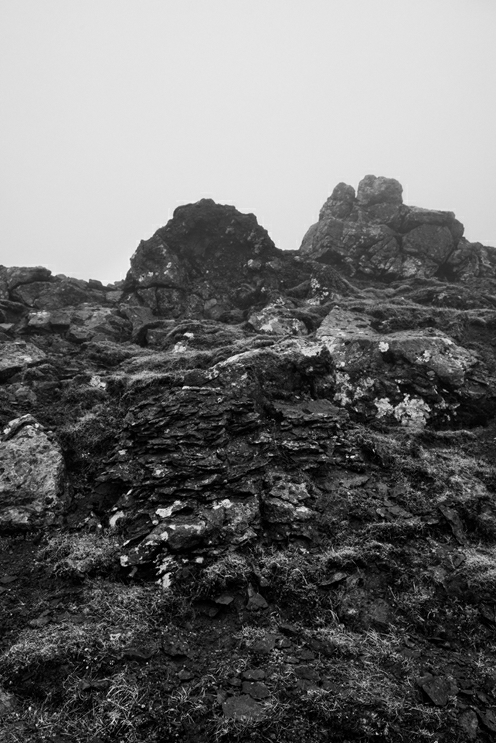
Faroe Islands.

Faroe Islands.

So you would say that the isolation of your geographical position, Faroe Islands, closely connects with the story of the brand?

It has a lot to do with being from the Faroe Islands and seeing the natural resources go to waste, seeing that they’re not being used properly. 

 I see more and more brands turning to sustainability. What’s the importance of it, why do we need to move away from the fast-everything culture and mass production?

I think the answer lies in people being more conscious and aware after the financial crisis that really had an effect on their consumption habits. Getting through that crisis, we have learned not to blame the ‘others, or the big ones or the global superpowers’, which were the attitudes flourishing for long, but we have understood that we ourselves are to blame, and we have to take collective responsibility for changing the detrimental patterns. We are all a part of the world, so we all have to play our part in being responsible and making a change. 

Gudrun & Gudrun AW16/17 Campaign.

Gudrun & Gudrun AW16/17 Campaign.

Also, you have a special kidswear range, which many brands have not thought of, or find too difficult to run. How did you come to this idea? It looks so playful… full of colour. 

We started with womenswear only, but often the customers would be like, ‘Awww, I want this type of quality for my child as well’, because we are only using natural materials, and organic yarns, and on top of that, we have the contemporary design and modern thinking. So we have combined everything that has to do with sustainability with the modern, creative side, which is really cherished with kidswear. When it comes to sustainable clothing, I think parents are thinking, first of all, about their babies, who would need the comfort — clothes that don’t do any harm to them. The combination of having the sustainability element and also the design, the aesthetics, is what makes our knits so unique and popular. Kidswear is not found everywhere, but people often look for the quality, the natural materials and longevity, but with that often comes a high price tag, and people refuse to pay for it. Often it is the same price producing a kid's sweater and sweaters for grown-ups, but people are still looking to pay half the price for it. So we have reversed it. 

How does the sustainability aspect come across in the production phase and use of materials?

We always use only natural materials. For example, Faroese wool — the sheep are in the mountains all-year round, they are never kept inside, so they are living on natural, unfertilised grass. The wool is not eco-certified, but just made using common sense and highest quality technology. For it to be the best possible [quality] is more important for us than just having a certificate to say that it is sustainable and organic. In addition to Faroese wool, we also use yarn from a lot of other places — we produce in Peru, using Alpaca wool from Peru, because that also makes sense for us to use the material from the place we produce and we learn a lot of techniques from the Peruvians… then we use organic Merino wool, for example. In addition, we use yarn from a lot of different places, from Italy, Norway, Iceland and Japan. But we always use natural materials, that’s one of our principles. 

"We could not change the fact that the women have a specific role in the family and home, but we could help to empower them by giving them the opportunity to earn their own money."

That must be complex to produce. How big is the workforce?

All in all, we have about 100 knitters, and they are divided more or less equally between Faroe Islands, Jordan and Peru.

Gudrun & Gudrun AW16/17 Campaign. 

Gudrun & Gudrun AW16/17 Campaign. 

There’s also a link between women’s empowerment and your brand… what countries is it related to?

We have a group of women knitting for us in Jordan and Peru. The project in Jordan was started, because before Gudrun & Gudrun I had a completely different career. I was working as a consultant stationed in Jordan, namely as a UE expert, and I always met a lot of ambitious people, and we were talking about the possibility of giving those women a way to earn their own money, because when we are talking about women’s empowerment, we believe that earning your own money is the base of this, the first step. 

"There are a lot of other brands that are so much better at making cheap T-shirts, but it’s not our field of expertise, so it is better that you concentrate on what you are good at, what you truly believe in."

In Jordan, for example, which is a restricted, patriarchal society, for a lot of women, it is difficult to get acknowledged outside the boundaries of their own home, so they are deeply ingrained in the role that they have to take care of the home and their children, there’s no option of having a career. We found that it would be a very good way, if we could fulfil that gap that they too contribute to the society. We could not change the fact that the women have a specific role in the family and home, but we could help to empower them by giving them the opportunity to earn their own money. I have been working with projects a lot and simple projects are often good projects that help to benefit the women the most. Also, for the husbands, it is not a threatening project, because the dinner is still served at the same time and they are still home by the evening, so that structure works for everybody. If it’s a project that the men will oppose, then the women would participate for a few times, and then they would not be allowed anymore, because they cannot take this discussion of freedom at home with them. They meet us in a charity organisation and surprisingly, some women, who started already 8 years ago, are still working with us. 

"Getting through that crisis, we have learned not to blame the ‘others, or the big ones or the global superpowers’, which were the attitudes flourishing for long, but we have understood that we ourselves are to blame, and we have to take collective responsibility for changing the detrimental patterns."

Do you boast a global audience?

We have a very global audience, from Japan to Italy to U.S. We have our flagship store in Faroe Islands and pop-up shop in London at the time, and last year we had pop-ups in Oslo and Copenhagen as well, and then we sell wholesale to a lot of different stores. 

What’s your message, how to give quality production more visibility and reduce the mass-production mania? 

As a first thing, this is what we are good at — we are good at making hand-knit collections. We don’t know any other companies that make full collections in hand-knit, as it's not a machine, it is extremely difficult to execute and control. Quality production from natural materials is something that we have expertise in. There are a lot of other brands that are so much better at making cheap T-shirts, but it’s not our field of expertise, so it is better that you concentrate on what you are good at, what you truly believe in. 

Faroe Islands.

Faroe Islands.

Sustainable Fashion To Die For — Eyglo

Be it the incredulous natural landscapes or modern design, Iceland does not cease to impress us. Reykjavik’s local design store Kiosk, run by 6 designers and named the best place to buy local fashion by The Reykjavik Grapevineun, makes a wonderful hub, providing the customers with latest fashions. From the Kiosk selection, Eyglo is a brand for a stylish and fun woman, led by designer Eygló Lárusdóttir. Her latest collection called 'Murder She Wrote' caught our eye and we were dying to know more.

Words: Johanna Raudsepp

Eyglo Campaign 2016: Photography by Rafael Pinho.

Eyglo Campaign 2016: Photography by Rafael Pinho.

They say first impressions are everything. How would you describe the woman you design for?

I guess I don’t use anyone as a muse when I design. I basically do whatever I like. There’s a certain playfulness mixed with classics, I guess. My clients are women between 24 and 65. [They are] cool, classy and fun. I’d say it’s for women who like to experiment with something fun, but well-made at the same time. 

You like using bold patterns, sharp cuts and pops of colour. What was the inspiration behind your latest collection ‘Murder She Wrote’? 

The inspiration for my last collection was triggered by the series “Murder She Wrote”. I used to watch these kinds of TV series when I was a kid, so Jessica Fletcher certainly has a special place in my heart. It’s kind of strange to come from a place with almost zero crime rate and create a crime-themed collection. I feel that people from the U.S. can relate more to it in a funny way than us, Icelanders, do. 

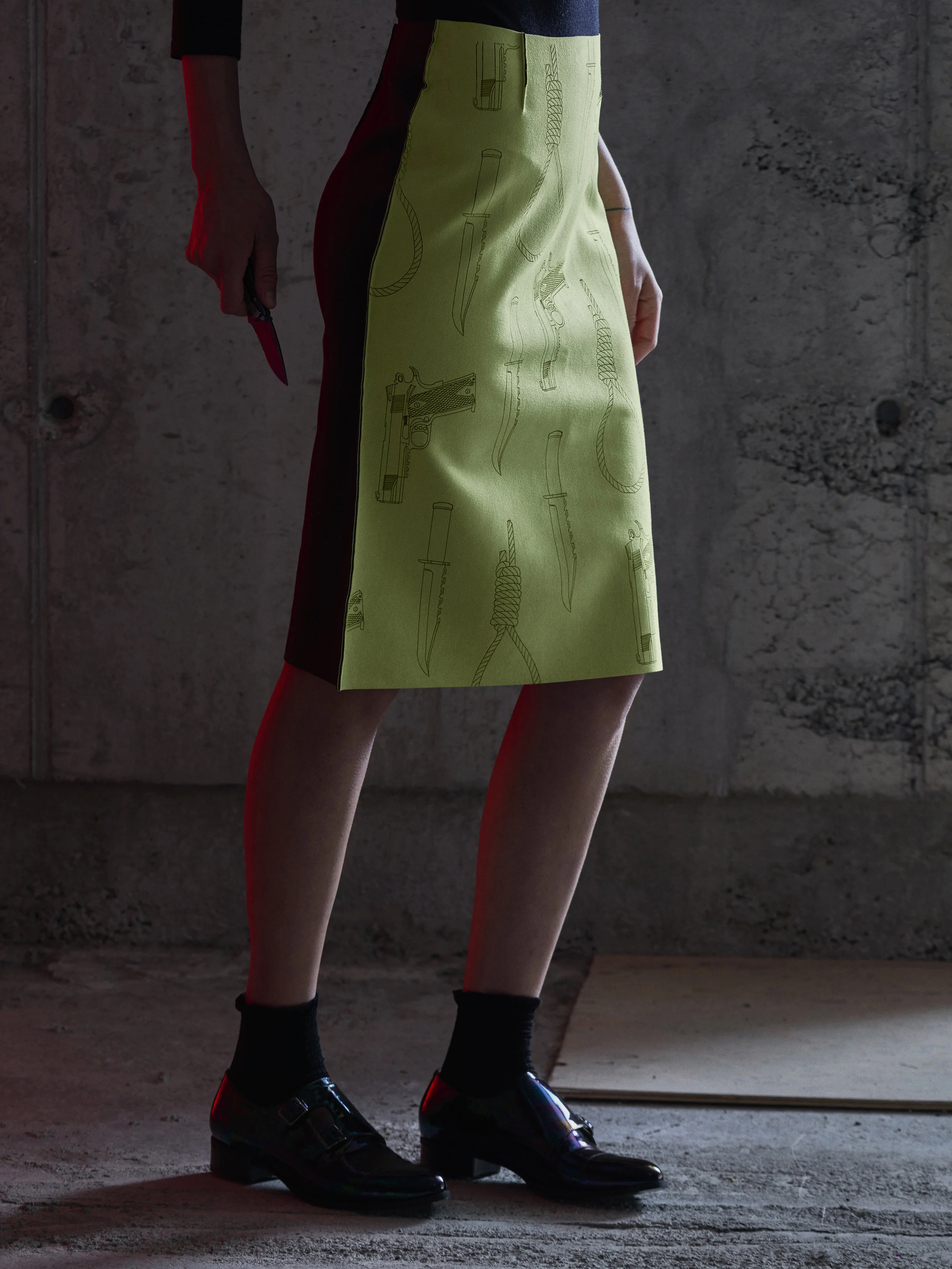
Eyglo: Jessica Fletcher Jacket, 2016. 

Eyglo: Jessica Fletcher Jacket, 2016. 

I’m into different ways of doing textile these days. I’m doing knitwear with patterns of victims on it — I laser-cut the images and peel the upper layer off, so it gives a 3D-effect, and I also use digital printing. I used to hate orange, but now it’s my favourite colour in the collections. I named one dress after the prison in Iceland, and another one is called Orange Is The New Black, Investigator, etc. 

At Savant, we believe in sustainable living, which is applied to the fashion we feature as well. How do you feel about the issue that people often buy what they don’t need? Is there anything you do as a designer that could alter people’s perspective?

I think people should certainly be more aware of what they’re buying. I do understand people that buy their basics from these big chain stores, like H&M or Zara, but I cannot comprehend how it can be fun to wear any of the other stuff they make. It’s made in such huge quantities that you will become tired of it immediately. The same goes for IKEA. They might make nice items, but you get fed up with them within a few months. At least that’s how my brain works.

"It’s kind of strange to come from a place with almost zero crime rate and create a crime-themed collection. I feel that people from the U.S. can relate more to it in a funny way than us, Icelanders, do."

As a designer, I try to be aware of how I do things as well. Most of my fabrics come from Europe and the garments are made in Europe (Estonia, Lithuania, some in Iceland). I’m looking into attending a sustainable fabric fair early next year, as it can be very difficult to source fabrics when you live in Iceland. 

I have a store called Kiosk in Reykjavik that I run with 6 other designers. We split the rent and the shifts, help each other with contacts and give advice. Kiosk has been named the 'Best place to buy local fashion' by The Reykjavik Grapevine for all of the 6 years we have had the store. We have been recommended by The New York Times, Vogue, Glamour, and many more. All this contributes to altering people’s perspectives in the long run. 

Eyglo at Kiosk, Reykjavík.

Eyglo at Kiosk, Reykjavík.

We recently interviewed Milla Snorrason, one of your fellow designers from Kiosk. It comes to show what a positive impact such a concept store can have — everything fresh and IN can be found in one place. What made you create the store 6 years ago?

One of my friends came up with the idea shortly after the financial crash. We had finished art school few years earlier and wanted to give it a try. We teamed up with about 6 other designers — now it has been 6 years and it has grown so beautifully. I would love to see similar shops like ours in more cities around the world. We have been super lucky with the rent so far, but we are losing our space soon. The plus side of the tourist boom here is that we can sell more, but the downside is that the rent has gone seriously high. At the moment we are actually looking for another space, possibly bigger to add more designers in. So there are definitely exciting times ahead. We also have a pop-up shop in Copenhagen coming up and another one in Laforet, Tokyo, at the end of November.

Eyglo Campaign 2016. . 

Eyglo Campaign 2016. . 

Finally, who do you look up to as a designer? What kind of design makes you swoon?

I do look up to Vivienne Westwood for everything she has said about sustainability. Just buy less and better. Take care of your clothes. Design-wise I´ve always loved Bernhard Willhelm, Christopher Kane and Mary Karantzou, to mention a few.

http://www.eyglocollection.com

COS x Agnes Martin at the Guggenheim

To celebrate their support of Agnes Martin at the Guggenheim Museum in New York, COS have created a limited-edition capsule collection.

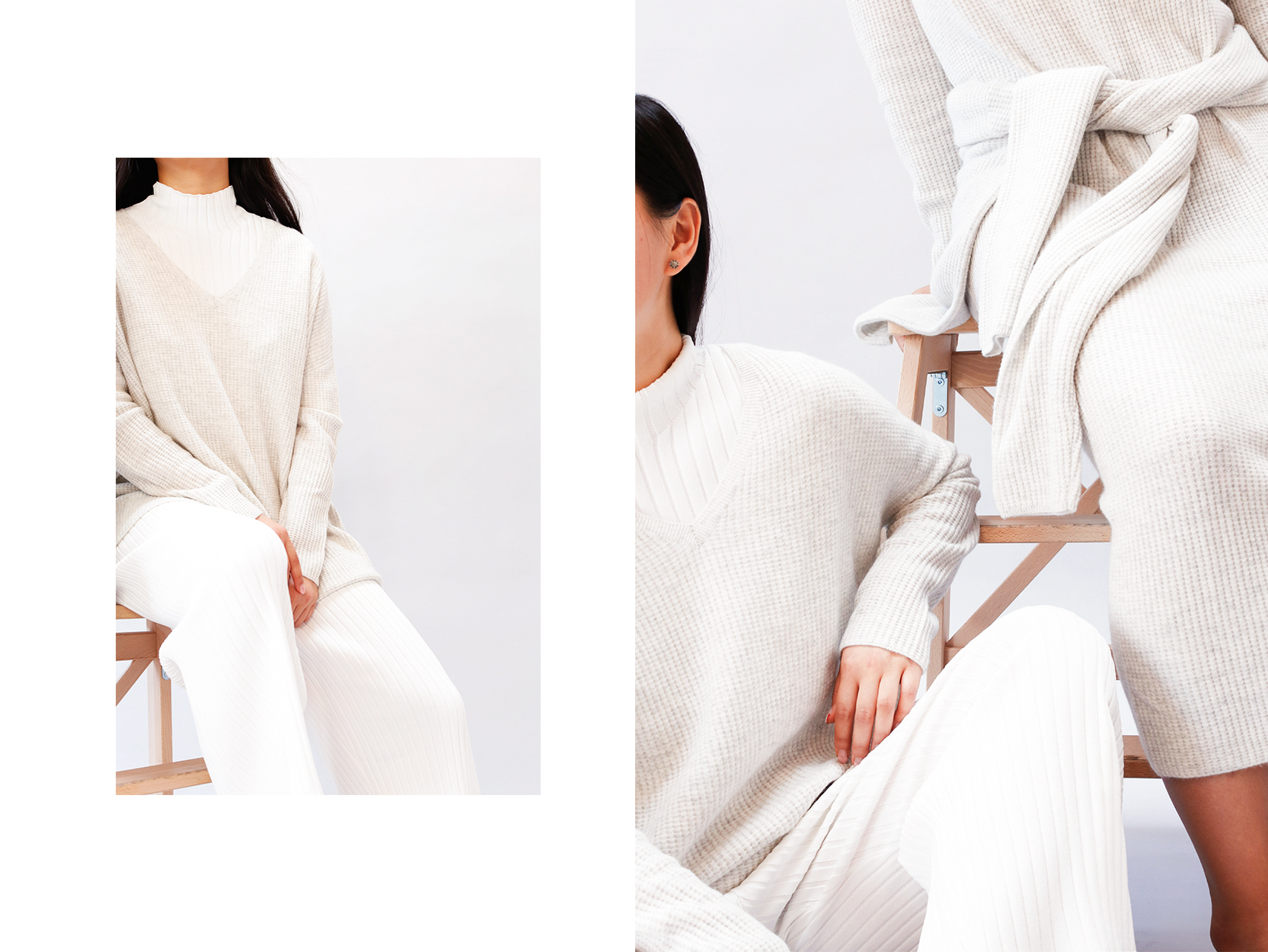
COS x Agnes Martin Capsule Collection, 2016. 

COS x Agnes Martin Capsule Collection, 2016. 

The collection features 12 items for women and men, inspired by the minimalist and abstract expressionist artist’s work. Well, we can’t think of a better collaboration. Martin’s soft palette and refined details correspond perfectly with the COS brand, who are well known for their minimal aesthetic.

COS x Agnes Martin Capsule Collection, 2016.

COS x Agnes Martin Capsule Collection, 2016.

“Artwork is a representation of our devotion to life.”

- Agnes Martin

The collection is reminiscent of Martin’s light colour wash canvases as well as the loose fit workwear she wore when in the studio. Just like in her work, the new COS collection is soothing and meditative, with subtle design details and interesting prints. We love the waffle knit jumper (softer than soft) and the folded wrap over skirt. The latter of which we can image Martin wearing at dusk in her studio in New Mexico. 

Agnes Martin. 

Agnes Martin. 

COS x Agnes Martin – On display at the Guggenheim New York and available in selected London stores and online now.

Read more about Agnes Martin here >> 

Icelandic Designer Milla Snorrason's Take on Environmental Kindness

Hailing from Iceland, Milla Snorrason mixes unique woollen pieces with a touch of comfort. By creating sustainable fashion for a strong individual, for Milla Snorrason, quality and longevity are the key. We were so inspired by the Scandinavian simplicity and femininity of the Reykjavík-based label that we asked the head designer Hilda Gunnarsdóttir about her design process and her passion for environmental kindness. 

Words: Johanna Raudsepp

Milla Snorrason Campaign 2016.

Milla Snorrason Campaign 2016.

At Savant, we believe in sustainable fashion and the complete traceability of production. Fast fashion is a craze, but it could be slowed down. What is your take on this?

The mass production of garments is a big problem nowadays. I always think our biggest restriction as regular consumers is our purse, but this needs to be perceived as power. Don't buy fast fashion products, as simple as that. Instead, do your research and try to buy from a company that cares about the conditions in the factories it does business with. It’s always going to be more expensive, but it was also never actually supposed to be cheap, [because it is fair and ethical]. I try to apply this philosophy to my production as well. 

Milla Snorrason Campaign 2016: Sóley Sigurþórs by Rut Sigurðardóttir / Stylist: Anna Clausen / Hair and make-up: Fríða María Harðardóttir.

Milla Snorrason Campaign 2016: Sóley Sigurþórs by Rut Sigurðardóttir / Stylist: Anna Clausen / Hair and make-up: Fríða María Harðardóttir.

We love that you like using sustainable materials and wool. Where do you source your fabrics from? What is your favourite material to work with and why?

I love working with Icelandic wool the most, because it is a local product and I can easily visit its producers, which I always do. This inspired me to even start my range of woollen sweaters. I can see and judge with my own eyes, how the sheep are treated and also how the knitting factory's workers are treated. Icelandic sheep get to run around wild all summer, but in the winter it gets too cold, so they’re kept inside. However, I haven't yet reached that goal of using only sustainable materials. Milla Snorrason is still a very small company and, more often than not, sustainable fabrics have too high minimum orders for us. But I am doing a lot of research and taking one step at a time towards more emphasis on sustainability.

Milla Snorrason Campaign 2016.

Milla Snorrason Campaign 2016.

In Iceland, it’s difficult not to be inspired by the magical nature, the breathtaking scenery. Where do you draw your inspiration from when creating a collection for Milla Snorrason? Who is the woman you design for?

For every collection, I take a trip to explore more of Iceland. My favourite pastime is hiking. I take loads of photos and I mostly use these photos to create my prints. Iceland's nature is definitely what inspires me the most, but I also look at so many other things. Our surrounding visual culture inspires me a lot — I go to galleries, watch movies, I surf on the web and I take so many photos and collect them from everywhere. I am constantly researching my next collection. This spring I also went to Mexico and Cuba, which will definitely have its impact in a future collection. 

“I am always inspired by people who treat animals with the same kindness as they do people. She is also a big advocate for environmental issues, which is something I take to heart, when deciding where and how to produce my clothes.”

I design first and foremost for myself, but also for my friends, my mother, her friends and any woman in the street who I think is inspiring, and I always wonder what I'd like to see her wear…

We all have people we admire, be it for their kindness, sense of style, or their lifestyle. Who do you look up to as a designer?

She's not really related to design directly, but the first woman that comes to mind is Jane Goodall. I think her work with animals is so beautiful and I am always inspired by people who treat animals with the same kindness as they do people. She is also a big advocate for environmental issues, which is something I take to heart, when deciding where and how to produce my clothes. Visually, I think female artists inspire me the most. They often don't really think about fashion in a traditional way and can have a fresh and interesting take on it.

“Our surrounding visual culture inspires me a lot — I go to galleries, watch movies, I surf on the web and I take so many photos and collect them from everywhere. I am constantly researching my next collection.”

Finally, let’s look through a crystal ball. What does the future hold for Milla Snorrason?

I will show my next collection in early 2017. It will be based on a four-day trip I took with four of my girlfriends to Iceland's highlands in August. It's going to be called Uxatindar [peak in South Iceland] and it's looking wonderful in my head! Past that I just let things flow naturally. My crystal ball doesn't seem to be working that well yet. 

http://millasnorrason.com

COSSAC: Changing the Face of Everyday Eco Fashion

East-London based Cossac’s motto is to appeal to the mainstream fashion customer through attractive branding and accessible language. Brand’s founder Agata Kozak boldly believes that the aesthetic allure of fashion-making doesn’t come inseparable from acts of activism, breaking Cossac out of all things eco fashion cliché. Savant explores Agata Natalia Kozak's world of leading an everyday 'eco-hot' brand in high demand... 

Cossac AW16/17: model Ruth shot by Atisha Paulson. 

Cossac AW16/17: model Ruth shot by Atisha Paulson. 

When did you decide that this cycle of fashion industry's mindless overproduction just can't go on anymore?

I started the brand only in 2014 — we actually have our second birthday in 2 weeks, which is really exciting. I studied Fashion Design in Istanbul and my previous experience was purely in mainstream fashion, both high-end and high-street. Back then, sustainability wasn’t really a thing in fashion. I don’t remember anyone ever mentioning it to me! When I moved to London right after university, here I became more conscious about sustainability as a form of living in general, so I started educating myself [on the topic], and I was applying it to everything — from my eating habits and the products I use to the kind of consumer I was. I thought that applying it to my job as well was just the right thing to do. 

What were the main large-scale concerns that triggered you to create a conscious fashion brand?

[I quickly realised] there weren’t that many brands around that were doing something related to sustainability. Unfortunately, sustainable fashion is associated with certain subcultures, like hippies, and mainstream fashion people don’t really like wearing it, so I saw it as a gap in the market. COSSAC was born as a green alternative to the fashion industry, but our attractive and engaging sustainability element is more to do with the branding and styling, which is very important for us. That we appeal to our mainstream fashion customer is, I think, a key to our success so far. 

Cossac AW16/17: model Ruth shot by Atisha Paulson. 

Cossac AW16/17: model Ruth shot by Atisha Paulson. 

You mentioned that initially there were not so many brands around, but did you have some idols that you were looking up to, some brands that made you think: Wow, they’re getting it right….

There were brands that I was admiring, like EDUN — they had well-established marketing and PR from the start — but I can see there are more now, mainly because I am in the eco fashion business every day and I live and I breathe it. Even though I was admiring the pioneering brands like PeopleTree, it was more because of the activism work they were doing, than about the fashion they had on offer. 

Whenever I was actually trying to buy something sustainable, the offer wasn’t what I had expected it to be — for example, shipping charges of 30 per cent on top of the product is a bit of an exaggeration. Therefore, I was thinking, let’s do something about it… 

What's your attitude towards the idea that eco fashion has certain negative connotations? As you mentioned earlier, it can be related to certain subcultures.

I’ve encountered that there are more brands growing now that actually understand how extremely important the image is… the way you sell your brand, the branding, styling.  Even Alexandra Shulman [editor-in-chief of British Vogue] has said that: “First of all, you have to have a fashion product that has to look good”. [My interpretation is] that everything else comes as an addition to it, because people buy first into fashion, then sustainability comes as a bonus. I think that most eco fashion brands often get it completely wrong. 

"People are still buying into fashion first and eco comes as an additional value. […]To me, obviously,  sustainability is very important, I apply it to every aspect of my brand and my life, but I feel nowadays, for the customer, fashion — the visual appeal — comes first."

However, have you encountered a change in attitudes recently?

I think the attitudes are changing — for example, we are selling in Boxpark, Shoreditch, in a shop called UTTERCouture, where they don’t have eco brands per se, we are the only eco brand at the moment. They say that people really like the product first, then they read the story at the back, and they fall in love with it. I think the change is happening, but as I mentioned, we all have to remember that first of all, it is fashion, and everything else comes as a bonus. 

Do you feel it’s also the reason why many brands get it wrong — they only focus on the sustainability aspect, leaving the fashion side secondary?

100%. Not to sound mean, but there is a difference between doing activism or being a charity worker and being good at fashion-making. I just cannot believe how fashion goes entirely missing sometimes…

Cossac AW16/17: model Ruth shot by Atisha Paulson. 

Cossac AW16/17: model Ruth shot by Atisha Paulson. 

More often, I see brands that actually have the aesthetics in place as well… 

There are more brands like that. There are some cool, innovative things happening, like eco underwear and eco shoe brands. I think another problem with the eco brands is that sometimes the price is over the top, ridiculously high. But if you therefore want to appeal to the mainstream fashion customer, your price has to be quite competitive, because otherwise they will go to Zara instead! I understand that eco costs more, but you can still do it within reason, because I am doing it, so I know first-hand it is possible. 

"If you talk to them in this accessible and easy language and prove to them that eco can be sexy — for example, our motto is ‘eco hot’ . This is very appealing to people."

Do you think that slow fashion’s high price will remain unchanged in the future?

It depends on many things, but my goal was to grab the interest of this customer who shops in high street, so the price needs to be more or less similar. It will never be as low as Zara or Primark, but it all is to do with where you source the fabrics from and where you produce. For example, if you do the production part in the UK, prices will be much higher and most of the materials are anyway imported, especially fabrics. I manage to keep the price low because we source locally in Turkey, where I produce, so I don’t have additional fabric shipping costs or import duty costs on the fabrics, everything is local. I think the price of eco products is one of the biggest issues, lately I wanted to convince my friends to buy eco fashion only… their reaction was that, not only are the clothes unattractive — not very sexy — but the price is also so high, I mean, who would buy it? It is possible to keep the price low, but it depends on quantities as well, so many, invisible factors must be taken into account. 

Is it very difficult to find the right fabrics?

I used to live in Istanbul, it’s a wonderful city. I also know how rich their history is, when it comes to textiles. But they are used to working with big fashion brands, so the order quantities they want for fabrics are thousands and thousands of meters, and my small label can’t give them these orders, so they take longer to produce my fabric. I can find whatever I want, but minimum orders are a concern. 

Do you feel that slow fashion is still targeted at the niche market? Who is the most typical customer of yours?

I think it is still a fairly niche market, but I believe it is changing rapidly.  Even though my clothes are quite universal and ageless, I have thoroughly envisioned who [my target customer] is and what she does. She is between 25 to 35. She is ambitious, she lives in a city, she is very aware of the world she lives in. She admires art, she loves socialising… The most important, she likes to pay a bit more for a product that has something more to it, something of value — sustainability or longevity. 

Give a London-based example. 

I think [in London] people who come to Boxpark, Shoreditch, to shop are pretty much my key customers — they are creatives from East London, they have a bit more of disposable income, and they actually like to invest in pieces, which they wear more than 30 times, which is the magic number [you wear your clothes]. They don’t really buy throwaway fashion. From the next season, we will also be selling at 69b Boutique in Broadway Market. I think this is another ideal spot, as people who go there are more into shopping organic — there is a farmer’s market down there on the weekends, so it nicely relates. 

Cossac AW16/17: model Ruth shot by Atisha Paulson. 

Cossac AW16/17: model Ruth shot by Atisha Paulson. 

Does the carefully selected presence add to the uniqueness of the pieces, would you say? There will always be people who don’t want to wear clothes that everyone else has…

The products are quite unique, because I do very small production rounds. I prefer to have less than restock, because I don’t think it’s sustainable to have stock left over. For example, I have sold out a couple of items of AW16/17, I had to re-order. I think it also adds to the exclusivity and creates a buzz around the brand, when it’s not so widely available. 

"COSSAC was born as a green alternative to the fashion industry, but our attractive and engaging sustainability element is more to do with the branding and styling, which is very important for us."

What's the most complicated part of the process of educating people on sustainable fashion?

I think one of the problems with sustainable fashion is that… I always feel that it’s too pretty, too unreachable. I always feel that someone is telling me off [when talking] about eco-fashion. People hate that. After all, fashion should be fun, fashion should be sexy and playful, we don’t want to have anyone telling us, ‘You are a bad person, when buying Primark’. I think some eco brands still don’t know how to speak about the issues. The language we use [when interacting with customers] is very casual, like “Hey babe, here is some eco fashion for you…”. The kind of thing that feels very close to people and invites them to explore the fashions, what’s on offer. It is also something that people can relate to and it doesn’t seem that harsh, even though you speak about a very serious matter. For example, we hosted the screening of ‘The True Cost’ [the documentary] a year ago and obviously it is a very serious documentary, but it was all about the way we approached people… we hosted it in Hackney Wick, at a bar that my friend owns. I turned it into an evening with good food and great fun. I think the language you use is very, very important. I think people responded well to it. 

You state on your website that you’re also reducing all the packaging and use of additional labels. Has this also appealed to people?

It does. This is actually quite funny because there are eco brands, which I have ordered a few times and the parcel came to me, and it had thousands of tissue papers and receipts. I was just standing there looking at all the rubbish, and thinking, ‘there is no need for that!’. 

Do you feel that there are eco brands that are still not fully transparent when it comes to what they’re actually doing?

There are brands that choose to focus only on one aspect of sustainability, because to be honest, it is quite hard to apply all the aspects. However, even if they only focus on organic fabrics, then that is already a plus.  I don’t want to be a hypocrite, so I try to execute [my fashion-making] on a fully transparent level, but it doesn’t change the fact that you live and you learn. 2 years ago, I even did my shopping at Primark, but as I became aware of the impact of the fashion industry on the planet, it is quite nice to observe that I grow with the brand, I learn every day. 

Would you say you’re not buying high street anymore at all?

I try not to as much as I can. Recently I was shopping for knitwear and I was only looking at eco brands, like Everlane, because I would like those brands to grow and I’d rather support smaller businesses. I don’t want COSSAC ever to be an enormous H&M. It is not my goal to make it into a global superpower. I think small is beautiful, so I am all for smaller businesses. 

But in the end, you have to sell to live? That’s perhaps the controversy. 

My goal is not to get filthy rich. I don’t think that is sustainable either. If you are able to do what you love and make a living out of it… that’s already great, a goal accomplished. People can get too greedy on the way. 

Sometimes I’m allured by a brand, and everything looks good on paper. Then I find out it is still ‘Made in China’. What does it mean?

Depends on where in China do they manufacture. I did work with some factories in China before and there’s nothing wrong — the factories I worked with have very good salaries, regulations, even obligatory yoga classes on weekends. There’s a difference between ‘Made in China’ and ‘Made in China’. Unfortunately it still has this negative connotation, but China is much high-standard now than it used to be… the more red-light areas are Cambodia, Bangladesh and Pakistan. 

We also live in an era that proudly advocates the cult of shopping. What do you think, what would make us invest in quality rather than quantity?

I think by making pieces that are quite universal and versatile. Then people will see themselves that they don’t really need to buy 3 jumpsuits, when they have one existing good quality, durable jumpsuit, which can be turned into something more interesting with the way you style it for different occasions.

If you talk to them in this accessible and easy language and prove to them that eco can be sexy — for example, our motto is ‘eco hot’ . This is very appealing to people.  

Cossac AW16/17: model Ruth shot by Atisha Paulson. 

Cossac AW16/17: model Ruth shot by Atisha Paulson. 

‘Eco Hot’! Sounds fun. How did you come up with it?

We were looking for a catchy phrase, that would define shortly what I want COSSAC to be. I wanted it to be sustainable fashion, but I also wanted it to be sassy, I wanted it to be desirable.  Every piece in the collection is a piece that I would personally wear… [the aim is that] you look at the design and you wouldn’t necessarily say it’s eco, and then you find out that it is also sustainable. The customers read the story and they feel better about themselves that they’ve made a more conscious choice, they contributed to creating a better world.

Eco aspect vs the aesthetics?

People are still buying into fashion first and eco comes as an additional value. It will change over time, but it will take years. At the end of the day, it is a fashion brand. To me, obviously, sustainability is very important, I apply it to every aspect of my brand and my life, but I feel nowadays, for the customer, fashion — the visual appeal — comes first. 

http://www.cossac.co.uk

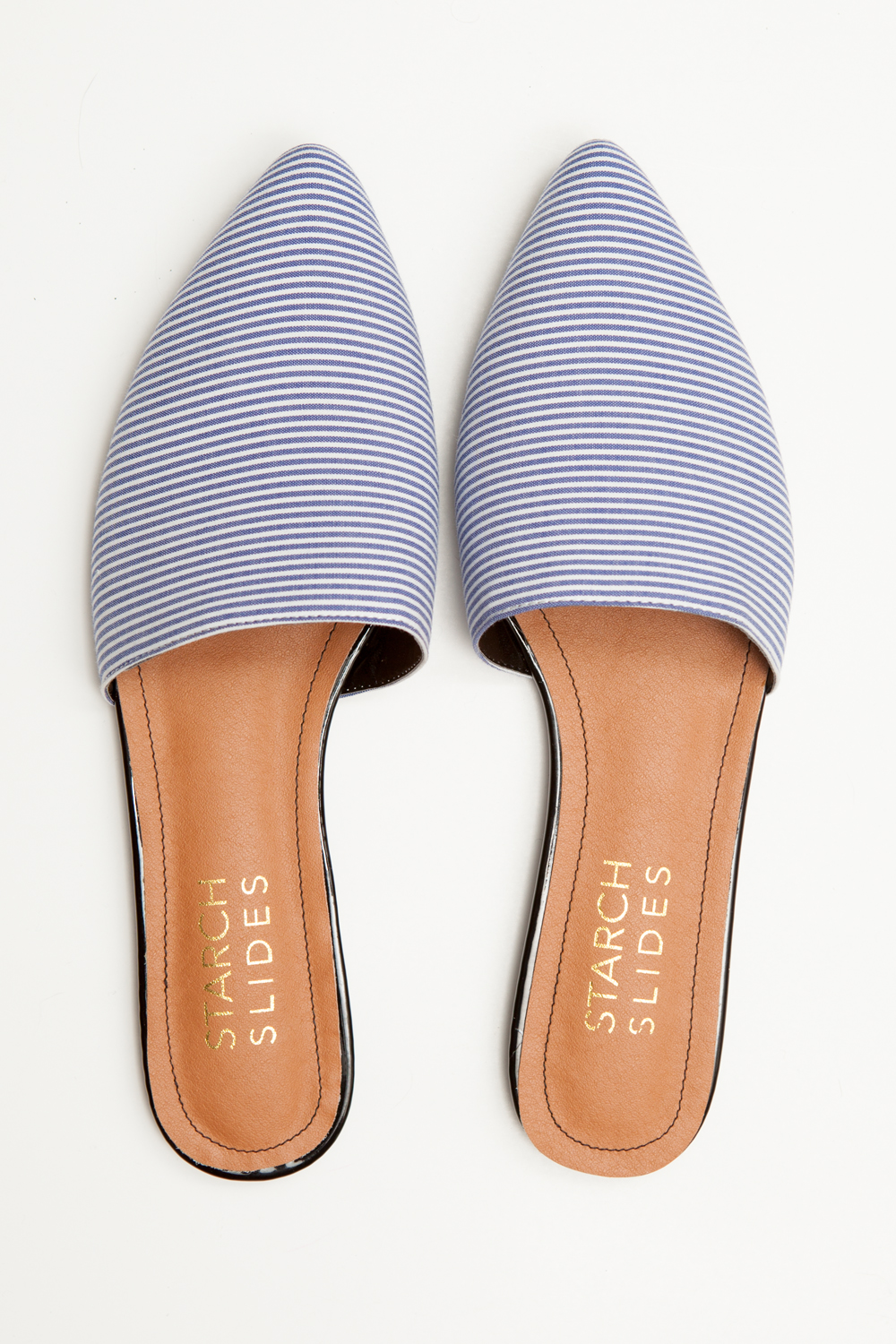
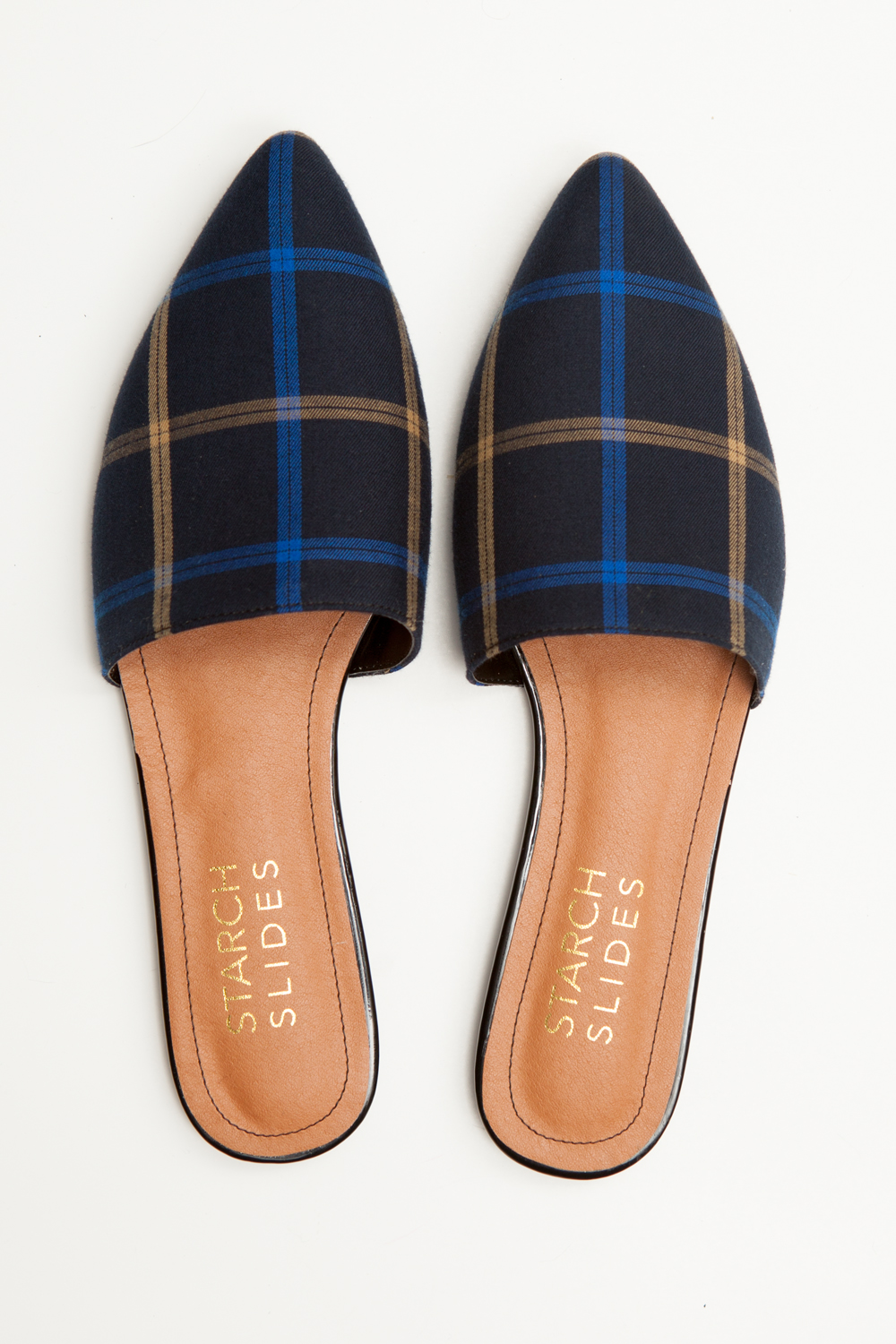
Starch Slides — Shoes of Up-Cycled Men's Shirts for The Girl On the Go

NYC-based Starch Slides is a unique footwear brand that has mastered crafting the perfect slide-on shoe, whereas proudly pairing the sustainability element of up-cycling men’s shirts with vegan leather. At Starch Slides, individuality is the key — no other pair for ‘the girl on the go’ looks the same, ever. Savant talks shoes and sustainability with its founder Shannon Crowley.

Starch Slides 2016. 

Starch Slides 2016. 

Particularly considering the environmental impact, what informed the creation of Starch Slides?

As I come from a retail buying background, I wanted to bring a brand to life that was eco-friendly without looking entirely “granola”. I woke up in the middle of the night with the idea of up-cycling men’s shirts as shoes, and I sketched [my vision] and took it from there. 

What's your personal relationship with sustainability? How much does it reflect in your brand?

Starch Slides is very much my personal style — they are cool, effortless, comfortable and original. I have always been aware of green living, watching my waste and hoping others do the same. I think even doing little things make a huge difference over time, and not being sustainable is irresponsible at this point. Little things, like skipping the plastic produce bag when buying oranges, using a refillable water bottle, and washing and reusing plastic Tupperwares when ordering take-out can make a big difference. 

"I have thought I dislike many styles of shoes, then I see a woman rocking them and looking totally cool. This has taught me not to judge."

Your design philosophy is to create a unique, one-of-a-kind pair of shoes that no one else has. Describe the woman who starts her morning routine wearing Starch Slides…

The Starch Slides girl is a girl of any age — our audience ranges from 17 to 60. The prints of a men’s button-up shirt resonates with all ages, as the shirts are so classic. A big trend has been for mothers and daughters to each get a pair (different styles, of course), the style of slides is so simple that the shoe really changes personality based on the shirt we used to make it. They are for the girl on the go — simply slip them on and run out. Also, they come in a reusable backpack and take up little room in a suitcase, so they are a perfect travel shoe. I bring at least 4 pairs to every vacation I take. 

Starch Slides 2016.

Starch Slides 2016.

Could you elaborate on the concept of 'vegan' leather? 

Vegan leather is made of polyurethane — it is durable, playable and breathable. We use vegan leather because we want to have as small of a carbon footprint as we can possibly get. We bind the fabric from the shirt to vegan leather so your foot stays secure and the slide is very durable. Trust me, I am bashing through the streets of NYC and I have yet to wear through a pair, and I am not easy on shoes. 

"Little things, like skipping the plastic produce bag when buying oranges, using a refillable water bottle, and washing and reusing plastic Tupperwares when ordering take-out can make a big difference."

What's your opinion on the fashion and footwear industry exposing itself to a greater degree of transparency? Is there still a long way to go to acting completely green?

I think that consumers are doing a great job of asking questions, this is leading brands to expose the truth behind the process of their factories. I do think many brands are taking strides where they can to become green, which is a wonderful thing to see. We have a long way to go, but I think we will get there in time. 

What do you hate the most about the mass production of shoes? What makes creating a sustainable shoe difficult?

I hate the cheap prices of mass produced shoes. It’s hard to work so hard to make sure your shoes all have their own, unique personality, then walk in a store and see shoes on sale for less than lunch. People need to continue to remind themselves, “who is getting paid?”, when they see prices that are too cheap to believe. 

What's the type of shoe you hate to see or wear? What makes a shoe beautiful?

I have thought I dislike many styles of shoes, then I see a woman rocking them and looking totally cool. This has taught me not to judge. I definitely have my own style, it is rocker/boho. When I am not in slides I am in sneakers or motorcycle boots. I live in New York City and always need to be in outfits that transition from day to night, [that are] easy and understated. So Starch Slides are the perfect shoe choice for this girl on the go. 

http://www.starchslides.com

MUD Jeans: The First 'Circular Economy' Based Denim Label

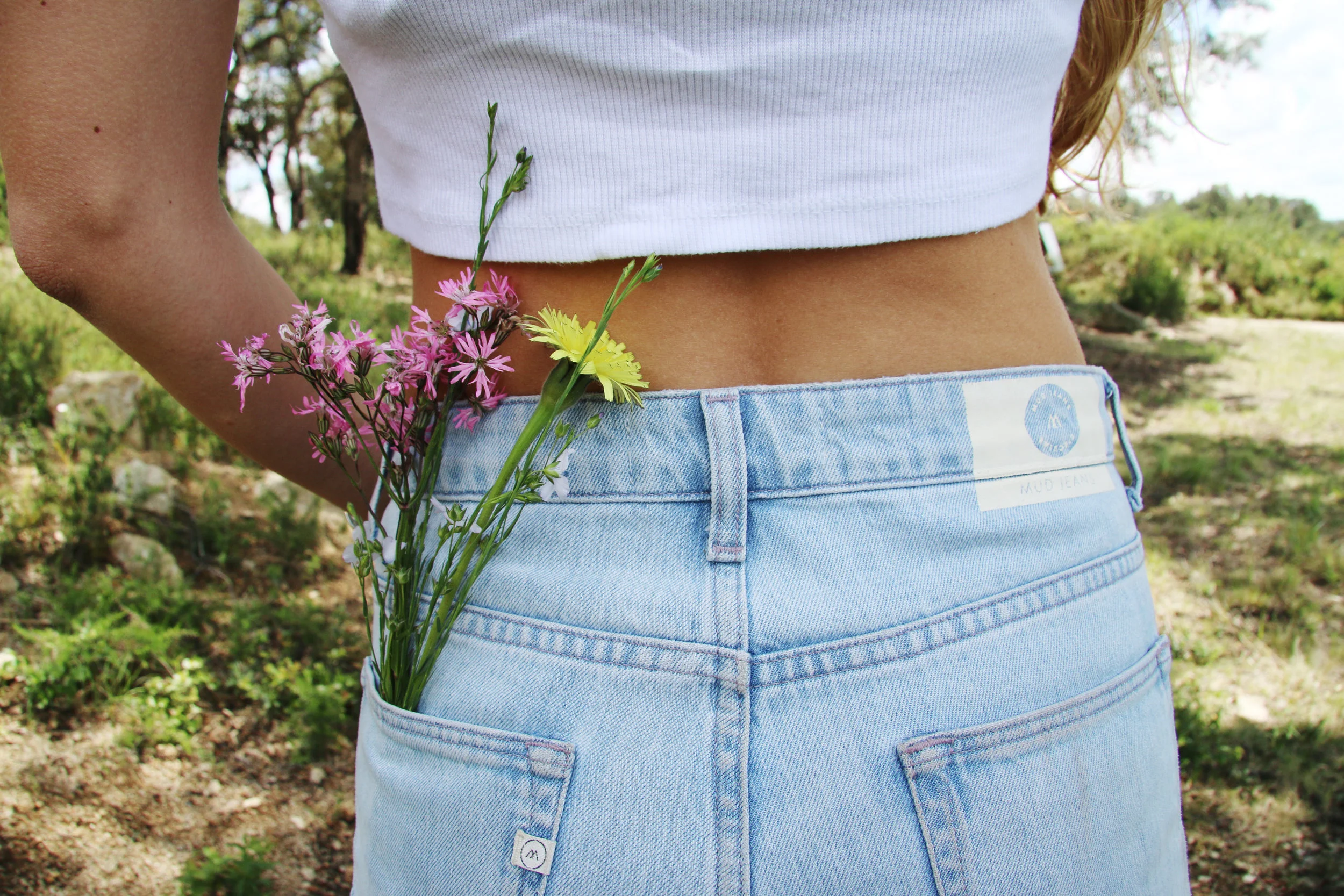
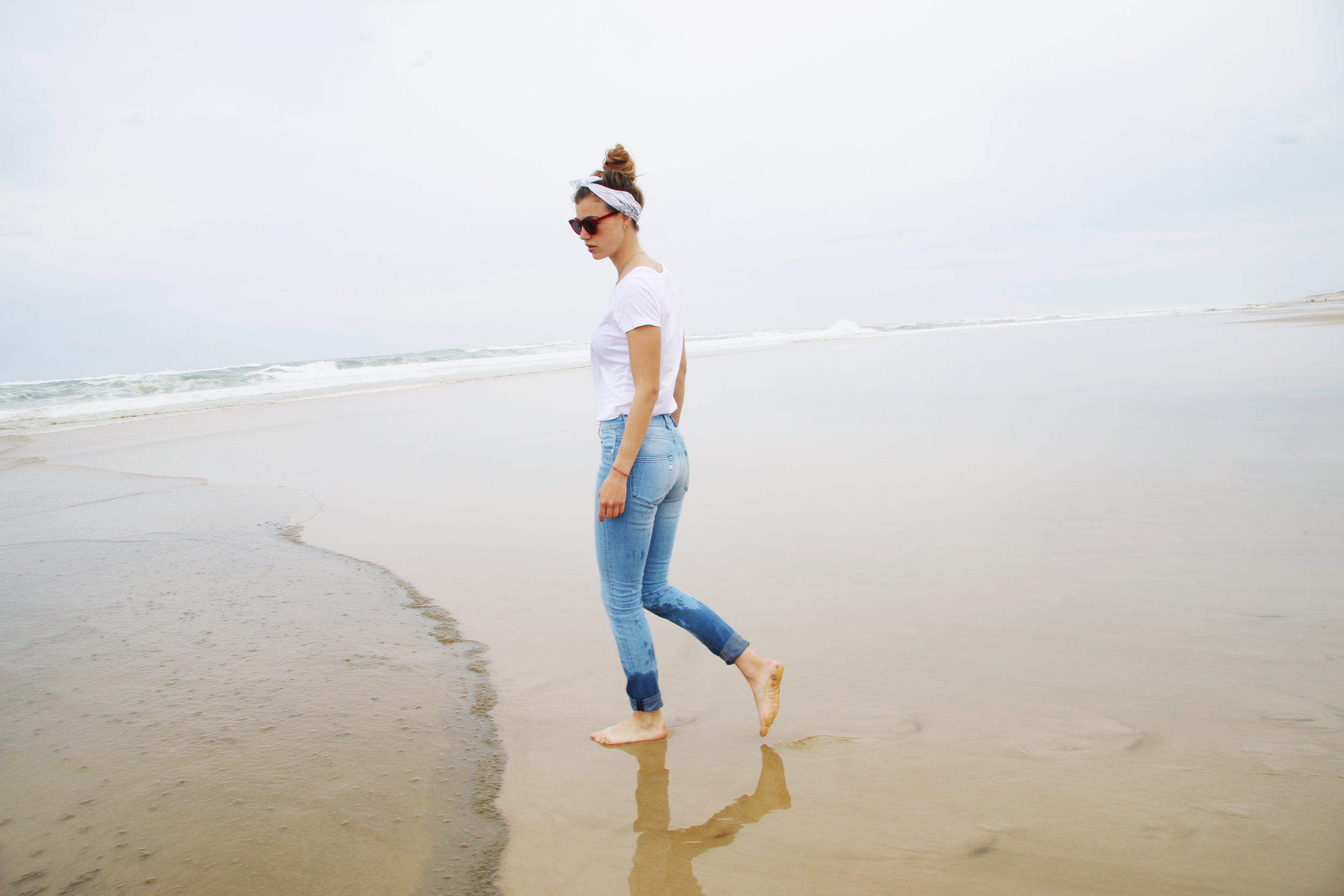
The Dutch denim brand MUD Jeans has gained fame beyond making jeans — the foreseeing, conscious denim maker operates on a ‘circular economy’ based brand model, aiming to shift the perspective of completely guilt-free consumption as a mere utopia. This means you are not just blindly buying a comfy pair of everyday jeans, but renting them with a bonus of swapping your most cherished ones against a new pair every year. Never letting go of your favourite jeans forever whilst doing good for the environment… sounds like a fair enough trade! 

Savant spoke to Danique Gunning, Marketing Manager at MUD Jeans.

MUD Jeans Campaign 2016

MUD Jeans Campaign 2016

MUD Jeans operates on the model of circular economy. What does it mean, to put simply? 

We live in a linear ‘take, make and dispose’ system, although we know our resources aren’t infinite. [The reality is], in the textile industry, we throw away a lot of clothing. We even burn it. Burning clothing accounts for 10% of the CO emission worldwide. So we have to change the way we do business. In a circular economy, there is no waste. We use old jeans — the ‘waste’ — as the resource for new denim products. We have made the circular economy practical by introducing the ‘Lease A Jeans’ concept. Customers pay a membership fee of 20€ and after that the pay only 7.5€ a month. After a year, they receive an email from us, asking whether they want to continue wearing the jeans or if they would like to switch to a new pair. Around 80% decides to switch to a new pair. Doing business in the circular economy thus means that, above all, you build long-term relationships with your customers. 

“Doing business in the circular economy thus means that, above all, you build long-term relationships with your customers.”

MUD Jeans: Circular Economy Model. 

MUD Jeans: Circular Economy Model. 

Why do you think many brands reject taking that responsibility of being completely transparent in what they do? 

I think brands should be transparent in what they’re doing because people expect this nowadays. Even though a brand makes mistakes, they should at least be honest about it and explain that they’re striving for the better. 

Can consumption ever be entirely guilt-free?

It can for sure. It all starts with not buying things you don’t need. But if you purchase a circular product, you know that the materials will be reused. Also, doing business in the circular economy creates a lot of jobs in the recycling sector. But above all, you’re giving the resources back to the Earth at the end of use. This is our understanding of entirely guilt-free. 

MUD Jeans Campaign 2016

MUD Jeans Campaign 2016

What are the general attitudes towards fashion and sustainability among the Dutch? 

People talk about it a lot and only very few of them actually act accordingly. But things are changing at their own pace. More and more people have become aware of the damaging effects of the fashion industry on our planet. I think people just lack the relevant education on the topic, and they have to learn that alternatives can be as fashionable. 

“Our own jeans are first sold as vintage, if they still look great. Worn-in jeans can be very fashionable, especially if you give them a redesign.”

What is the most difficult aspect in terms of educating the customer about environmental responsibility? To what extent does the education aspect of marketing matter?

Nowadays, people are so overwhelmed with information already. So it is important that the information we give about sustainability and about circular economy is fun, above all. In May 2016, we brought 3,000 returned lease jeans to our recycle factory in Valencia. Have a look at the Recycle Tour Video (link to YouTube). Through this trip, we showed that practicing in the circular economy can be a source of creative ideas and incorporate a lot of fun, too. 

What can we all do to fight against the harm caused by the increasingly polluting fashion industry?

We can make sure our products are designed in such a way that they can be recycled after use. For example, we have already instructed the designers in the production process to make a difference. We are also thinking about how to reuse the products after being worn, for that we have introduced several waste streams — for returned jeans from other brands and for returned MUD Jeans. Our own jeans are first sold as vintage, if they still look great. Worn-in jeans can be very fashionable, especially if you give them a redesign. That’s what we do — we redesign the jeans on demand. 

http://www.mudjeans.eu 

Les Sublimes: Pairing the 'Ethics' with Parisian Chic

Apparently, organic has been a thing in French women’s grocery lists for years, but what does it take to introduce the word ‘organic’ into their everyday fashion choices? Sometimes the answer lies in an accidental research trip to the Himalayas in Nepal, during which long-term friends Kachen Hong and Alexis Assoignon experienced their own Eureka! moment, leading them a step closer to revolutionising the world of wardrobe staples in France. Les Sublimes surely serves as a complement filling in the gaps in the quintessential, timeless 'Parisian chic' style directory…in a delicately sublime way. 

Les Sublimes A/W16 Campaign

Les Sublimes A/W16 Campaign

What does Les Sublimes represent?

Co-founder Alexis Assoignon: Les Sublimes is France’s first sustainable luxury brand sold exclusively online. Les Sublimes is a brand that doesn’t make you compromise on your needs, while also making you look and feel good on the inside and out. That is what we define as being Sublimes: the combination of inner and outer beauty.

What are the ethical principles you have incorporated into your brand?

[When creating Les Sublimes] we were driven by a desire to improve environmental and social conditions around the world, as well as a desire to create sustainable wardrobe alternatives that we wanted and couldn’t find in the marketplace. In fact, no one in France is making the everyday clothing pieces — those items that make up 80% of our wardrobes — in a socially-fair and eco-friendly way. We were sick of having to choose between style, affordability, comfort, quality and ethics.

As a responsible company, we integrate ethics and transparency into every element of our business, from design and production, to corporate culture and customer service.

What’s the personal story that links together the creation of Les Sublimes?

My co-founder Kachen Hong and I have been good friends for over 10 years (we met while studying at Sciences Po Paris). In 2014 we both quit our jobs and met in Nepal for 2 weeks. We had both been thinking about starting something of our own in our respective fields (Kachen, a Consultant in sustainable consumption and Alexis, a fashion Account Executive), but we weren’t sure where to start. 

Les Sublimes: Alexis Assoignon and Kachen Hong

Les Sublimes: Alexis Assoignon and Kachen Hong

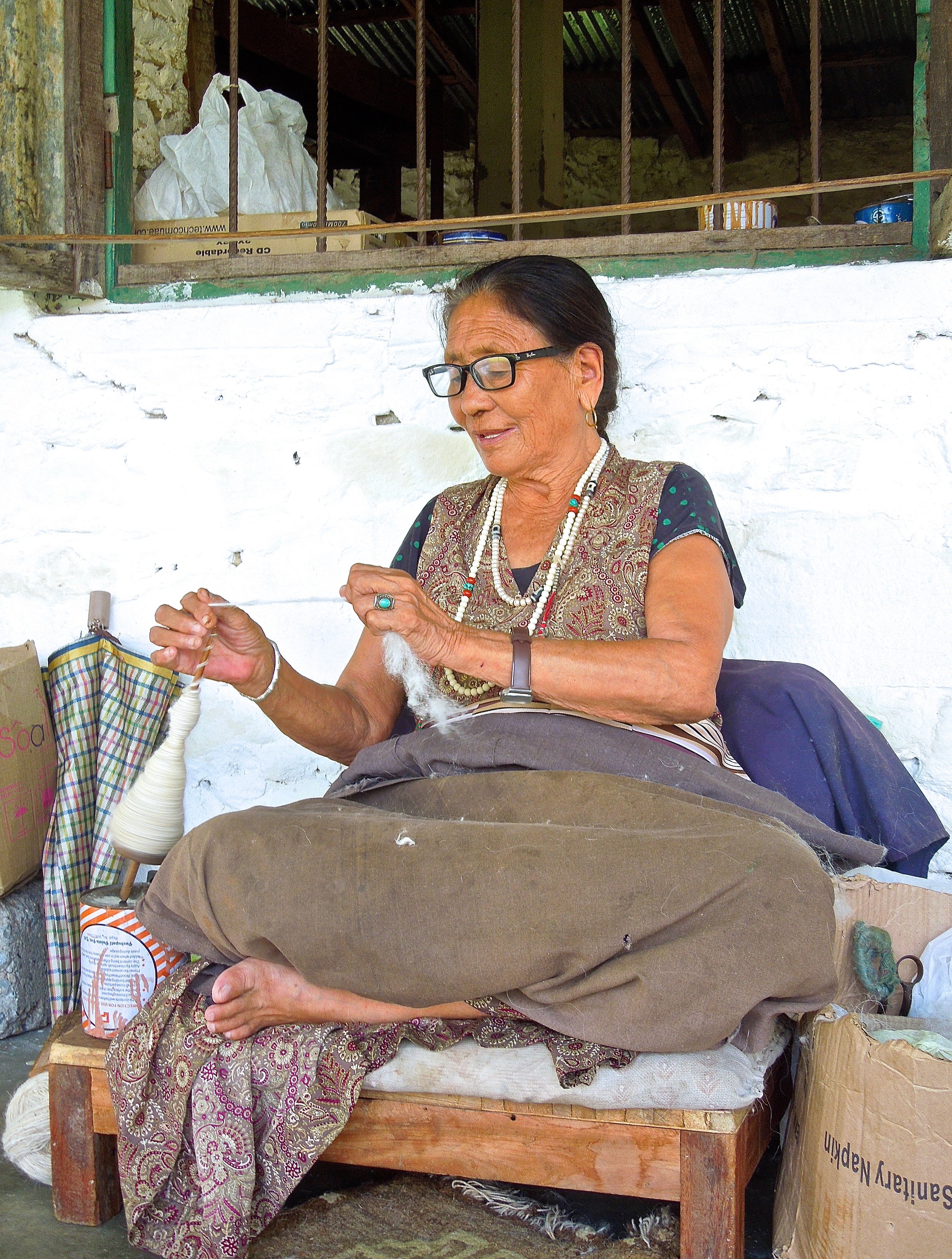
In Nepal everything started falling into place. There were long, scenic treks with lots of time to talk and share ideas. We also went to visit a group of Tibetan refugees spinning yarn for weaving and a small group knitters making sweaters in a remote village. We saw the women working so hard, for so many hours, and earning so little. Less than a $1 per day! We could see firsthand the immense need for better quality jobs and living wages. Speaking with the women, they felt hopeless about their employment situation. We quickly discovered that by marrying our own skills in fashion and sustainability, we could create a solution for these women in underprivileged communities, and also solve a personal problem — the lack of desirable and ethical, yet affordable fashion in the marketplace. So, in the misty landscapes of the Himalayas, Les Sublimes, a lifestyle brand for worldly women with big hearts, was born.

View of the Himalayas

View of the Himalayas

Tibetan refugee spinning yarn

Tibetan refugee spinning yarn

I see every new startup as a collective effort, no single person can change the world alone. Bring an example of the power of teamwork. 

I couldn’t agree more. Within the Les Sublimes team itself we choose to hire based on personality and purpose rather than a fancy resume or a corporate background. Because everyone on board is motivated by something bigger than themselves, the dynamics of the team are totally different. The work will always be rewarding because we share a common goal of making a difference. We also recognise that every person on the team has value. 

“We quickly discovered that by marrying our own skills in fashion and sustainability, we could create a solution for these women in underprivileged communities…[…]. So, in the misty landscapes of the Himalayas, Les Sublimes, a lifestyle brand for worldly women with big hearts, was born.”

We also believe that there is enough room on this planet for all of our [like-minded] businesses to thrive. So if we can work with our fellow entrepreneurs to reach our collective goals, then we are all better off. That’s one of the reasons why we choose to be fully transparent as a brand.

Describe your personal style. How is sustainability represented in your personal wardrobe choices?

My style is a mix of modern West Coast staples and effortless Parisian classics. I love to dress in something easy and comfortable, but still look chic and presentable in the city. Influenced by French dressing, I’ve always taken a position of quality over quantity, investing in well-made classics and essentials that I can easily mix and match with other items in my wardrobe. My mom always took me along to second-hand stores growing up, showing me how to find hidden gems at bargain prices. Nowadays I have taken my values a step further by actively seeking out products and brands that are environmentally fair. But the options are still limited, which is one of the motivating factors behind creating Les Sublimes.

“For me personally, living sustainably is about taking baby steps and slowly shifting to a more conscious lifestyle. I don’t try to be militant about it, because it can be overwhelming.”

What would you say about a typical French woman’s style in that respect — are they into sustainable choices, or it's only now that this mindset is starting to ingrain?

We were surprised to discover that France is definitely behind other markets, such as Canada, the U.S., Germany and Scandinavia, when it comes to shopping consciously. The French care a lot about the quality of their foods, and eating organic has quickly become a trend here. But as far as that expands into fashion, they are still learning. On the flip side, however, French women naturally shop with a philosophy of quality over quantity. So in terms of consuming less, they trump North Americans any day. They prefer to invest in high quality pieces from brands they trust, and take care of those items, so that they will last for years to come. The bulk of her wardrobe is very thoughtfully curated.

How does Paris as a city inspire your work?

Paris is an inspiring city - there are so many incredible museums, exhibits, shops, restaurants and monuments; it’s almost hard to stay focused on any single aesthetic! One trip to the Louvre and you want to introduce Roman inspirited jewellery, the next day you’re dreaming about empire waist dresses.

Les Sublimes A/W16 Campaign

Les Sublimes A/W16 Campaign

 What are the 100% natural gems on your beauty counter? Reveal us a secret conscious brand we all should know about.

I learned a lot about natural beauty products when I spent 2 months travelling through India a few years ago. I discovered great oils that can be used on the hair, skin, face, eyelashes — and they work better than any fancy cream. My favourite is almond oil. It’s the same stuff you cook with. You can buy a large bottle for a few dollars in any Indian supermarket, or for a bit more at your local grocery store. Nothing keeps my legs moisturised during those dry winter months like almond oil, and it even keeps me warmer, preventing a chill.

What's your attitude towards negative connotations linked to ethical fashion? Do you feel that ethical fashion still sustains the absence of glamour? 

I do think that ethical fashion is still perceived by many people as being unglamorous – I call it folk festival chic. The public perception is that ethical fashion is unattractive, avant-garde, hippie-esque, or super ethnic. Products are rough, poorly packaged and overpriced because they are labeled ‘organic’. But this is definitely shifting. There are so many incredible brands emerging that are disrupting this old attitude towards sustainable products. And we are here to help the movement along.

“One trip to the Louvre and you want to introduce Roman inspirited jewellery, the next day you’re dreaming about empire waist dresses.”

What are the widely circulating attitudes about ethical fashion in France now?

Honestly, there isn’t much of a discussion at all yet. It’s still fairly new in France. The food industry has become a hot topic these past few years. Recently supermarkets have banned plastic bags, and the government has just put a stop to disposable cups and plates. There are so many organic grocery stores popping up everywhere and the supermarkets now offer a great assortment of organic foods. The bus system in Paris is going completely electric as well. So I think ethical fashion will be the next big thing.

Les Sublimes A/W16 Campaign

Les Sublimes A/W16 Campaign

What's the hardest part in this process of promoting sustainable fashion? 

One of our biggest challenges is educating the consumer that doesn’t already actively pursue a sustainable lifestyle. She may not have ever thought about shopping differently or doesn’t realise the impact of her conventional purchases. But once she understands, there is a permanent, albeit slow, shift in her buying habits. 

We realised early on that most shoppers see ethics as a bonus, not as a driving force behind their purchasing decisions. That’s why we are focused on developing this concept of no compromise consumption — so that she doesn’t have to choose between integrity and everything else.

Les Sublimes A/W16 Campaign

Les Sublimes A/W16 Campaign

How are sustainability principles incorporated into your own everyday?

For me personally, living sustainably is about taking baby steps and slowly shifting to a more conscious lifestyle. I don’t try to be militant about it, because it can be overwhelming. I choose to live simply, in a small apartment, with less — which incidentally also means I save money and have less stuff to clean, manage and store. I recycle, reduce my energy consumption, walk or bike when I go out, buy organic at the supermarket, eat less meat and dairy, and invest in quality, durable products. In the end, leading a sustainable lifestyle generally leads to less stress, better health, more time and saving money. It just takes a little time to get there.

If you could introduce only one major change into the fashion industry today, what would it be?

Tough question! If I had to choose, I think we must put a stop to the pollution caused by factories that is destroying the environment. The devastation that results from processing and dying our garments is beyond control. As passionate as I am about supporting workers’ rights, I can’t ignore the urgent need to slow down climate change.  Nature has no voice and we are running out of time!

https://www.les-sublimes.com