Slow.ee — Pioneering Estonian Eco Fashion Revolution

Helen Puistaja — founder of the first online slow fashion boutique Slow.ee — is on an altruistic mission of bringing eco fashion closer to the Estonian public, and make it more accessible in our half-Scandi land. She assures that the eco revolution hasn’t happened rapidly, but Estonians are more conscious about their consumption habits than ever before. I met Helen at a quaint cafe in my hometown, Tartu, to talk the present and future of eco fashion in Estonia. What an honour to exchange ideas with a brave woman pioneer dedicated to changing things one generation at a time…
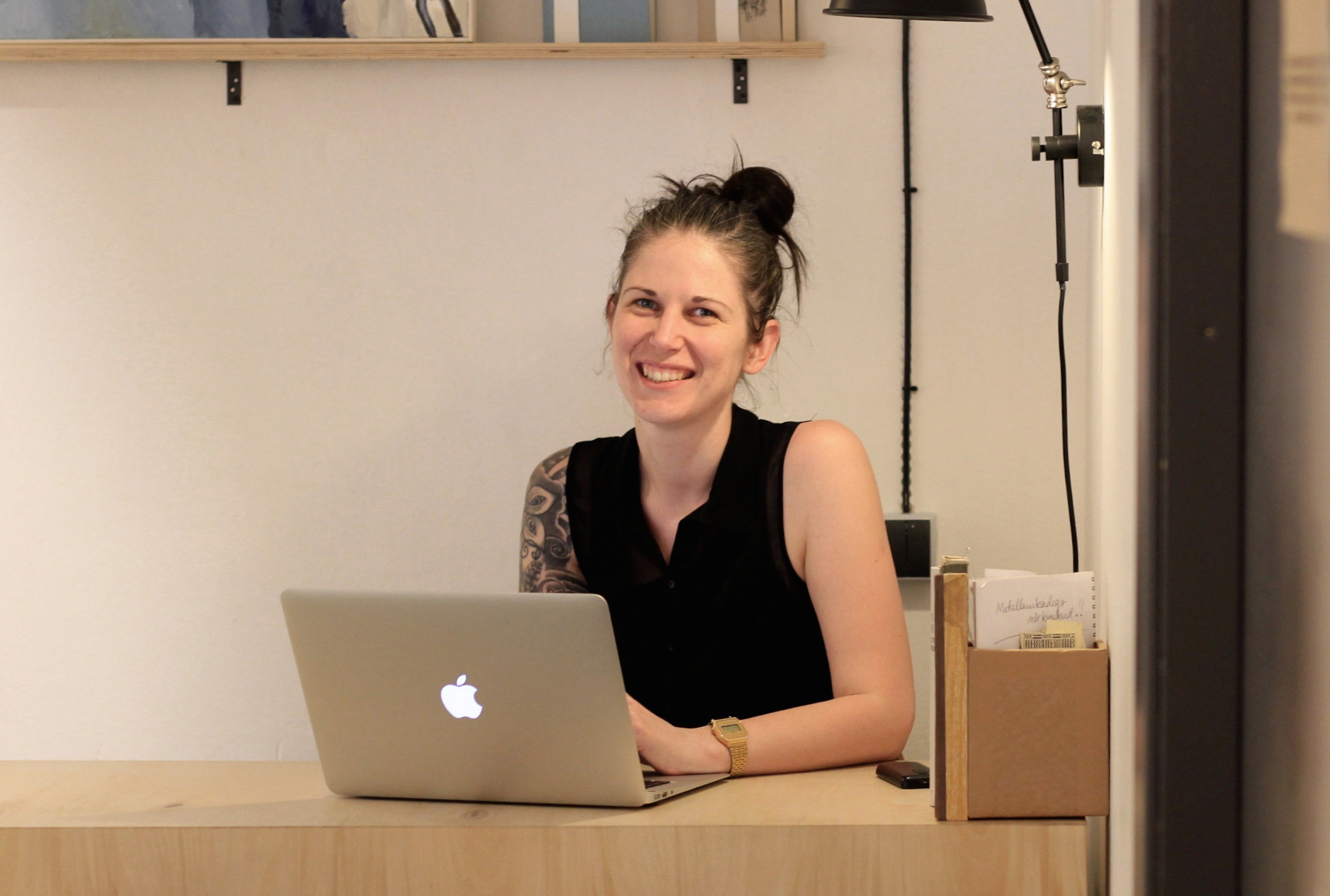
Helen Puistaja, founder of Slow.ee

Helen Puistaja, founder of Slow.ee

Personally, I find your idea of a slow fashion concept store relatively unique in the Estonian market. What were the main concerns in this infinite fight between the fashion industry and the environment (large-scale and the ones you considered on a personal level) that informed the creation of Slow.ee?

The idea preceded already about 5 years, but I somewhat sensed that back then people were not ready for my vision as such. Originally, it started when me and my sister were facing an infinite dilemma of where to get the most basic clothes in Estonia — the most simple, ‘everyday uniform’ type clothes, such as black and white T-shirt, tight black jeans, the most basic sneakers, that would also be of good quality, and we felt like these items were impossible to find in Estonia at the time. So for a while we were playing around with the idea of a store specialising in wardrobe basic items, but then I went to Germany for a year and we somehow dropped it. After a year, though, my thinking had changed and I had also turned into a vegan, which had invoked another level of thinking — I was more concerned about the environmental impact of fashion-making than ever before, so I knew there needs to be an ethical twist to it. I wasn’t really contemplating the concept and its necessity, because I generally have this attitude in life that if an idea pops into my mind I immediately execute it, trusting my gut instinct. I don’t even bother to go into too much detail, but just consider the fact that ‘oh, there’s a gap in the market’, nothing similar exists in Tartu yet. So, Slow.ee was born. 

“I generally have this attitude in life that if an idea pops into my mind I immediately execute it, trusting my gut instinct.”

Nothing similar existed in Tartu, but elsewhere in Estonia? How does your approach stand out? 

There are actually three similar boutiques in Estonia, but they’re all located in Tallinn [our capital]. It seems to me that they are focusing on eco fashion and strictly certified items, but what was particularly missing from their approach was focusing on educating the consumer about the environment and the impact of fast fashion. They’re style direction — what I perceive as romantic and hippie — is also a polar opposite to mine. I didn’t notice too many classic, everyday basics within their selection. 

What's your initial reaction to the cliche that perceives eco fashion as something not as glamorous, e.g. namby-pamby linen cloth products that look a bit outdated. On the other hand, we see fast fashion as something desirable — piling those fashion items high into our shopping basket offers us fulfilment, we are gaining immediate gratitude from simply buying those items. However, do you feel that people’s attitudes are starting to change?

Considering [the realm of] Estonian market, I truly understand where this perspective comes from — there are not many sustainable fashion alternatives on offer to balance it out. We still only have a choice of hippie dresses and those flowers and fairies, but a lot of excellent brands are out there and slowly cropping up here as well to offer balance to the market. I also hope to bring them closer to the Estonian public. You brought out the fast fashion issue and the satisfaction we gain from buying [new things], which could be related to psychology. By no means I am an expert, but I had a thought that, from an early age, we are being sold that idea of ‘shopping makes you happy’. So often we are just buying new things and new things, without focusing on our main problem, and [find it easier to] kill it with the good emotions we gain from the act of consumption. It is easier to show the audience that the other side of fashion has a lot of variety to offer than root out the necessity to constantly consume and crave and seize for new things. It is a deeply-rooted concern; addiction which takes years to reverse. 
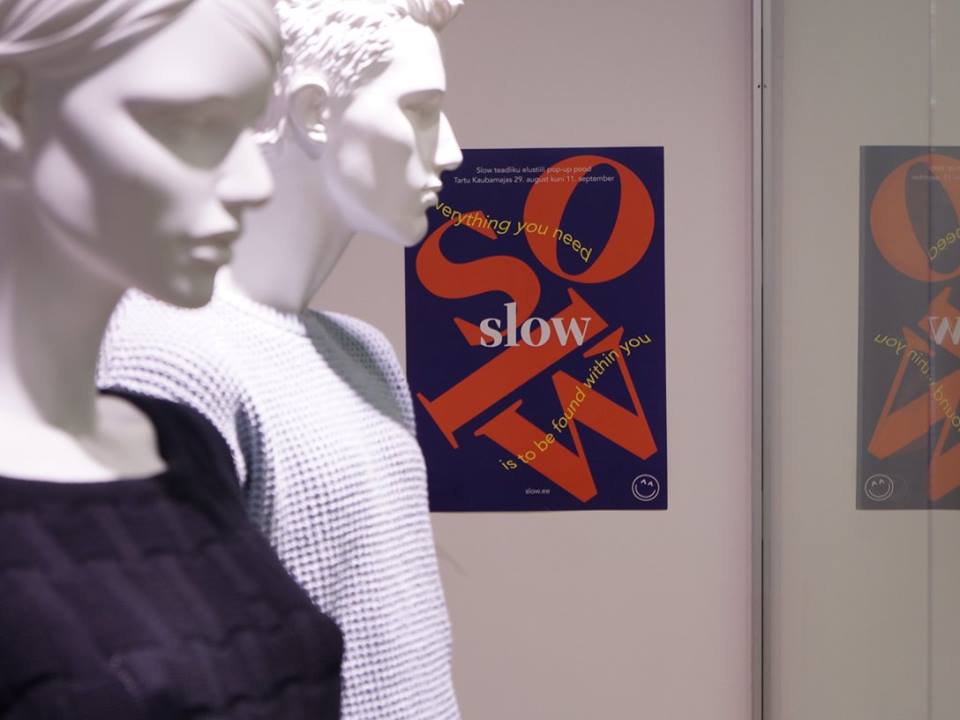
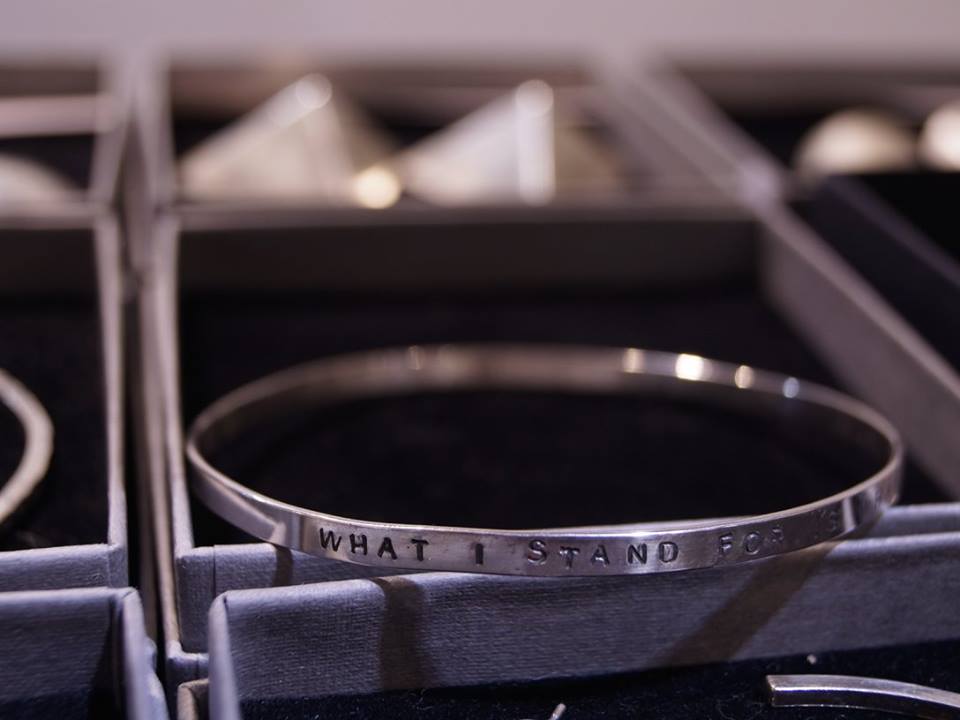
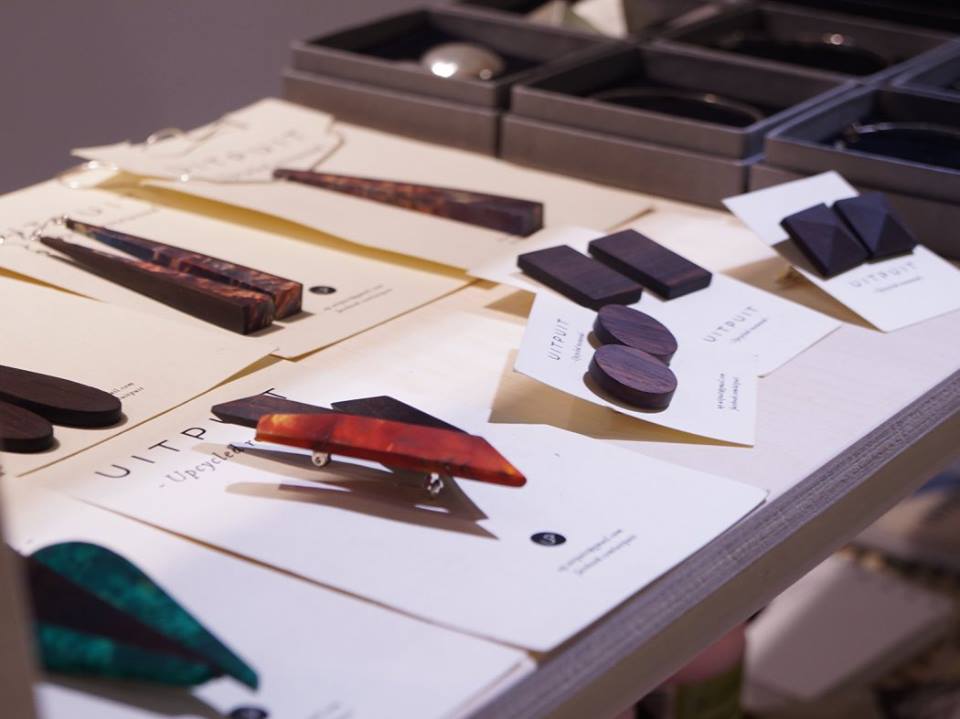
Slow.ee PopUp at Tartu Kaubamaja, September 2016

Slow.ee PopUp at Tartu Kaubamaja, September 2016

Slow.ee PopUp at Tartu Kaubamaja

Where does this phenomenon come from that we see shopping as a reward — we subconsciously hide our true concerns behind conspicuous consumption and mindless buying craze, and also tell our children that ‘If you behave well, I will treat you to some goodies, I will reward you with a treat or two.’

It is the easiest way [to deal with it]! It is an easy way out, especially when it comes to kids, who see things and want chocolate and candy in the shop. If the kid wants something and is shouting in the store, then you cannot put up with [the unpleasant scene] in front of everyone. And when they get the treat, then they become completely silent immediately. 

Perhaps it is to do with us spending too much time in those artificial environments these days — all our entertainment revolves around huge shopping centres, whereas it is inseparable that when the children drag along and see fancy things, they immediately want them too. How do we get out of that vicious cycle of consuming things and perhaps realise that there are other ways of spending our leisure time? 

I think these issues are all interrelated. It is not only about buying better quality clothes, which are better for the environment and therefore for our health, but it is also attached to the concept of personal development. After all, it is an individual matter to come to this realisation — you yourself need to force yourself out of that cycle of commercialism and reflect more on yourself to make rational decisions and understand that you don’t need that new item to be happy. Firstly, you should always ask yourself, perhaps there’s something else missing in your life, it might be that somewhere deep inside there’s another reason behind [craving for a thing]. 

So you believe that every person has an individual responsibility to open their eyes to the idea of environmental responsibility? 

It can be approached on many different levels and through various layers of importance — starting from your own health to [what is to do with] the environment. The easiest way to convince parents to act greener is the fact that they always want the best for their children and they don’t want to wrap their child into those clothes full of chemicals. Last week I held a presentation at a kindergarten, and I find it a very clever approach to speak to people to whom the future we build for ourselves and our children is more tangible. I want to do things better for the world simply to be a better place, but I don’t have this particular person in mind whom I am doing it for, but parents have that special person because of whom they should do things in a more considerate way. Nothing will change overnight, but let’s take it generation by generation then. 

“[…] From an early age, we are being sold that idea of ‘shopping makes you happy’. Often we are just buying new things and new things, without focusing on our main problem, and kill it with the good emotions we gain from the act of consumption.”

How did parents react to your presentation? 

I only had limited time to speak, so I used the shock therapy method. I showed them images like, here’s a child sitting on top of a dumping ground, that is the reality. A young, exploited child sewing somewhere in a dirty factory, that is the reality. To see the images of the huge amount of sewage water that drains into the natural waters from plantations and factories, is only one side of the coin, but I think this is what people have the strongest reaction to. There they sat and stared with petrified faces…

Don’t you often get the impression that these problems and concerns seem somewhat distant, so out of reach from us? For example, we often hear the news that somewhere in Bangladesh a factory collapsed, and immediately think, who cares? What we actually don’t realise is that we are contributing to these incidents on a daily basis by buying those fashion items, toys and homeware, which are crafted by children of the Developing World. 

During the presentation I gave at the kindergarten the headmaster pointed out savvily that, “we feel like they are extremely unhygienic and unkempt there, but it is our rubbish they are sitting in.” She was confronted with the epiphany that this little human is sitting on top of our rubbish, not on someone else’s rubbish. Of course, there will always be people who couldn’t care less about preserving our environment, and there’s nothing much to do about it. But if you take that garment full of chemicals and wash it in the washing machine here, then the infused chemicals reach us one way or another. Then comes the time we have to learn to take responsibility for it. 

Of course, we are often presented with the beautiful lie that they are actually happy to have that job in a factory mass producing clothes… 

They are! Because they don’t know a better way. Perhaps it is the best choice for them out of all choices, but it doesn’t justify the sad reality — exploitation of these young people.  

I’ve also noticed that slow fashion still stands on the pricier side of the market compared to its Fast Fashion sister. To me it seems like stating the obvious, considering the high production costs and ethical approach, but how has the audience’s reaction been so far — do they perceive eco fashion as something lavishly expensive or affordable? 

I have also tried to take in orders for goods that are more affordable. However, I’ve been keeping in mind that the things I offer cannot be too cheap. In order to cherish the item more,  you need to think the purchase through and ask yourself a few questions — how to combine it with the already existing pieces in your wardrobe; how does it go together with your personality. I want the customer to see it as an investment — she is willing to spend a larger amount, because that way it also lasts for longer. My target audience — of course, all people could act more considerate and consume better — are people who have already found their own style and know that the lifespan of the purchased item will be infinite. I am that person myself… I know nothing about fashion! On the other hand, I have developed my own unique style over the years, which is not very significant, but I feel good in my own skin wearing my signature clothes, and when I do buy something, I wear it at least for a year…two… three… four, maybe even longer. 

And when you divide the cost of the product with the number of years worn…

It is overall much cheaper indeed. 

As a true fashionista, I am also struggling with the results of excessive fashion consumption habits in the past — I’ve got heaps and heaps of old garments, which I’ve disregarded for long and, as a result, I cannot find a way to get rid of them anymore. It just seems to me as a mindless waste, both financially and environmentally. 

I would also like to highlight that I don’t support mindless wasting. That comes without saying that when people all of a sudden realise they should consume less and invest in better quality, durable clothes, then it necessarily doesn’t mean they have to swap their wardrobe against a new one. The items that already exist should be used until they last, without the attitude that “I am now environmentally conscious and I only need to consume organic clothes.” I am also struggling with finding the best option to send off the old items to recycling. 

Tell me more about the brands you’ve chosen to introduce to the Estonian market. According to which criteria did you select them? Do you keep your own personal taste in mind, or think that, ‘I don’t actually like it, but my customers certainly do’?

I aim to keep a characteristic line in the selection of products, not to diffuse things unreasonably, because my aim is that the regular customer, who comes every once in a while, knows that they will certainly find items of a specific style from my store. If I would only consider my own personal taste, my store wouldn’t be customer-friendly at all! (laughs). It would be only for a strictly limited audience then. When I fill in the orders, I usually have specific prototypes in mind — people whose opinion matters and to whom I turn to when I need advice about product selection.

When I was studying in London and my course was completing our final major project, our tutors would often ask in awe, “Who do you keep in mind, when designing these products?”. There were artworks that were designed in a very incompetent way and we would often answer, “Don’t worry, I personally also don’t like it, but the one who purchases it, will adore it, hands down”. I think it also cannot be that controversial…

Agree! Well, of course I am considering what the consumer thinks, but I also have to remain true to my own vision — if I am doing it alone now, then it is my brand, my soul that has been poured out to take a form of a store, and I cannot do it inadvertently at this stage. I am always trying to look for the middle ground bringing together my own personal taste and an understanding of what the customer wants and needs. 

Do you believe that slow fashion is still targeted at the niche market? Who is your actual target audience? You already mentioned earlier that someone who has already found their own personal style. Do you have anything else to add to this equation?

I wouldn’t say that slow is the right word to use here, but consuming consciously is certainly becoming more trendy and common here, more than it was a few years back. 

Well, the brands you represent, use specific principles to be more environmentally considerate… 

After all, the reality of things is, for making ends meet, you need to sell your products. This is the… 

Together: Point of conflict!

Did I understand correctly — you can produce something ethical, but when you sell it in large quantities, then the end result comes across as completely unethical? 

When you look at the entire process as a whole, it is absolutely acceptable that people need clothes and they want clothes, nothing wrong with that, but then we should start from the fact that the items we wear have been crafted keeping the nature and people in mind, and when the garment reaches the end of its lifespan, then it is crucial it won’t be thrown out to the dumping ground immediately, but the whole recycling process has to complete the full circle. Then the act of consumption becomes more reasoned and thought-through, too. 
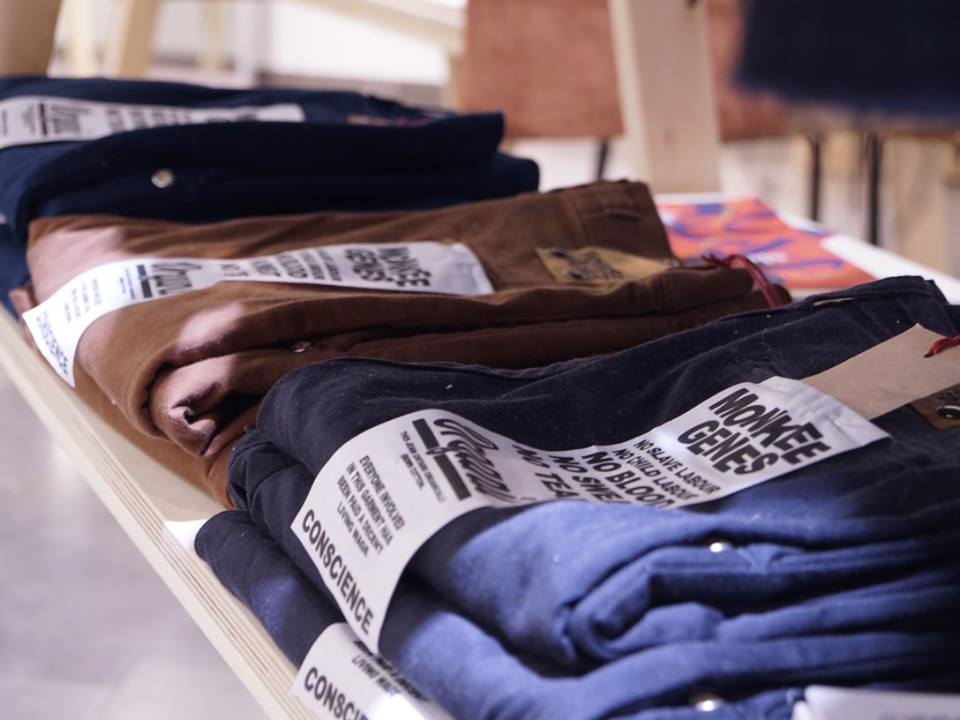
How would you evaluate the slow movement in Estonia compared to Scandinavia and the rest of Europe? Assuming that they already stand a step ahead of us, how could we progress to their level? How could we fill in that education gap when the subject of living greener is concerned?

To be honest, I preserve it more as a natural process, but as much as I’ve kept track [of the progress], it can be said Estonia is still a step behind. Although I think that the progress gap is not immeasurable anymore — people are more aware of the harmful effects of overconsumption and thinking green has become valuable. Of course I can perceive the rapid change in the mindset and general attitudes more sharply due to the fact that I am also an active member of the vegan community here. 

Oh, veganism has become an entire movement on its own in Estonia. 

Yes, all of a sudden there are vegan cafes popping up everywhere and we also boast a wide variety of organic food stores. Judging by that, I think we shouldn’t define the gap in being slow in progress — we only need more activists, who create these stores and make whole foods and the organic produce more accessible [for the everyday consumer]. 

One thing I have noticed, though, is that everywhere in Europe, the excessive use of plastic bags is strictly prohibited, but Estonians haven’t adopted that policy yet…

Not to mention that a few days back I just got angry with Selver [my local food store], where there was a striker on the food scale saying: “Please place all the products with different prices in a separate plastic bag.” AAAAGGHHH! Pure nonsense! 

I also believe that they should at least encourage using paper bags, or… 

Why do I need to place a single item in a plastic bag? I can weigh a single tomato without it.  

That is indeed ridiculous. 

I do understand there will always be people who would place even their single carrot in a plastic bag, but the store has a responsibility not to encourage it. I cannot buy any food products that are wrapped in heavy plastic packaging… in Estonia, they sell leek wrapped in plastic. If I see something like that, I just refuse to buy it. 

“My target audience — of course, all people could act more considerate and consume better — are people who have already found their own style and know that the lifespan of the purchased item will be infinite. I am that person myself… I know nothing about fashion!”

What other environmentally responsible principles do you follow in your everyday life? Apart from being a vegan…

I hate wasting water. Although our bad habit of letting the tap run freely while we are brushing our teeth is not even comparable to the amount of water wasted on growing cotton in India, but I try to avoid wasting water as much as possible. Also, as mentioned, I am not fond of using heavy packaging. The loveliest surprise awaiting me when I moved to my new flat was that next to our building are 4 separate recycling bins — one for general waste, one for plastic and packaging, one for cardboard and one for organic waste. Now I recycle everything separately. No one is an über-human, but at least as much as I humanly can. 

Have you also reduced consuming fast fashion? 

To be fair, I have never been particularly fond of shopping — when I was brought up I was always encouraged to think my purchases through. I still belong to the generation who remembers the time when everything wasn’t so easily accessible and available in our market, so it is fairly a modern-day concern, when you have limitless opportunity to consume and consume. 

Maybe partially this could be the reason why Estonians are reluctant to accepting eco fashion and consuming less, because we are so used to not having anything available… 

And now we have more than enough, so we have to take advantage of it! Maybe that’s the reason why it takes longer for us to understand that we are better off with consuming less.

In a nutshell, could you bring out a specific aspect that concerns you the most related to your start-up?

To be fair, in Estonia there are thousands of people who are dedicated and ambitious; who are willing to invest all their free time to help and work 12 hours in a row, but in the end it all comes down to the finances and readiness to act. But it is not a hindrance at the moment. We can do it!

I would again like to point out that we are inserted into this materialistic and superficial cultural environment that encourages consumption and therefore we also encourage our children to look for the missing happiness in rewards we can buy only with money. How to change that mindset and replace it with thinking greener? Pitch me an effective action plan.

I think everyone needs to come to that conclusion themselves that this cannot go on any longer. What we can do is to educate people as much as in our will and be a positive example. Sadly, the way it works with certain things in life is that when you force them upon people, then they refuse to conform, and as a result, act in a reverse way. We certainly don’t want that. I personally try to offer a variety of possibilities — to filter the products according to my own vision and ideals, to educate people on the negative effects of consumption and be an exemplary figure in thinking green. And then everyone individually slowly gets there in their own pace, if they do… 

How is your experiment called pineapple leather versus Estonian weather progressing? (hinting at the shoes made of Pinatex leather [pineapple leaves fibres] Helen is wearing)

They haven’t seen any rain yet! I also haven’t deliberately jumped into shower with them to test the water resistance, but they are extremely comfy and allow the feet to breathe. 

So you recommend them? Will they be available for us to buy?

I have introduced only a couple of pairs at the moment. My final e-store launches in October and then feel free to order and test out yourself!

Where do you keep your inventory and send the products out?

Under the kitchen cupboard. I have a teeny-tiny apartment and you wouldn’t even notice that there’s a whole store full of goodies hidden somewhere… everything is perfectly fitted in. 

Thinking economically! Both laugh out loud. 

Lately, Slow.ee PopUp store could be spotted at Tartu Kaubamaja, (expectedly) from December onwards, Slow boutique will be open to customers in the newly-refurbished Aparaaditehas…

www.slow.ee

Noctu: Seasonless Organic Cotton Nightwear

Noctu is a family business founded by sisters Zoë and Milly, who are based between Bath, UK, and Oslo, Norway. Having witnessed firsthand the shocking impact conventional cotton manufacturing has on people and our planet, they were compelled to create ethically made, beautiful, minimal night and loungewear.

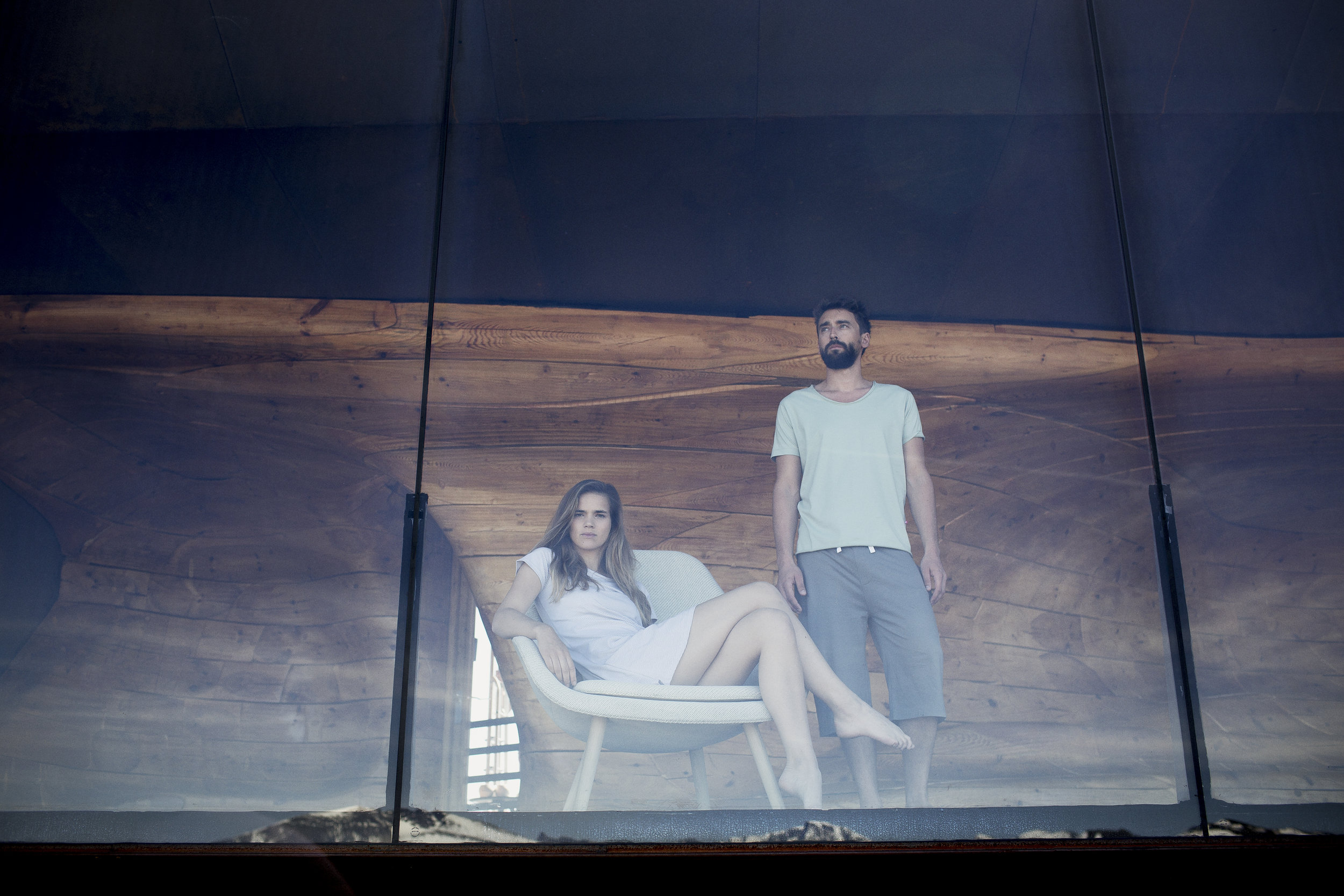
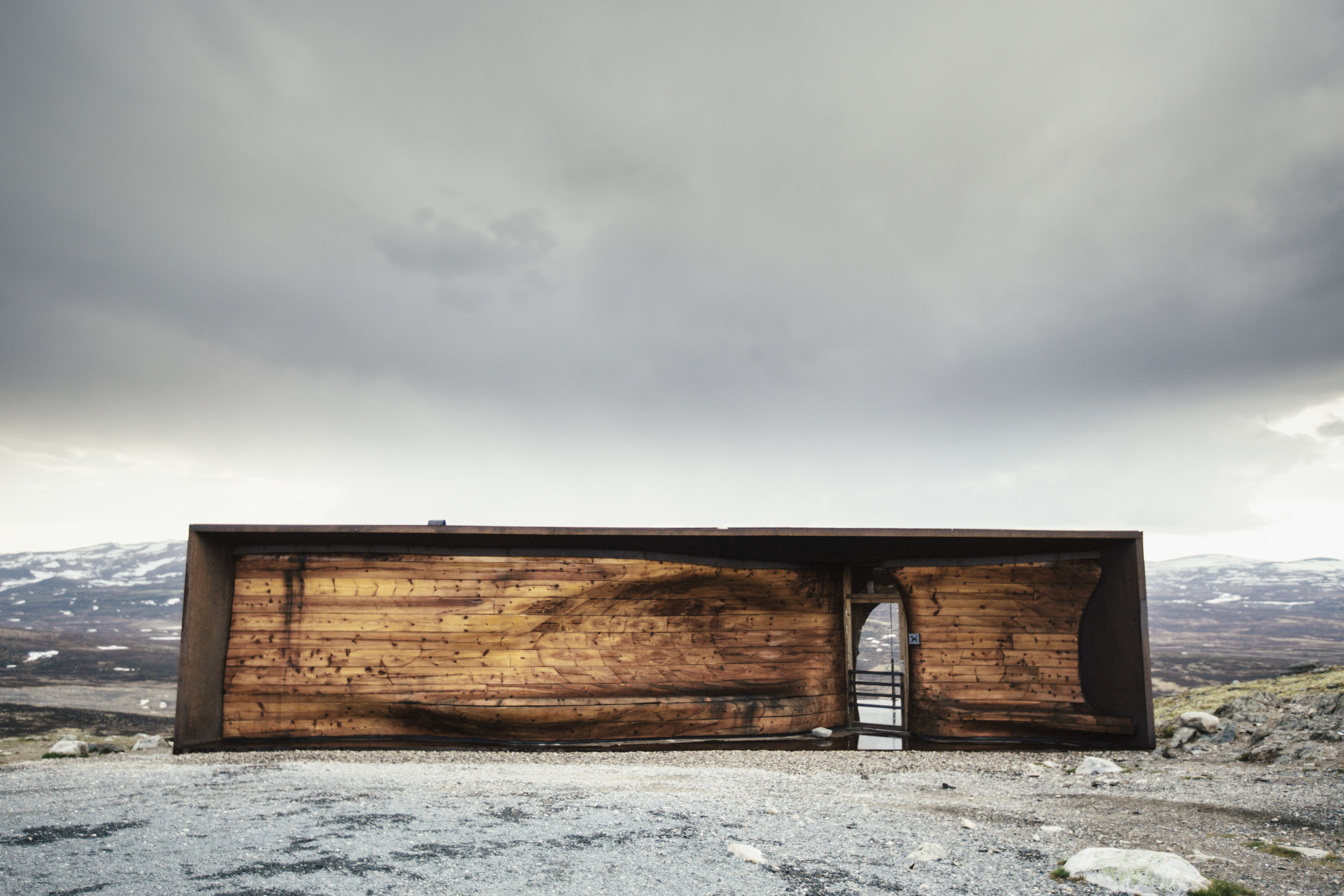
Noctu Campaign, 2016

Noctu Campaign, 2016

“Take my hand and I will lead the way.

Through the fjords where the night is day.

A special place where the sun does not set.

A land where mountains silhouette.

A place for those who dare to dream.

The land of the midnight sun.”

Noctu Campaign, 2016

Noctu Campaign, 2016

Noctu dedicated years to finding the right manufacturers, determined to find organic production and fair trade conditions. Throughout their business, Noctu ensure equality, women empowerment and ongoing training programmes. The collection is a wonderful example of how small companies are helping shift the norm with beautiful, high quality products, sourced and made ethically and sustainably that don’t compromise on design, or start at an inaccessible price point. 

Noctu Campaign, 2016

Noctu Campaign, 2016

Noctu’s first seasonless night and loungewear collection is beautiful and simple, inspired by the Scandinavian midnight sun, where days neither begin nor end.

All of Noctu’s cotton products are certified to the Global Organic Textile Standard Fairtrade.

We love their nighties and the gorgeous pure white bed linen, just what we need as the nights start to draw in. 

Noctu Campaign, 2016

Noctu Campaign, 2016

The White Label Project: Connecting Sustainable Scandi Luxury With Honest Prices

The White Label Project is a Norwegian online concept store connecting clean-cut, sustainable luxury staples with affordable, honest prices. Savant spoke to Nicola, founder of The WLP, who calls people to be just a degree more mindful when it comes to their fashion purchases, without stripping away the glamorous side of shopping. Not all the luxury in the world has to come with an insurmountable price tag…

The White Label Project (Lookbook 2016)

The White Label Project (Lookbook 2016)

What are the key influences that formed The White Label Project?

The White Label started out as a project based on the concept of unbranded goods. We wanted to focus on classic staples that are of luxury quality, but which are not priced according to their brand positioning. [The aim is to offer] classic, clean-cut staples at honest prices. After moving from Shanghai to Norway, I realised that there were many women like me, who wanted key investment pieces, but cared more about the actual quality of the products than brand names. I knew a lot of people in manufacturing and step-by-step started calculating how to make luxury more affordable for everyone. Scandinavian simplicity will also always be a key influence crossed with feminine touches from my days in ballet. 

Why is sustainability in fashion important now?

It is becoming harder to ignore the facts about the change in our climate and environment. We need to be considerate and conscious when it comes to our fashion purchases, instead of being mindless and materialistic. We must realise that the way we live our lives now affects the world and the future of our children.

“We continue to sweep under the rug the traumatic incidents and truths about manufacturing in Third World countries, and hide it behind all those big campaigns and glamour.”

From the viewpoint of you as an insider, who is the key audience for sustainable fashion?

I honestly would have to say young women. I think we now want the future generations to say, 'My mother taught me this..' or 'My mother did this…'. When women hold the majority in purchasing garments in the retail sector and for households, I think that is where we can pinpoint the right audience to educate. It has become quite clear that it will be these women and their choices in consumption that will be passed on to the next generation.

The White Label Project (Lookbook 2016)

The White Label Project (Lookbook 2016)

There are many projects connecting sustainability and something novel in fashion in the Scandinavian region. One could say it has become a wave on its own. What could be the reason behind that? 

Scandinavia has always been ahead of the market when it comes to design and innovation. Personally, I feel that here in Norway people have a deep connection with nature. You don't see forests being destroyed or pollution taking over drastically. It seems like the natural and the artificial world co-exist in a balanced, peaceful way. So it only seems like a natural progression that Scandinavian designers and organisations would venture into sustainable fashion. 

“I try to focus on [calling people to be] more minimal and mindful when purchasing clothes, instead of stripping away the glamorous side of fashion.”

What's the hardest part when it comes to promoting sustainable fashion? What could be done to make it more visible to the everyday consumer? 

I think people have stereotyped sustainable fashion and therefore it is very difficult to change [the idea of it]. I find a lot of brands really marketing it the wrong way. I personally try to approach it in a very gentle and subtle way — I try to focus on [calling people to be] more minimal and mindful when purchasing clothes, instead of stripping away the glamorous side of fashion. 

The White Label Project (Lookbook 2016)

The White Label Project (Lookbook 2016)

Do you agree that honest and ethically made fashion is still on the pricier side compared to its Fast Fashion sister. Why is that? Do you think this could change in the future?

Sustainable fashion will always be more expensive than fast fashion due to using high quality materials and fairly paid workers. Fast fashion companies in general are continually searching for new factories in the developing countries that can provide the low cost of labour. For example, China used to be considered cheap, but now it is well known for providing high-quality garments, too. I do often wonder, what will happen when all these developing countries become regulated. How will fast fashion brands maintain their prices? Bottom line, it won't be sustainable.  

How would you evaluate your competitors in the realm of Scandinavian market?

I don't really have time to think about competition at this point. Instead, I like to focus on the direction that we are heading to. I think you can easily get too caught up with what is happening around you and let it influence you in a negative way, which in reality isn't productive.

“I think we now want the future generations to say, 'My mother taught me this..' or 'My mother did this…’."

Talking about reshaping the fashion industry today, how can we make something that affects us all on a larger scale perhaps more personal?

From my perspective, what is still wrong with the fashion industry is that we continue to sweep under the rug the traumatic incidents and truths about manufacturing in Third World countries, and hide it behind all those big campaigns and glamour. There needs to be more honesty. As consumers, we really need to become more conscious of what we are buying into in the long run.

The White Label Project (Lookbook 2016)

The White Label Project (Lookbook 2016)

What would be your advice for startups who want to do something similar to your project, but haven't had the courage to do so yet?

Always be practical and realistic, but honest. The entry barriers into business these days are low-cost, so you have every opportunity to start.

http://www.thewhitelabelproject.com

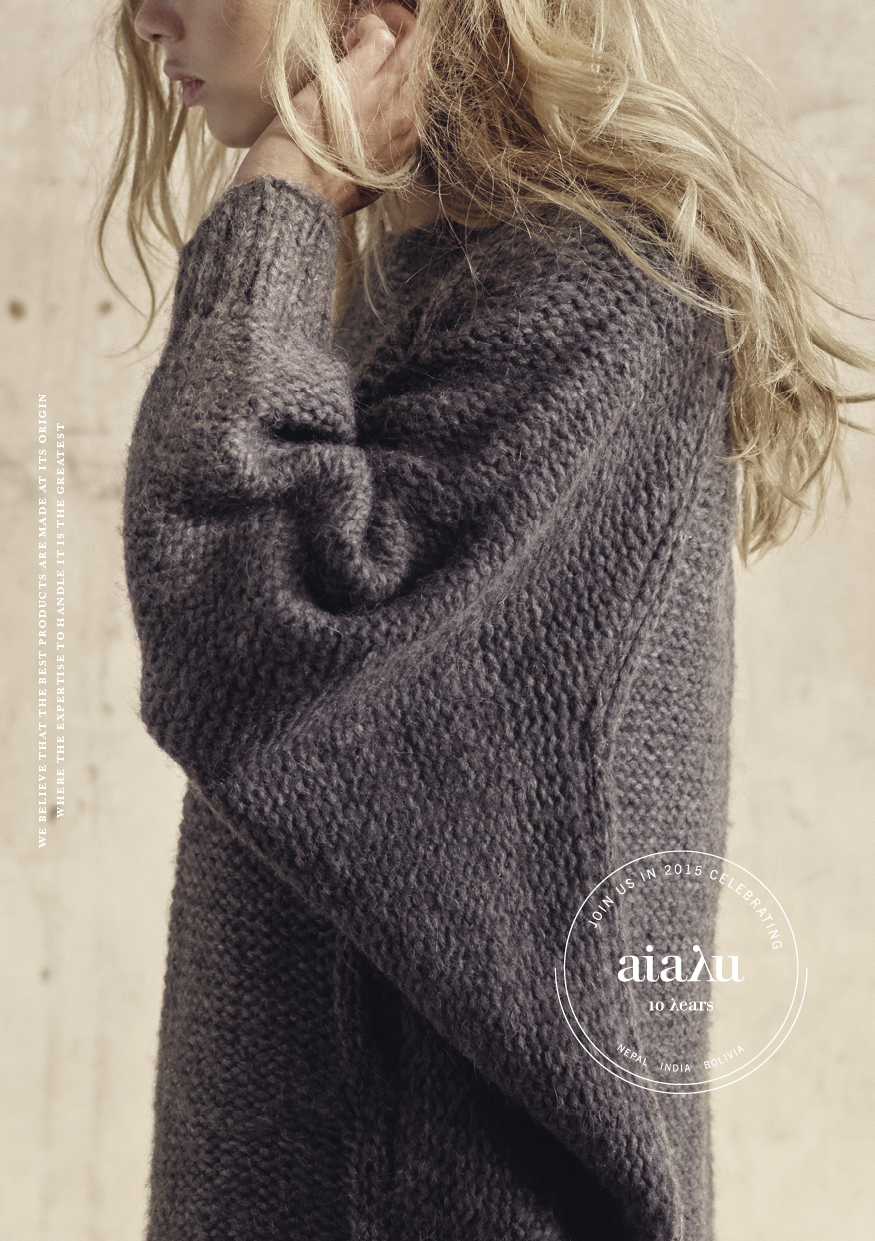
AIAYU: 100% Social Mission Oriented Danish Label

Incorporating a human story into fashion making is one of the core values for Aiayu. Working with authentic, raw materials found in Nepal, Bolivia and India, the foreign-sounding Danish label brings you immaculately crafted fashion basics by skilled local artisans. The transparency factor behind the certified Scandinavian label? In addition to educative story telling about the origins of materials, Aiayu religiously equates the aesthetics with a larger environmental benevolence. With the help of a skilled pair of hands or two, Aiayu proves that a 100% responsible social mission is the only way forward in today’s sustainable design industry.

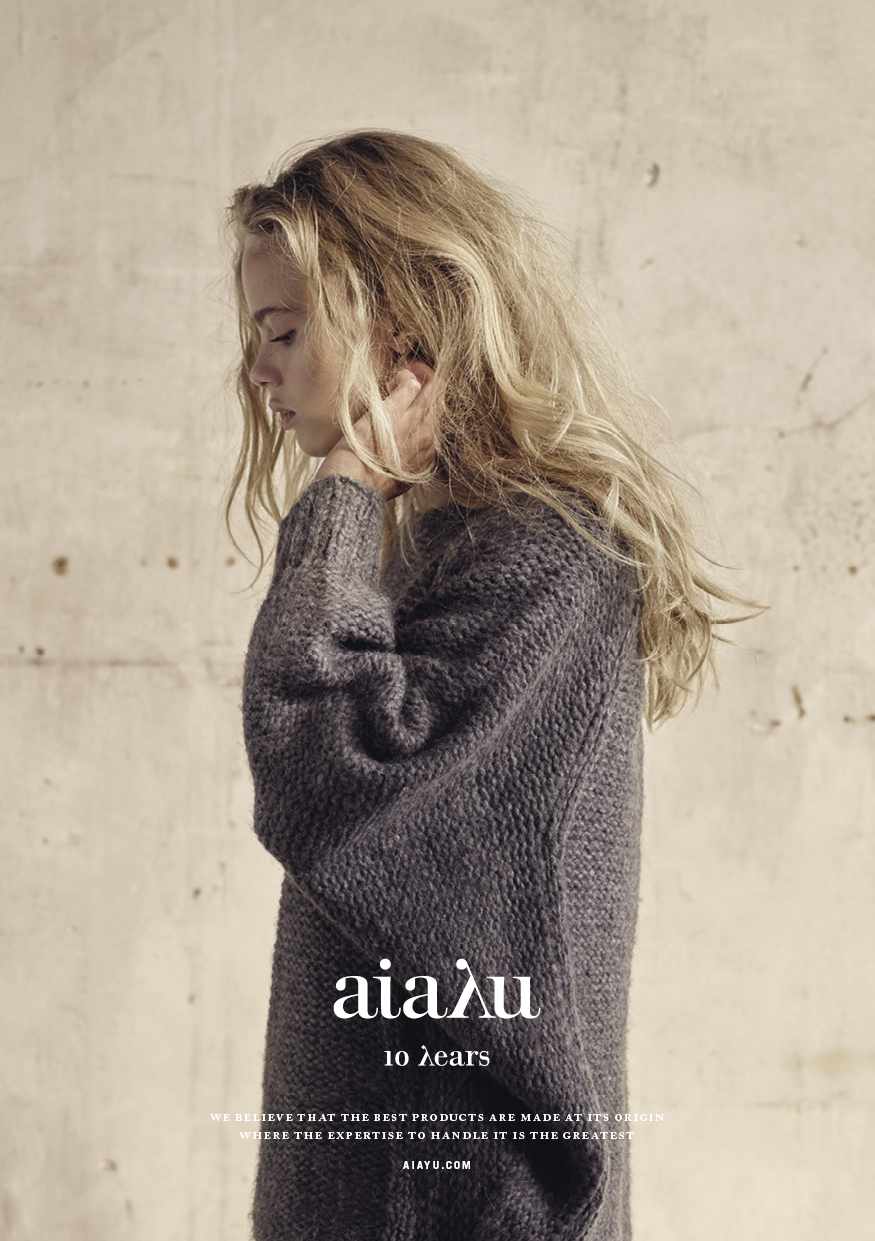
Aiayu, 2016

Aiayu, 2016

What are Aiayu’s principles and philosophy? 

In a world filled with meaningless products made via mass production, it’s becoming more and more important to choose products with a soul, from companies with a conscience. At Aiayu, our concept is all about natural, organic materials handmade by artisans using ancient techniques to create timeless designs born to be worn, lived with and loved. [We are interested in] involving working conditions that comply with international standards, as part of a certified sustainable production process designed to minimise any harm done to the planet, or the people who inhabit it.

What's the biggest accomplishment for Aiayu so far?

Some accomplishments have been [reached] internally, so to speak. Having the factory in Bolivia WRAP (Worldwide Responsible Accredited Production) certified took many years and is a big step forward in a Third World country. Another accomplishment is to be seen in the company of Gwyneth Paltrow in her new cookbook. [For us it means a lot that] people take a liking in our brand, because it is beautiful and comparable to other brands that are not necessarily sustainable. [The fact that] our products are attractive enough in itself is a big accomplishment. 

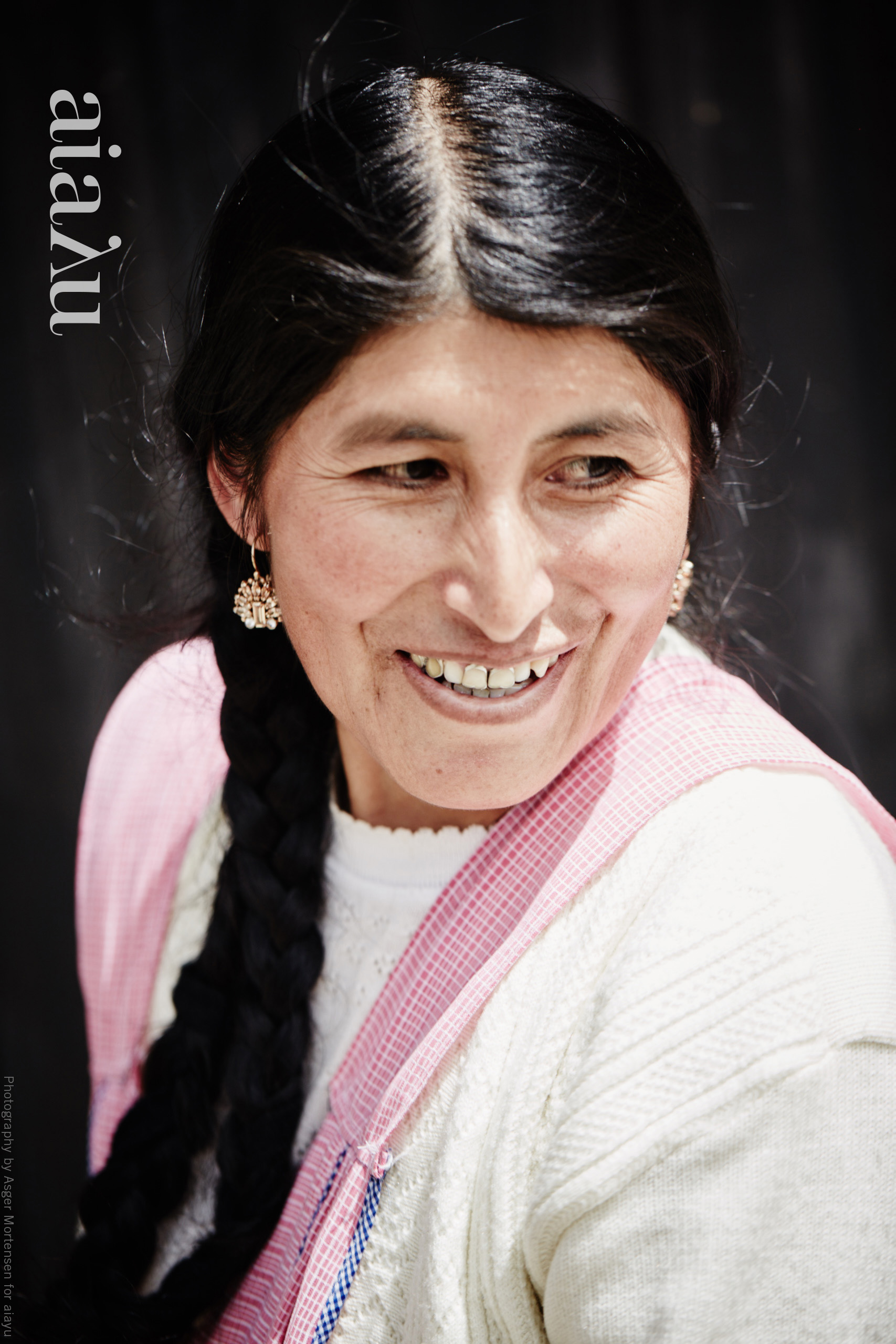
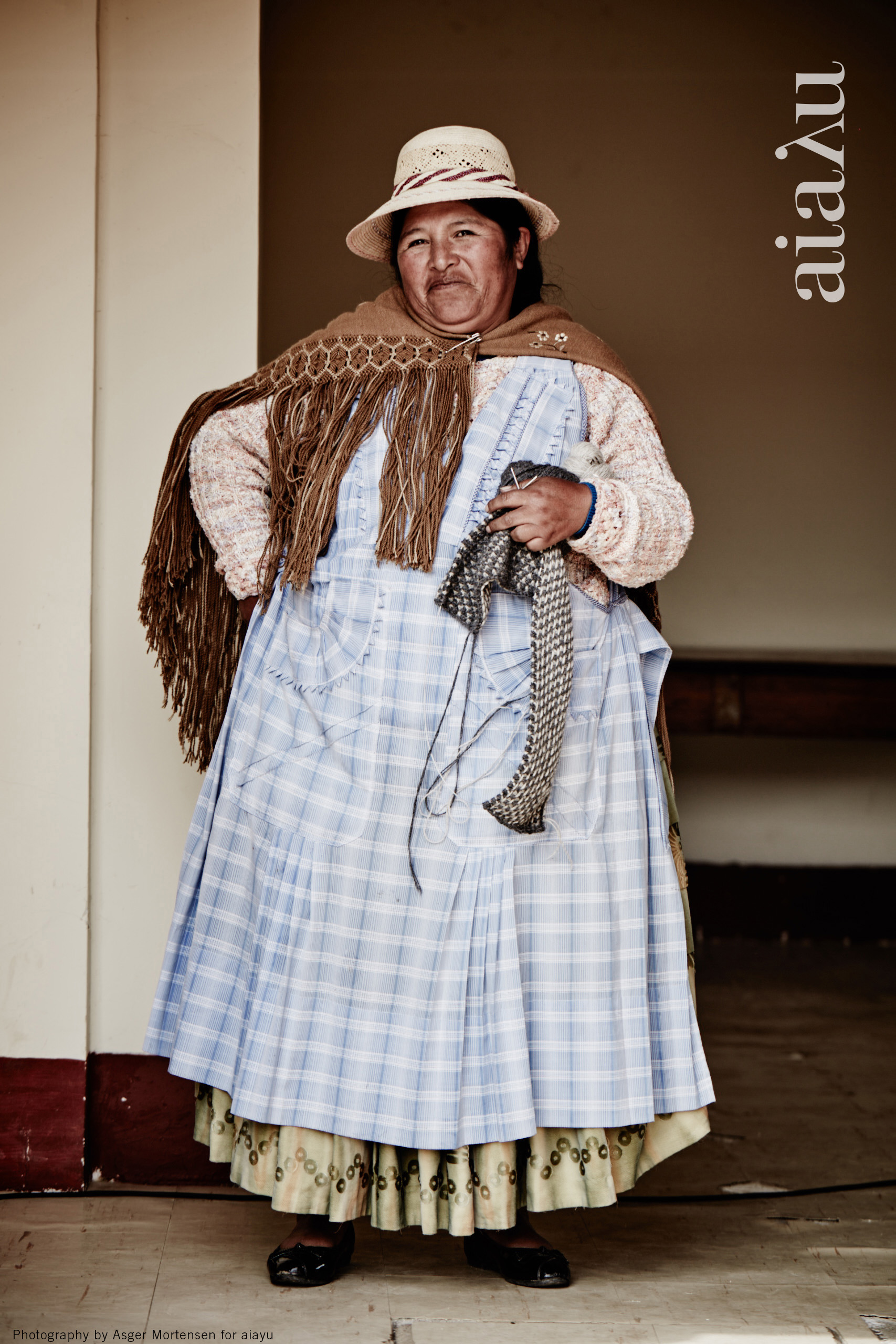
Marina, Bolivia

Marina, Bolivia

What Third World regions are you working with and how does it go together with your social mission? 

Our social mission is to produce, where the material originally comes from and where they have the specific skills to work with it. We want to preserve the heritage of the people who we work with, and make them proud of something they take for granted. Today we work with Bolivia in knits, India for cotton and Nepal for cashmere and yak. The origin determines the quality. We are deeply rooted in our love for natural materials - these exquisite raw materials are the main source of inspiration when creating our product range, and they continue to inspire us to evolve our concept. Our idea is to simply refine what nature has already designed so beautifully.

“I hope we stand out in telling the story not only as a marketing tool, but giving people a feeling of being close to the process and the people behind it. […] It’s the human story we need to transcend to the end customers.”

By what it feels like, more and more Scandinavian brands are pushing forward ethical principles in their businesses. What’s unique about Aiayu’s approach?

I hope we stand out in telling the story not only as a marketing tool, but giving people a feeling of being close to the process and the people behind it. We get initials engraved inside the garments to trace the women, who knitted them. These are they stories people want to hear and relate to, much more than just a certification. It’s the human story we need to transcend to the end customers. 

How can we make something that affects us all on global scale reach its meaning to the end consumer? Could it be a question of personalising, creating a story that delivers around it?

As mentioned above, I think it is very much about telling a personal story of the people behind [production]. Teaching people something. People want to learn and get skilled. Working in depth with our factories and materials, we have knowledge that we have to keep on reminding ourselves to share and not take for granted. Sharing our brand’s personal story means educating people in a good way…

In your opinion, what are the key concerns the fashion industry still faces? If you could make one change that has no reverse effect, what would it be?

The massive consumption and fast consumption of clothes. Overproduction and overload of needs, fast-moving trends. Purchasing long-lasting pieces makes you value your clothes even more. At Aiayu, the quality of the clothes also has the effect that people buy fewer pieces from us, but they come back. They naturally buy fewer pieces because the last for a long time, but the longevity and durability of the product makes people feel they get the value for money. Our customers understand the value of good quality. 

“We are deeply rooted in our love for natural materials - these exquisite raw materials are the main source of inspiration when creating our product range, and they continue to inspire us to evolve our concept.”

In addition to selling fashion products, how important is it to educate people on how to take care of their fashion purchases?

It is super important! [This is] to make them appreciate their products, old and new. Our marketing approach also incorporates a mission to make people proud of what they have already purchased, not only to think about what they are going to purchase next. It is conflicting with our short-term business goals, but we believe that it is a long-term achievement that will come back to us well. 

Handknitter, Bolivia

Handknitter, Bolivia

Spinning, Bolivia

Spinning, Bolivia

“Our marketing approach also incorporates a mission to make people proud of what they have already purchased, not only to think about what they are going to purchase next.”

In your opinion, has the digitalisation of our culture made it harder or simpler to spread your message? Is there anything you would change about this surrounding 'fast and more' culture?

If the media is used right, I think it gives us a unique opportunity to connect directly to the consumer, and to break it up into fewer pieces, so that people can consume [the information]. Instagram and Facebook feeds deliver information in smaller bits to make people read more without losing interest, whereas a website often makes them just to look at the pictures. About the social media influence as a whole, I think you can use it to your advantage – even though these fragments are fast-moving. But before starting, make sure you have your vision and goals clear far afield.

https://www.aiayu.com


To Freeze The Time Through Tapestry — Retrieving Memories Through Carpet Landscapes: Alex Keha

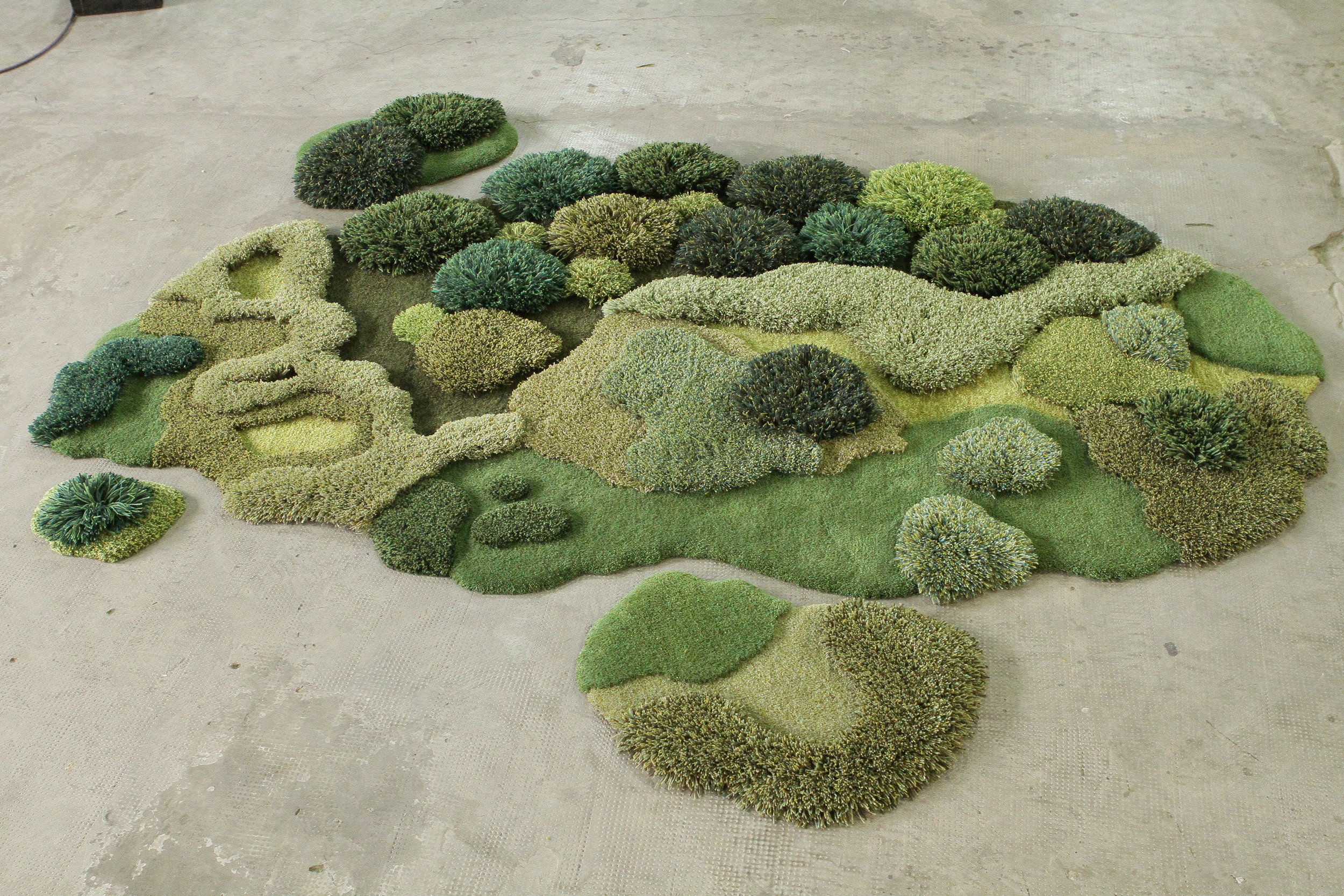
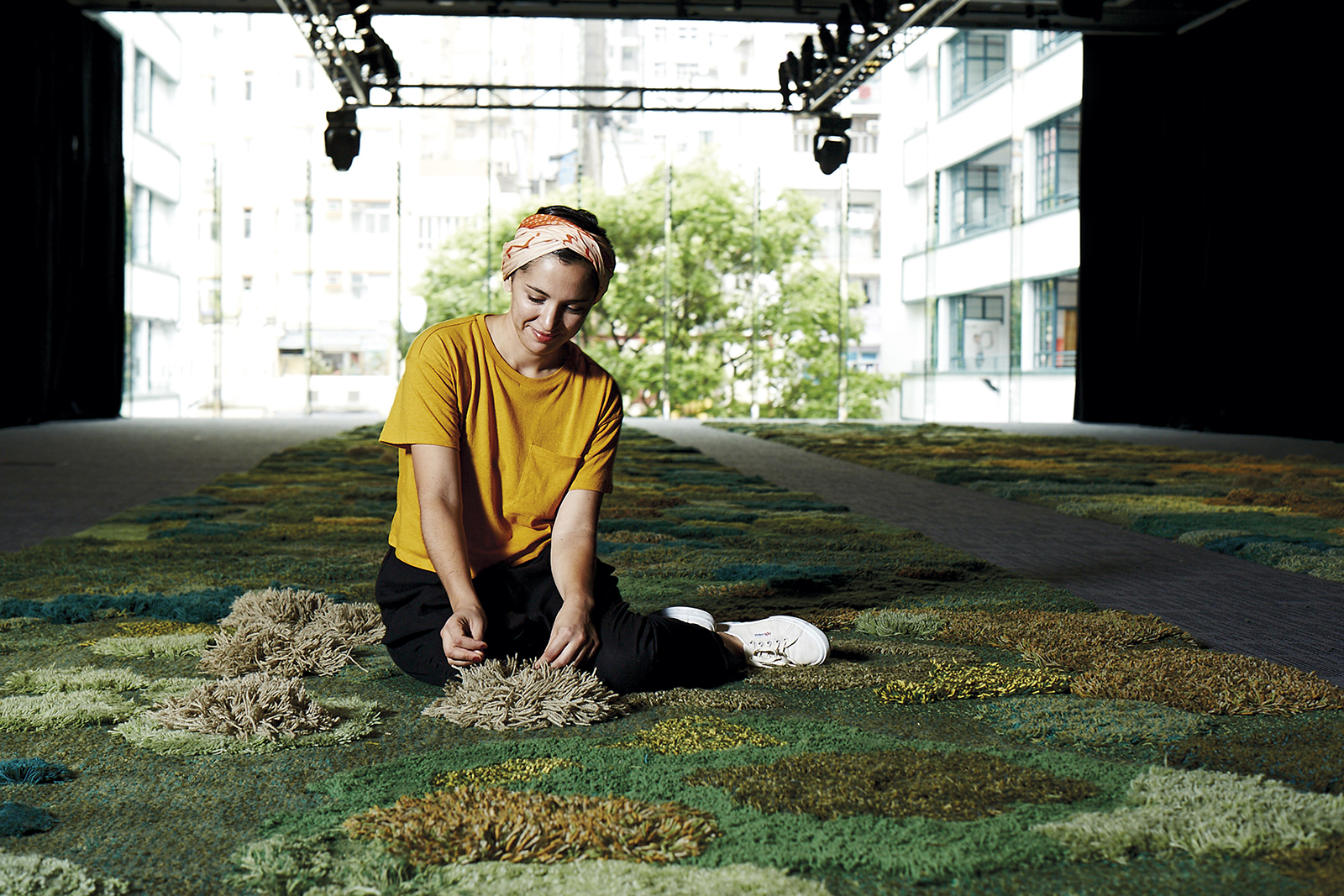
How to connect the dots between nature, sustainability and carpet making? By reinventing cherished childhood territories from leftover textiles of her family-owned factory, Argentinian rug artist Alexandra Kehayoglou gives an answer to this seemingly impossible equation. It’s in the Studio Kehayoglou, where the hands work hard and artisanal immaculacy bravely takes shape, stopping the passing of time in ethereal still-life carpet artwork.

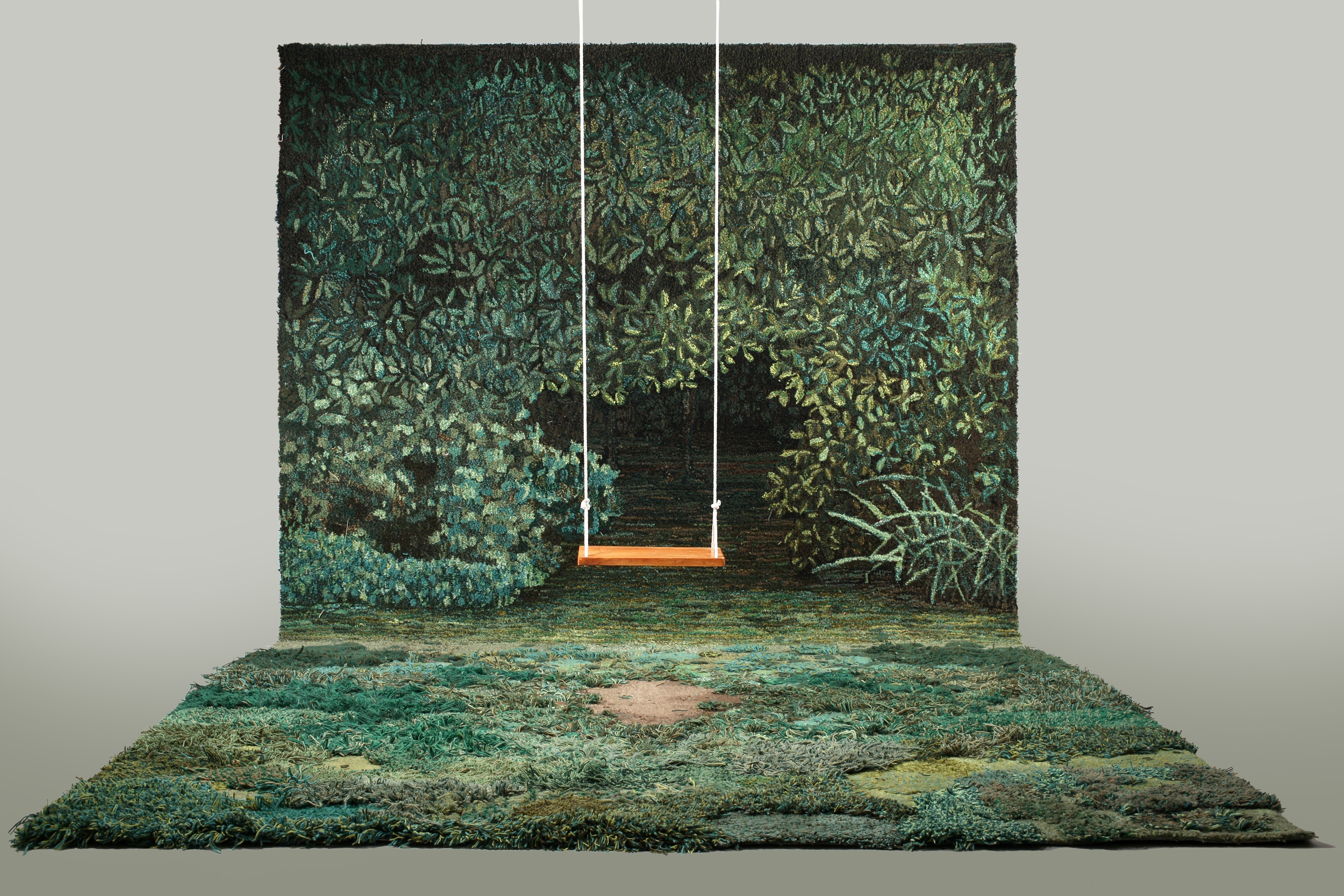
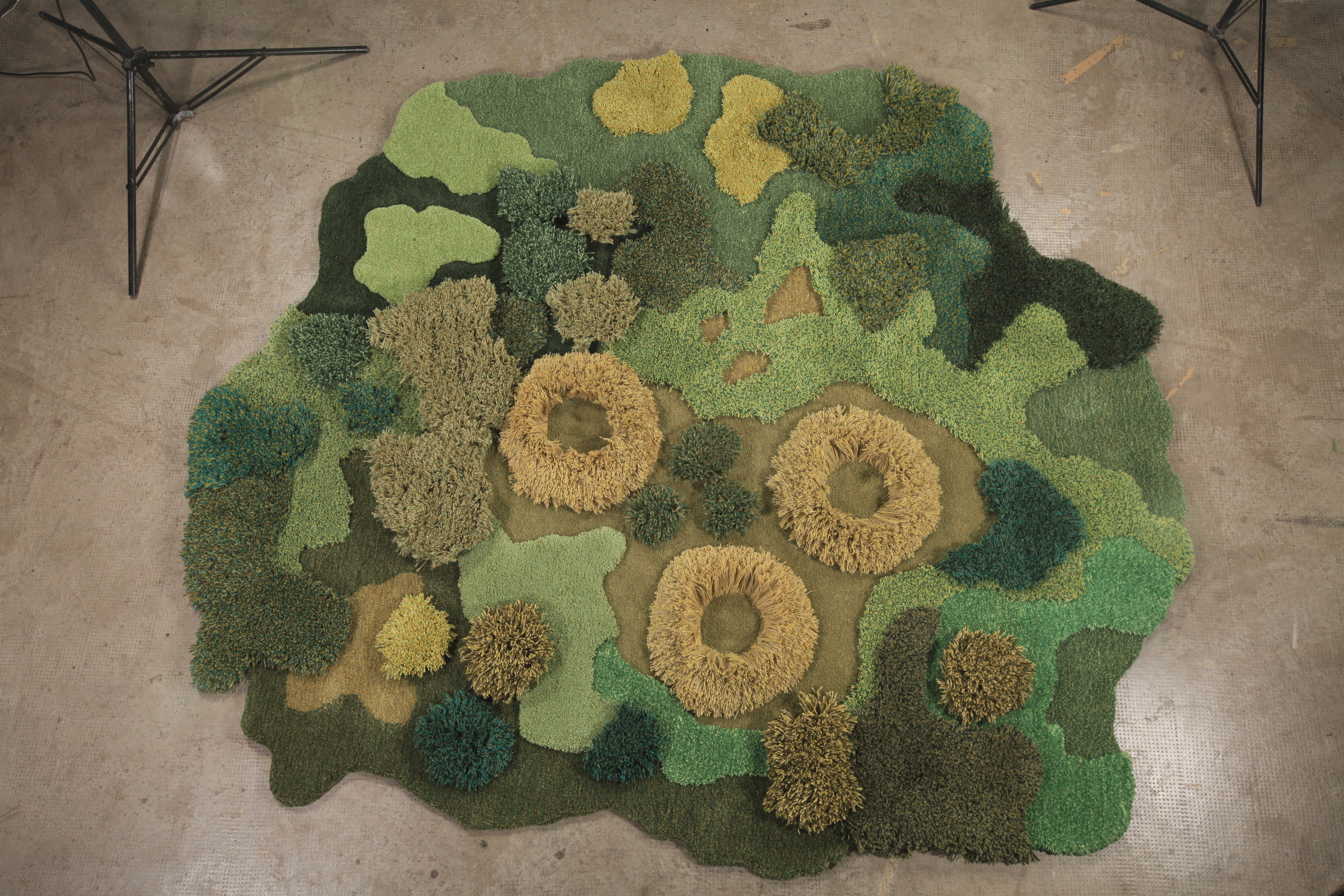
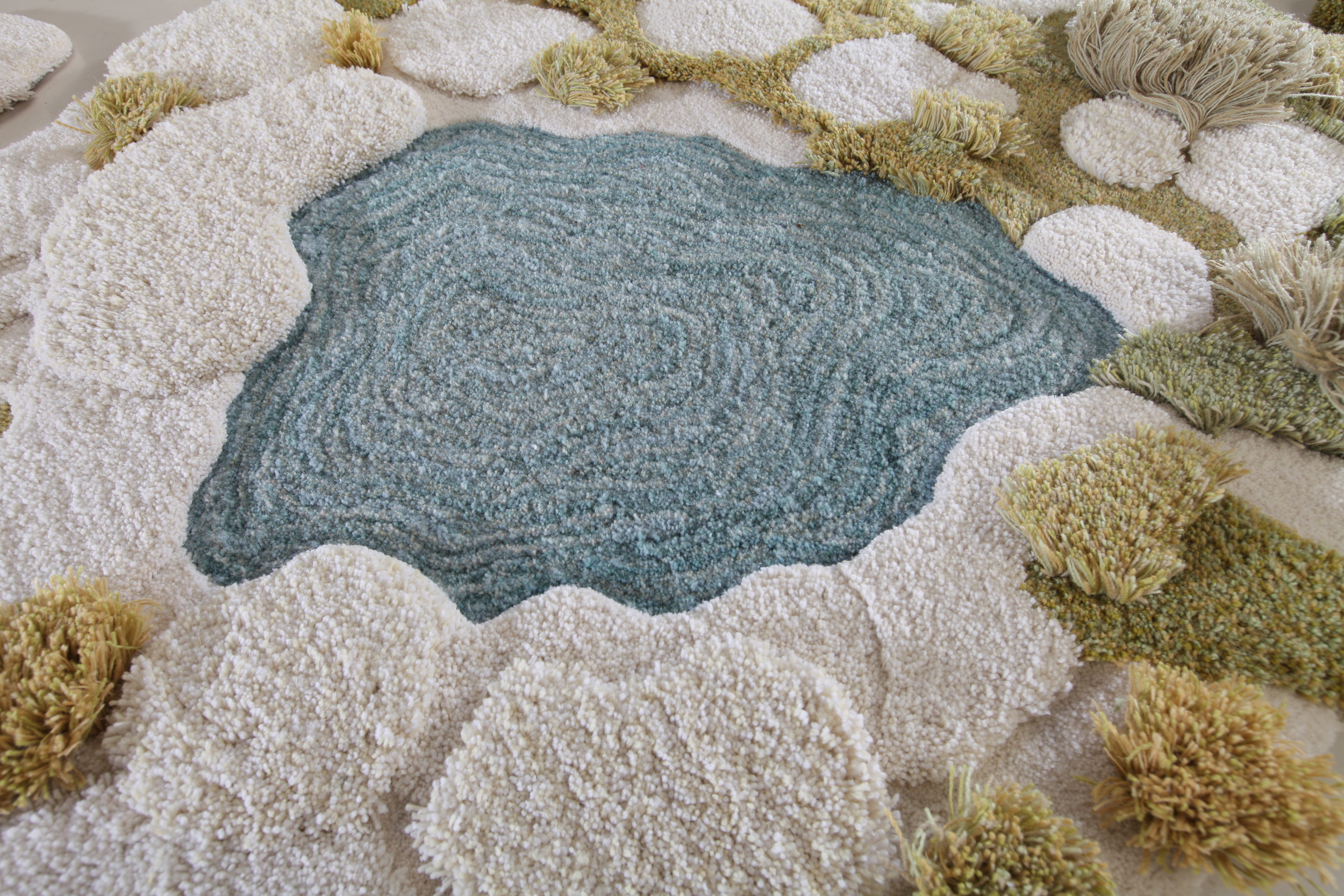
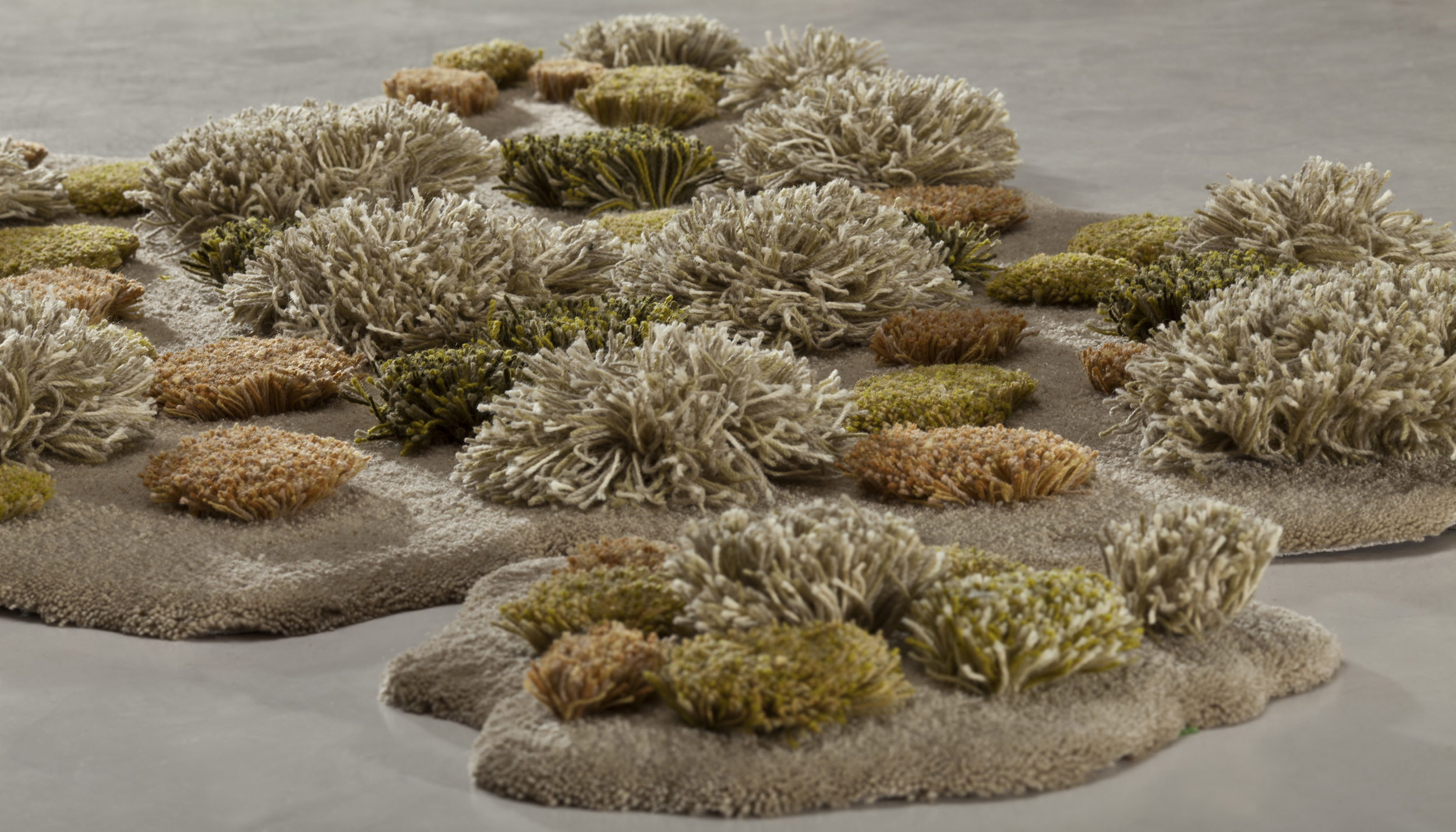
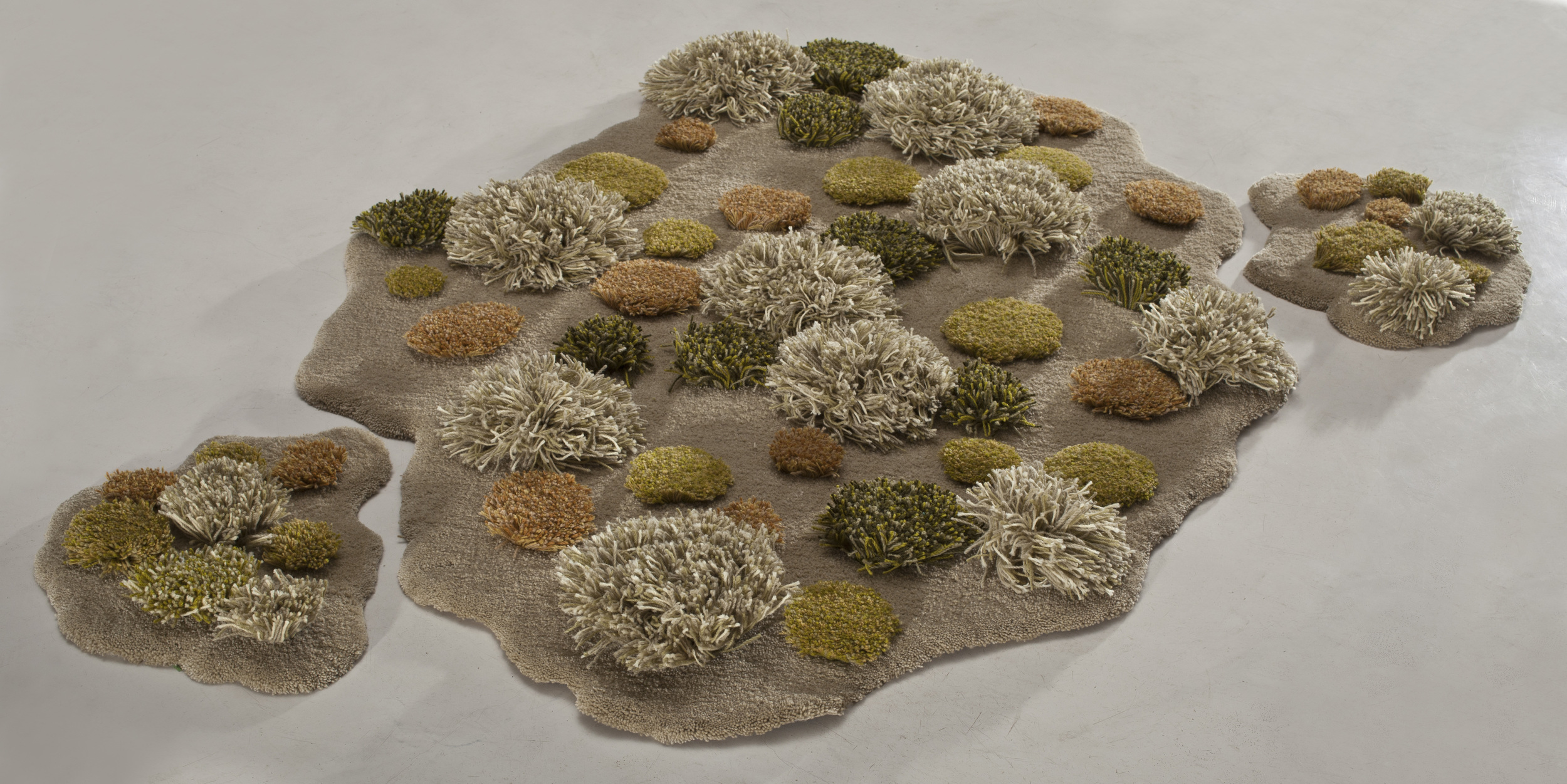
Carpet artwork by Alexandra Kehayoglou

Carpet artwork by Alexandra Kehayoglou

Your carpets are pure magic. How does the process of creating one begin? 

Every piece has a story behind it and the whole process that leads to the final result is rather long and complex. [In my approach], the original techniques of tufting are combined with modern technology. I try to link both platforms — the industrial and the manual — to create more experimental artworks. My greenlands, paddocks, shelters and tapestries are made up from retrieved material of the factory owned by my own family. In a way, they contain my own life experience. 

I usually have a previous idea of what I want to achieve [as a final result], but this always changes through the process. I first sketch on the canvas, then apply the tones and create textures inspired by landscapes I’ve seen. The textile is weaved with handtuft system — with a pistol that I manipulate on vertical racks to create the weft that will give shape to the final piece. Each of them is unique, with a certain texture, pattern, volume and unrepeatable palette. 

When did you start connecting and exploring the symbiosis between landscapes and rug making?

I grew up among rugs. Seventy years ago, my Greek family brought the tradition of designing and producing the carpets to Argentina. After many years of research, I decided to transform my family history into an artistic expression. 

Everything started with my diorama boxes in which I tried to freeze a scene. An artificial miniature beach landscape in which the spectator could submerge, but these were at first [merely a] model — they were small and packed in a box. When that tapestry unfolded on the floor, I realised I could create those landscapes, following the same idea of time being frozen, but this time in a human scale. Therefore I decided to keep my cherished territories from childhood safe from the passing of time by recreating my landscapes. 

How is the sustainability element represented in your artwork? What other principles do you consider to be the cornerstone of your art? 

Sustainability is present in each piece of work. I am deeply conscious about nature and that is why I hand-tuft my pieces with 100% natural sheep wool and all the materials are surplus from my family’s factory. The materials are selected carefully and then dyed to achieve the desired colours.

Alexandra Kehayoglou

Alexandra Kehayoglou

How long does it take to create one masterpiece rug? What's the most complex project you have undertaken and completed?

Depending on the complexity of the piece, the production time can take from one to several months. I pay a lot of attention to details and I am extremely tedious with each and every stitch. The most complex project I worked on was a custom-made carpet designed by Olafur Eliasson and crafted by Alexandra Kehayoglou’s Studio. It consisted of a 3D carpet, which we had to adapt to a wooden topography to create a reading space in the Art Kunz Library of Berlin. This was truly challenging, because we had to develop a new method for the carpet installation. All in all, it was a great experience; we spent almost three weeks at the Studio. We worked a lot! 

“Each of them is unique, with a certain texture, pattern, volume and unrepeatable palette.”

What makes a particular landscape inspiring enough for one of your rugs? What else inspires you throughout the process?

I guess the contemplation of the landscapes I love is the first step for the development of my work. Also, Argentinian geography has been very inspiring for me because, in a way, my personal history is tightly related to the history of that land. Walks through my parents garden with my son, road trips, sunsets, aerial views, the sea, the beach, my family, my grandmother, are part of this dialogue between nature, tradition and art. 

You also have an inspiring Instagram account. In your view as an artist, is it important to promote yourself more as a 'brand' nowadays? Don't you feel that it has made your work more commercial?

I believe all art is very much about freedom. In a way, Instagram is a great tool for any visual artist, because it allows us to choose what we want to share about our daily work at the studio — it’s sort of a visual diary. During the last few years, artists have found new ways of creating the ‘buzz’ and circulation, it’s not merely about being a part of a gallery anymore. Even though my work is sometimes related to important brands, I really don’t find my work commercial at all. In fact, it is well known that there are new models of art business arising and concurrently with them, new ways of being an artist. 

“Walks through my parents garden with my son, road trips, sunsets, aerial views, the sea, the beach, my family, my grandmother - all are part of this dialogue between nature, tradition and art.”

Alexandra Kehayoglou

Alexandra Kehayoglou

Describe the relationship between fashion and your rugs. There was a runway setup project you've done for one of the major fashion brands. Are there any other fashion collaborations you’ve executed?

In 2014, Dries Van Noten contacted my studio through a fashion producer called Villa Eugénie, who had seen my work online. They asked for a rug of 50 meters based on the same nature concepts that I work on. The design of the carpet was a pastizal (grassland/pasture). We travelled to Paris for the installation of the piece. It was a great experience because, even though the process was very intense and it had to be developed in a very limited timeframe, a new way of thinking my work appeared [as a result]. 

How can we be more environmentally aware and shape people's mindsets through what we put out in the world?

I think we should start with small actions. Every day is a chance of making things better. If we finally understand that we are not the centre of the Earth, but just a tiny part of it, as well as the trees, the animals, the rivers and seas and the mountains, our decision-making and behaviour will lead us to living a more environmentally-conscious life. 

“I decided to keep my cherished territories from childhood safe from the passing of time by recreating my landscapes.”

What's your relationship with nature? 

I was raised in a house with a big garden, so my approach to nature is quite sincere and spontaneous. As a child I used to explore the different colours, shadows, smell of the grass, the flowers and plants. Everything was special and new, my point of view was not contaminated by life experience. I remember making up stories for hours, nursing the birds, playing with mud. The feeling that time was frozen in a special moment is something I’ve been trying to transmit with my work as part of that first intuition. 

The process of creating a masterpiece: Artist Alexandra Kehayoglou

The process of creating a masterpiece: Artist Alexandra Kehayoglou

In what ways has Argentina played a role in shaping you as an artist?

Argentina offers many kinds of climates, landscapes and cultures. I decided to embrace this diversity because it’s also a part of my own identity. The scenes I create are part of native territories that carry ancestral information and I think that my job as an artist is to transmit their message through the best language I know, art. 

http://www.alexkeha.com

Artattack: C for Charlotte Posner Pop Dolls

Meet Miss Charlotte Posner — London’s contemporary bespoke illustrator whose glam Pop Dolls have conquered the city’s galleries and conceptual shopping spaces. Whether it’s a proud row of sophisticated fashion Pop Doll icons, or elegant eye candy for the foodies, the funky hand-painted illustrations, mimicking commodity culture, branding and fashion’s exuberance in a stylish and satirical way, are simply a joyous celebration of the (otherwise) mundane everyday objects. All around us. 

IMG_8760.jpg

Recently: C. Posner brought the era of fun, customised illustration back at Daisy Green Food, Seymour Street, on May 11th, and even three splashes of sticky prosecco accidentally poured over couldn’t stop us from admiring the majestic Pop Doll artwork, paired in perfect harmony with the trendy Peonica London summer collection handbags (above). 

C Posner Art

C Posner Art

At Savant, we always love personal stories the most. Tell me more about your artistic background and key influences. How did your journey of becoming an illustrator begin?

'Hello Sweetie' by C Posner

'Hello Sweetie' by C Posner

For as long as I can remember, I have always had a passion for expressing myself through creativity. My academic capabilities were not always my strongest asset and being artistic allowed me to strive and achieve in the one area that bought me happiness. From the age of 14, Mr. Jepson, my art teacher, taught me how to create using oil paint, which is where my love for art grew deeper. I spent 4 years studying at Chelsea Collage of Art and Design, which also included a semester at Emily Carr in Vancouver.

For the past 6 years I have worked on my paintings from Limehouse Art Foundation Studios in East London, competing in competitions and exhibiting my artwork nationally and internationally. I’ve had my work accepted for the Royal Academy Summer Exhibition, I participated at the Tate Modern. I also won a Saatchi drawing prize, and have been featured on the BBC Culture Show. Three years ago I decided to quit my part time job to become a full time artist. ‘If i don’t do it now i never will.’ I haven’t looked back since…

What trends and techniques are prevalent in your field of illustration today? 

The main technique I use for my illustrations is pen and ink drawing, starting my work by sketching first in pencil, I then use dip pen and black ink going over the rough sketch with solid neat lines. I then paint in the colour with acrylic or watercolour and touch up in pen again. I also use collage and jewels to accessorise the paintings. I want my paintings to be stylish, bold and easy to live with.

“Three years ago I decided to quit my part-time job to become a full-time artist. “If i don’t do it now i never will,” ran through my mind. I haven’t looked back since…”

How long does it take you to complete an illustration? Have you also experienced the so-called 'creative block' periods when you are unable to produce new art at all? How do you overcome such periods?

The process of creating my painting from start to finish depends on the size of the painting. They range from a day for the very small drawing or sketch to two-three weeks for the very large. I occasionally get the creative blocks, but I find that less thinking and more doing helps! Working on a few paintings at the same time keeps my imagination flowing and keep me interested in my work.

It seems like you get the inspiration from the most unexpected places - like the row of Magnum dolls, and many other commercial brand and figure led influences. How did you get into this niche? 

Everything around me is influential, I really stand by the quote, ‘you are what you surround yourself with’. All my artwork is based on current trends, life events and all my travels. 

The first ‘Pop Doll’ painting I ever created were the ice cream girls. I posted the dolls on social media and I received more ‘likes’ than I have ever had! From then on my ideas grew and little did I know I had my theme. From ‘foodie dolls’ to ‘designer dolls’, my work was slowly but surely taking off. I started to receive interest from brands, such as Magnum, Coke, Walls, Kellogg, Nails INK, and Magnum UK featured me on their summer campaign.

My vision for the future is to stick to the same theme, whilst growing my style and keeping my work fresh and interesting.

'Magnificent' by C Posner

'Magnificent' by C Posner

Why should we appreciate bespoke illustrations today? 

Making art is being totally in the present. It is a full process of taking your time, concentrating and using your imagination. Everything is becoming much more digital and easily accessible today. I believe that, ‘Good art is like a designer bag, you keep it and it never loses it value.’ My paintings are only increasing in value as my work has become more popular.

What's your opinion on promoting your work at concept store events, such as the Fofolles Popup on Kings Road, Chelsea, in perfect harmony with other ‘brands’, be it artists or fashion makers? Could it be that it creates a better connection with your art when exhibited in a conceptual space?

I think all exposure is great, having a pop-up store on the Kings Road was fantastic for brand awareness and getting my art seen by a young, trendy audience and surrounded by other luxury brands.

Why is it that many artists today decide to sell their work only through social media, and not in galleries anymore? In this case, what could be our potential loss as artists and consumers of art?

I believe the reason for this is that the rentals for gallery space in central London are financially prohibiting. I would agree that a gallery is the best place to exhibit you artwork because this is the only venue that encourages the speculative purchaser that buys on impulse.

'Saucy Ladies' by C Posner

'Saucy Ladies' by C Posner

Who are your favourite illustrators?

My favourite illustrators are Harry Clarke, Léon Samoilovitc Bakst and Richard Dadd.

Who would you expect to have their home decorated with your wonderful illustrations? 

I am extremely fortunate to have acquired such a wonderful audience of all ages. My clients leave it up to me to design what I feel, for commissions they give me the theme and idea and I go ahead and create. I like having the freedom to experiment with colour and style, to give the client the painting they want. My work is hanging all over the world - starting from London, Paris, New York to Brazil! Art is an international language and thereby appreciated all over the world.

Find the above and other bespoke, limited edition Pop Doll prints -

http://www.charlotteposner.com

Sustainably Made Hosiery: Swedish Stockings

Ever heard of caring, eco-conscious hosiery? Swedish Stockings’ founders Nadja Forsberg and Lynn Frisinger - a team of two ambitious innovators - prove that stockings are a petroleum product no more. Instead, be prepared to fall in love with their quality pantyhose made from certified recycled yarn. What’s even better - they proudly add to a wonderful row of Scandinavian storytelling brands, and we’re instantly hooked by their elegant craft.

Read More

Will the Allure of Frida Kahlo Ever Fade Away?

Frida Kahlo: Fashion As the Art of Being
Assouline

“Feet, what do I need them for. If I have wings to fly.”
– Frida Kahlo

If you are seeking some inspiration look no further. The latest Assouline beauty is packed full of bright and beautiful pictures of the one and only Frida Kahlo. The book is a tribute to her amazing style and character, hosting a stunning selection of images mirroring her signature style.  Pour over bright Mexican landscapes and see how her inimitable individuality has influenced so many over the years.  Frida’s free spirit has us planning outfits and adventures in equal measure.  If you’re a fan of art, fashion and a great coffee table book – this needs to be your next investment. 

Frida Kahlo: Fashion As The Art of Being

Frida Kahlo: Fashion As The Art of Being

On sale in Assouline stores or Amazon UK.


A Kinder Fashion Travel Memoir — Linda Mai Phung

Linda-Mai is a French-Vietnamese ethical designer based in Ho Chi Minh City, whose childhood memories of witnessing water wastage in her second homeland, France, inspired her to create her own brand. Behind the humble hues and preen prints at first sight, LMP reveals us a deeper cultural heritage behind her detailed craftmanship — SS16 particularly speaks of exotic patterns and paints powerful pictures of travels to foreign, faraway lands. Expect LMP’s collections change as fast as a camera roll of your ‘fashion travel journal’, encompassing the enigmatic heritage of joyous journeys around the world. If you haven’t thought through your summer’s one-way ticket yet, come admire closer.

Read More